Living by Fiction

I’m at home this week with what I hope is almost the last of a case of pneumonia. I joked with a friend the other day that I have ‘the rockin’ pneumonia and the boogie woogie flu,’ though I’d not like to call up the lyrics of that Johnny Rivers hit too literally. Yesterday, in the midst of some solemn Sunday reflections, I received a nag from Facebook telling me I hadn’t posted on my blog for a week, tsk., etc. So I dutifully looked around under the bed for some unfinished thoughts I could work up into something to fulfill the Facebookian expectation.

And I found something. For years now, at least since I observed how Richard Nixon fulfilled the expectation of comic book ads I grew up with and made himself the life of parties by playing the piano, I’ve wanted to write something about the authority of the fake. We Americans can seem obsessed with authenticity sometimes. Consider such icons of popular culture as Antiques Roadshow, and now Finding Your Roots, wherein we are led to appreciate wonders by experts whose appeal is enhanced by their ability to startle us with surprises hidden in the obscurity of some past represented by an artifact or an old letter.

Yet we can also give credence and power to utterly trivial people, to patently false but convenient beliefs, and to confidence tricks masquerading as dark hidden truths. Today’s Internet rumor mills are rife with the apocalyptic predictions of charlatans of all stripes. Somehow the world goes on, but so do multitudinous predictions of its demise. I’m not speaking now of authentic concern about the survival of our planet in this post-scientific age or of legitimate concern over lost values. I can get as distressed as the next person about the potential alteration or disappearance of Social Security, for instance; but I doubt very seriously that God is punishing us with storm and drought because our culture is changing.

And who better to represent our present obsession with the grandiose than Donald Trump?— a man who is an utter fake but who has apparently convinced many of us that his candidacy for the presidency is substantial and serious. We’ve seen many iterations of this American type, a figure with no particular talent for anything else who manages to achieve prominence by standing in a media spotlight and convincing a large segment of the public he belongs there, that he is a winner in a culture that worships winning and regards losers, except for the Chicago Cubs, as beneath contempt. Not only does Trump seem to succeed by brashness alone (a fine American virtue), but he also tells lots of lies, many of them about himself. Indeed he projects an image as fake as his hair and so slight one suspects a lucky breeze might blow it away, which may be why he resorts to thuggery and surrounds himself with other thugs to keep his critics at bay. Yet we are told that Trump is popular among losers, chiefly white working class voters who find themselves economically disadvantaged and feel culturally disadvantaged as well. And about this factoid the pundits seem able to dance to various tunes, some arguing that Trump is a legitimate populist while others lament his apparent racism, sexism, authoritarianism, etc.

Of course the list of losers among us is getting fairly long now. Lots of us never learned to play the piano, it seems; but the genius of fakers like Trump and his predecessor, P. T. Barnum, is a gift for the same trick performed by the Wizard of Oz, who even after he is unmasked is able to retain preeminence by presenting his postulants with various consolation prizes. Everybody knows that losers love consolation prizes. The trick is to keep the prizes believable but relatively commonplace. The more portentous they seem to be the more likely the giver is to be accused of practicing an invidious affirmative action, leading to lost value for true winners in the race to the top. Trump’s speech to the NRA last week was a masterful consolation prize. The NRA and its zealous partisans are winners presently, but their program is despicable, destructive, and anarchic. It surely can’t last forever. Like most of the rest of his campaign Trump’s pandering to the NRA cost him absolutely nothing. Old Barnum, who is supposed to have claimed there’s a sucker born every minute, could hardly have done better.

This puts me in a difficult position, because with another hat on my head I’ll defend the importance and value of fiction and the fictive, even the fictitious, till the proverbial cows come home. Where do I get off sneering at Trump? A lot of people like him after all, and many in the Republican party are now vowing to support him as their candidate for president (I note that only recently many of those Republicans deplored Trump, but let that go). Trump is real, he is authentic, they claim. He says things openly that many believe but are shy of uttering, namely his now famous racist and misogynistic statements which seem to resonate with many conservatives. Part of my answer would have to be an admission that though I acknowledge the value of a popular culture figure such as Harry Potter to model courage and heroism for the rest of us (though that is not all such figures do), I don’t expect Daniel Radcliffe to run for president dressed in his Hogwarts scarf with a wand in his hand.

But another part of my answer would have to be that it is the courage and sacrifice of this fictional character that we most admire, not the mere winning. Had Potter gone down to defeat we should still have admired him as we do his mentor, Albus Dumbledore. Sometimes even romantic fictional heroes suffer final defeat, as with Lancelot and Arthur. Or perhaps some token signals for us that their defeat isn’t absolute, as with the sword that returns to its home in the lake. One cannot imagine Donald Trump as a figure of heroic romance. Dictators and potential dictators tend to try to dress the heroic part, as Augusto Pinochet did in his Chilean heyday, for instance, as Raymond Burke, the darling of the Catholic right wing, does today. Their pretensions historically have had poor survivability, but Trump goes on. He is problematic for me, and for others who deplore him, because like Ronald Reagan he seems to have a Teflon skin, impervious to fact or other deconstructive force.

Annie Dillard once wrote a book entitled Living by Fiction. It’s not her best book. She was trying to be a literary critic, something she isn’t. Nevertheless, some of her observations in Living by Fiction are memorable. Here’s one: “Fiction elicits an interpretation of the world by being itself a worldlike object for interpretation . . . In the fiction of Aestheticism [fiction in the tradition of Joyce and Chekhov] ideas dissolve into their materials without a trace.” Trump’s presentation of himself as a presidential candidate invites the same interpretive exercise in which critics engage with such literary fictions, a teasing out of meaning not apparent on the surface of the text. From such a perspective Trump is an antihero, an iteration of Trump the reality TV star, whose feral mind seems to relish the corporate sewer. I cannot imagine any morally acceptable American scenario unfolding in a country with Trump as its leader. He is a know nothing and a blowhard. He inherited money, but unlike Mitt Romney he has not racked up a string of financial successes—rather a string of bankruptcies and frauds like Trump University. His thinking is grandiose. His call to unity evokes white supremacy, stigmatizes Americans of color, and proclaims them enemies of the people.

As I say, I am reading Trump’s presentation of himself as a candidate for president, some critics would say his performance of himself. When I say he is a fake, I don’t mean he is an empty suit masquerading as a leader, but something more. Trump’s language and behavior proclaim him to be a man without moral character who is perfectly willing to proclaim the worst in himself to be the best and to represent the worst in his constituents; yet he is seeking an office that requires moral seriousness, vision, historical perspective, and strength of character at a bare minimum. I am also reading the performance of the movement Trump’s candidacy seems to gather around him. Trump’s rallies and campaign are part of the fiction too, with their violence and demagoguery. Trump is not Hitler, as pundits remind us (and we must believe them, else they wouldn’t be pundits). But the country his campaign proclaims to be the America Trump wishes to lead resembles Germany in 1932, and that all too closely for comfort. If Trump represents winning to his constituents—winning for them, their winning—and I think he does, the rest of us would do well to lock our doors and keep our powder dry.

And as Americans we would do well to ask ourselves why the fake has power to move us to wish (or to do) harm to others, to vote for destructive policies, to support hate campaigns, and the other like things the Trump organization seems ready to accomplish. Or perhaps Trump isn’t fake at all. Perhaps these things are what his campaign is about, harm to those who differ from us, hatred and destructive public policies that promulgate hatred of the most vulnerable among us, reversal of the access to public life achieved by women and minorities over the past fifty to sixty years, restoration of white supremacy and patriarchy. Perhaps these are the means to making America great again envisioned by Trump and his followers. If so, then the question becomes how did a substantial number of Americans come to think these things, to wish these things?
fight for fifteen, part two

In my last post I described my participation in last month’s Adjunct Action rally in Saint Louis. Adjunct Action is a project of the Service Employees International Union (SEIU). I’ve since participated in two meetings between adjuncts and upper administration on the Saint Louis University (SLU) campus and learned with some considerable sadness that the effort to organize adjuncts at Webster University across town has failed for the present.

I am an adjunct, though not a typical one. I teach only one course, a senior seminar. As a retiree I have benefits such as health insurance, and I do not need to make my living as an adjunct. I am what is termed a volunteer professional in the current iteration of the Jesuit Just Employment Policy, which we adjuncts at Saint Louis University are asking our administration to adopt. But I have met many young adjuncts since I first became involved in this movement who are making their living as adjuncts, teaching (some of them) upwards of eighteen classes a year at several universities and colleges in order to make ends meet in their busy lives, serving as part of the pool of just-in-time casual labor on which most universities rely to do most teaching of basic courses, and sometimes more, these days.

I have found these young people to be bright, energetic, competent, and savvy. It is not their fault that their academic careers did not open with tenure-track jobs upon their graduation with terminal degrees. It is a mournful fact that the majority of graduates of today’s graduate schools find that their academic careers end with the acquisition of terminal degrees. Marc Bousquet has documented the phenomenon exhaustively in his 2008 book, How the University Works. This result is produced by an insidious system that protects the privilege of “professional” faculty, who don’t have to teach much (which is just as well since many of them find teaching distasteful) and the sometimes redundant graduate programs that employ them as specialists, and of the now vastly inflated administrator class in colleges and universities.

The relegation of responsibility for core mission to a cheap and disposable cadre of casual employees benefits institutional bottom lines as well, which benefit leaves trustees and legislative overseers free to pursue more important concerns such as athletics, property, and alumni relations. In short, today’s university system is designed to serve the interests of everyone but students, their parents, who often pay exorbitant amounts to send their children to colleges and universities whose faculties and administrations hold them in contempt, and the casual faculty itself.

If you think this is extreme, take a look at at a piece in yesterday’s Huffington Post, in which Keith M. Parsons details his message to a group of college freshmen. My Western Civ professor years ago ended the year by telling us ignoramuses that he had “enjoyed” casting his pearls before us swine. This is about the level of Professor Parsons’ discourse. Professor Parsons claims that his students are adults and therefore need only to be led to the fountain of learning (a rhetorical confusion if his audience is a student audience—to whom is he preaching?). Why not treat his students as adults and speak to them as adults. Why the condescension, the posturing, the self-aggrandizement?

I am your professor, not your teacher. There is a difference. Up to now your instruction has been in the hands of teachers, and a teacher’s job is to make sure that you learn. Teachers are evaluated on the basis of learning outcomes, generally as measured by standardized tests. If you don’t learn, then your teacher is blamed. However, things are very different for a university professor. It is no part of my job to make you learn. At university, learning is your job — and yours alone.

To be clear, I am seriously opposed to high-stakes testing and its consequences, particularly the sort of teaching to the test that is becoming standard in schools. But arrogance is arrogance—Professor Parsons is a beautiful illustration of the fact. And begging his pardon, learning is a shared job, in university as in school. To assume the mantle of professor is to assume a huge responsibility. Professor Parsons, rather than accepting that responsibility and taking it seriously, seems intent only upon asserting his superiority to the great unwashed. But Professor Parsons is not an anomaly. He represents the norm, or one aspect of it. He represents the regular part of the professoriate, tenured (or tenurable), privileged in the sense of being allowed relative autonomy to practice his craft (which somehow doesn’t exactly include teaching), and relatively well paid.

But here is how the casual faculty lives and works. Their wages are kept low; the academic job market is a buyer’s market after all, and individual adjuncts have no power to negotiate better wages. (The norm for adjunct compensation at SLU is $3000 per course.) Adjunct employment is restricted at part-time, which restriction avoids the necessity for paying benefits and the possibility of de-facto tenure in the case of adjuncts employed year in and year out. Many universities are now employing their own PhD graduates as adjuncts for a year or two, sometimes more. This is especially true for universities who created PhD programs during the 1970s when post World War II expansion seemed to promise endless economic growth on campus. Many of these mediocre graduate programs no longer have a market justification, but of course their faculties have to be kept busy.

A normal adjunct is employed to teach, and the mere fact that now more than half of the teaching in colleges and universities is done by low-paid adjuncts indicates more than any other fact or set of facts just how seriously colleges and universities take their teaching responsibility. The contempt with which university trustees, administrators, and professional faculties view the basic teaching function is, I believe, primarily to be measured by the fact that what is becoming a majority of the university teaching faculty is being forced into academic peonage. Adjuncts are typically disdained by regular faculty. They do not attend faculty meetings as a rule. They have no vote on matters of policy that concern them. And the best that administrators seem to be able to come up with as an improvement to this system of peonage is to continue it in one form or another, perhaps offering adjuncts yearly contracts with some benefits and a better wage but continuing to enforce their serfdom.

Higher education in America is under grave stress. On the one hand there is much to criticize in the behavior of our major universities and elite colleges. And on the other, every few weeks now we read of wantonly destructive policy changes aimed at these treasured institutions by venal trustees and politicians out to score points with Americans who are presumed to have no affinity for learning or to disestablish academic institutions in the interest of right-wing ideology, junk science, or no science at all. But a more important problem may be that colleges and universities expanded too far too fast after World War II and produced a system that would inevitably have proved unsustainable at the end of the baby-boomer generation. Professor Parsons and others like him for whom the professoriate is an entitlement rather than a responsibility are protected from market forces by the scores of adjuncts who have neither status nor tenure nor job security but do the work of generalists in today’s system of higher education.

Adjuncts are organizing all over the country now, and are winning concessions from university administrations. This is important, I believe, because I am persuaded that higher education in America is in decline and the competition to control the decline is serious and fierce. I am further persuaded that adjuncts are the voiceless in today’s scheme of higher education. I see SEIU Adjunct Action as potentially giving adjuncts a voice, potentially a place at the negotiating table as we as a people attempt to manage the dislocation and human destructiveness of a declining system.

—and that is why I have joined up.

fight for fifteen

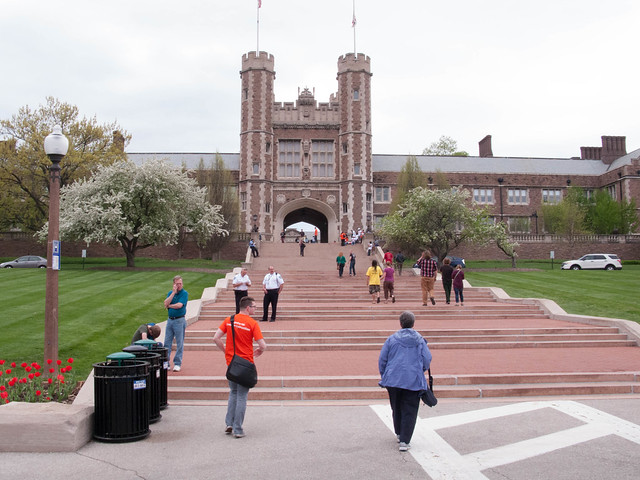
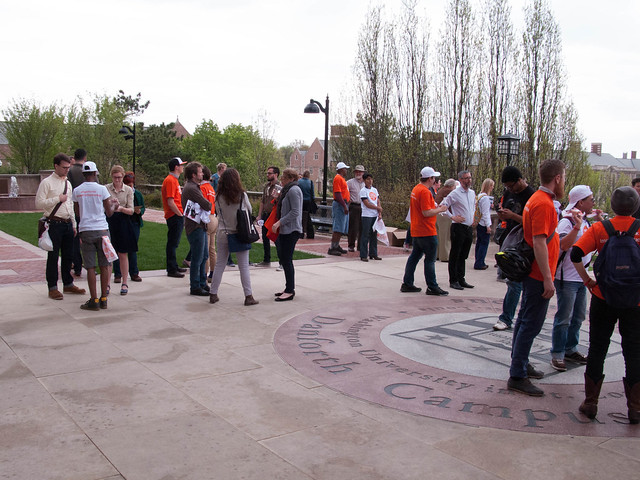
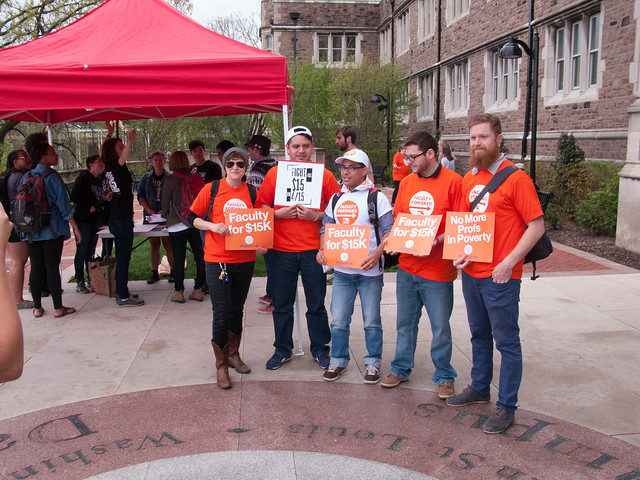
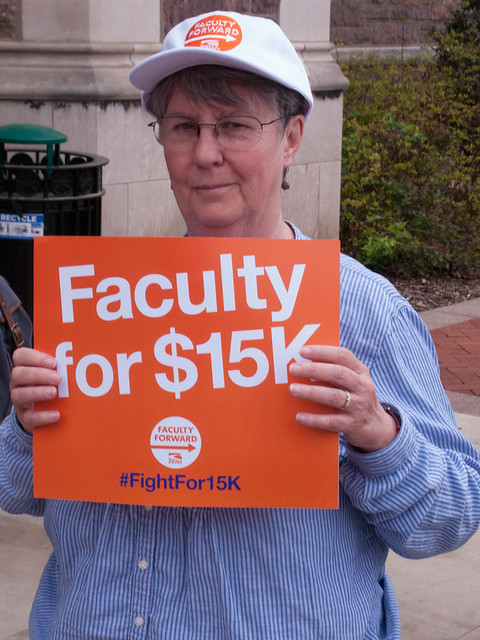
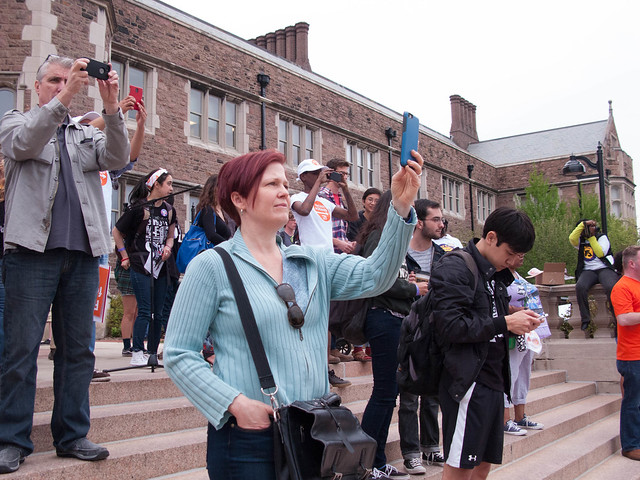
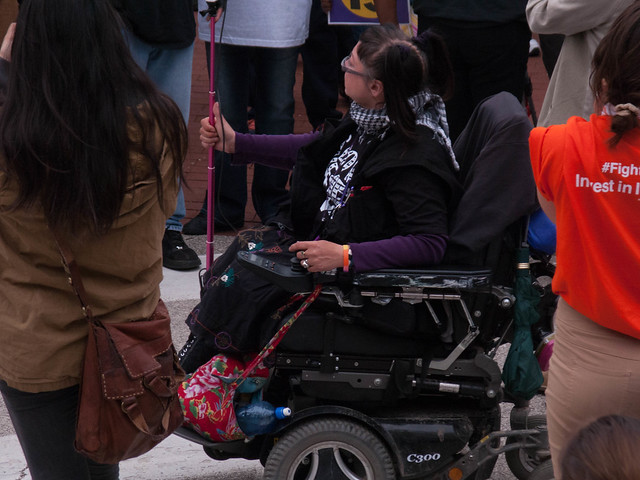
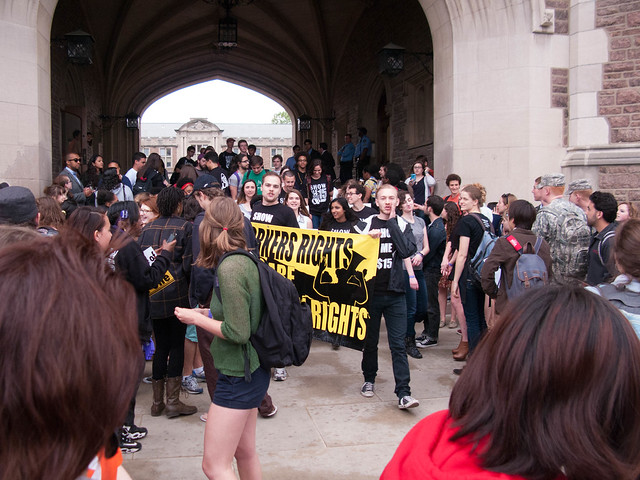
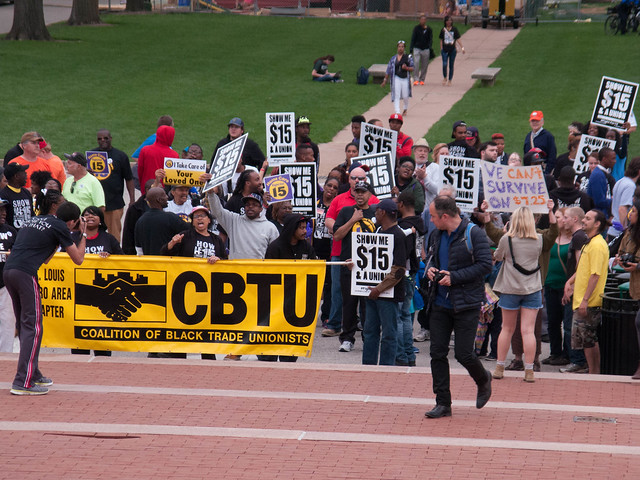
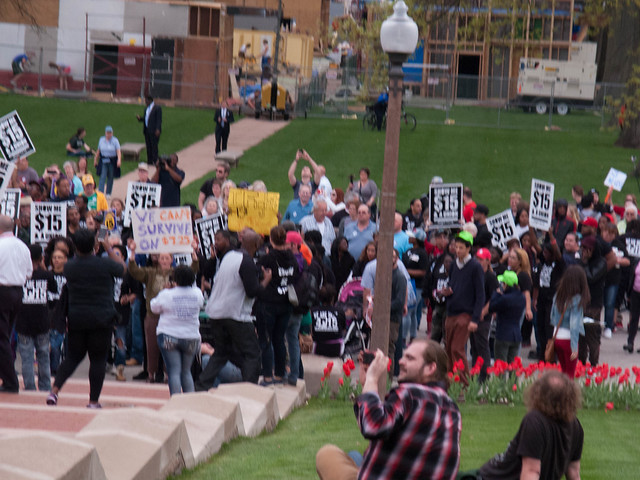
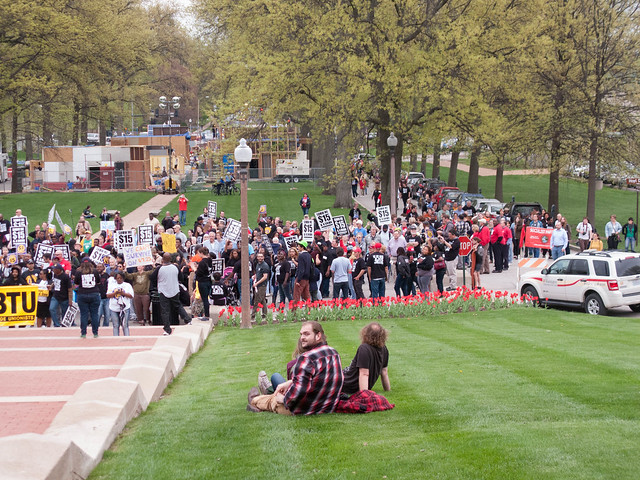
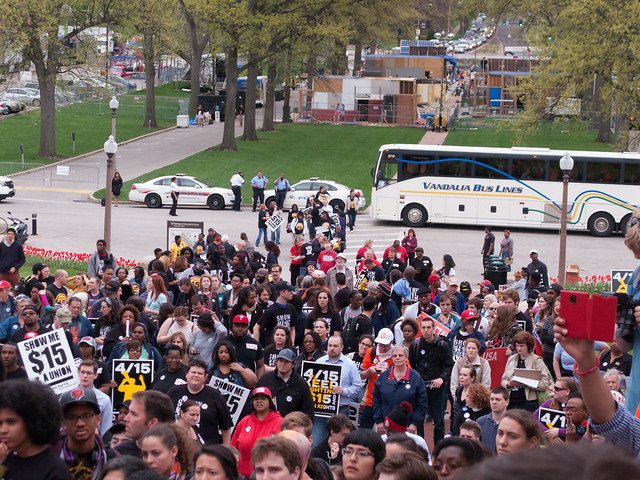
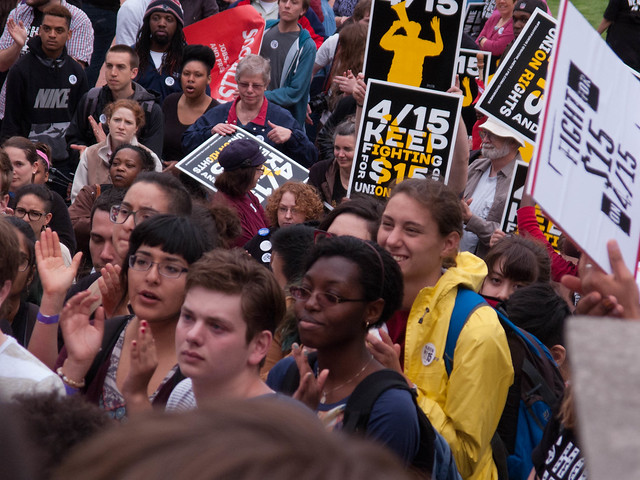
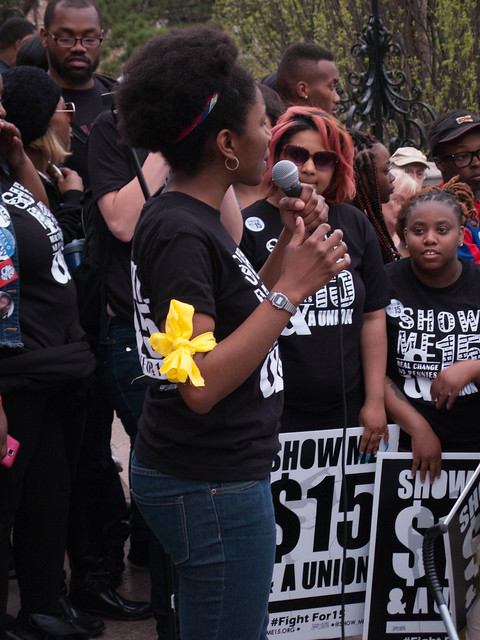
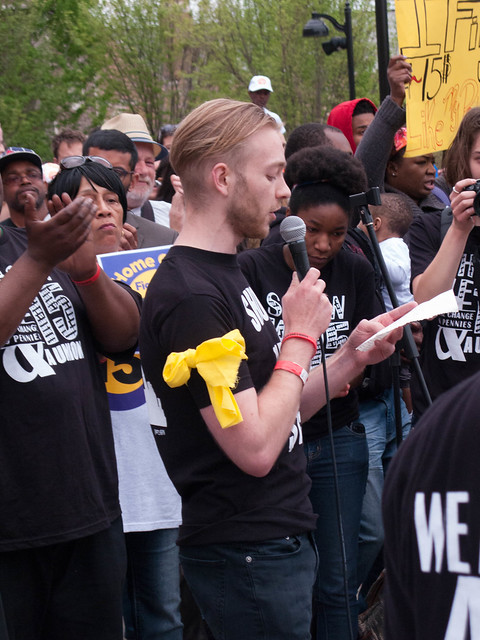
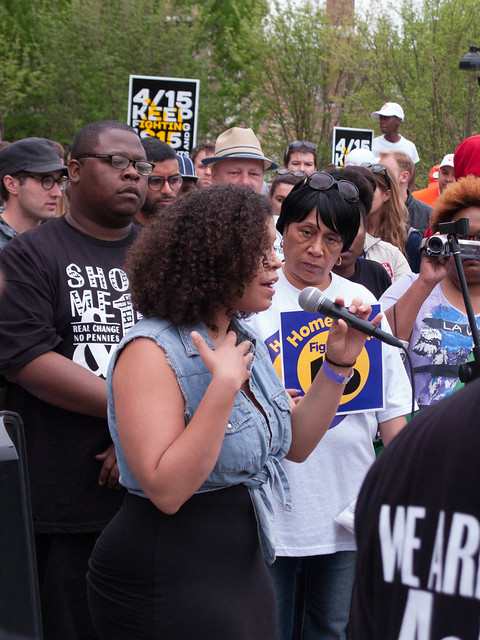
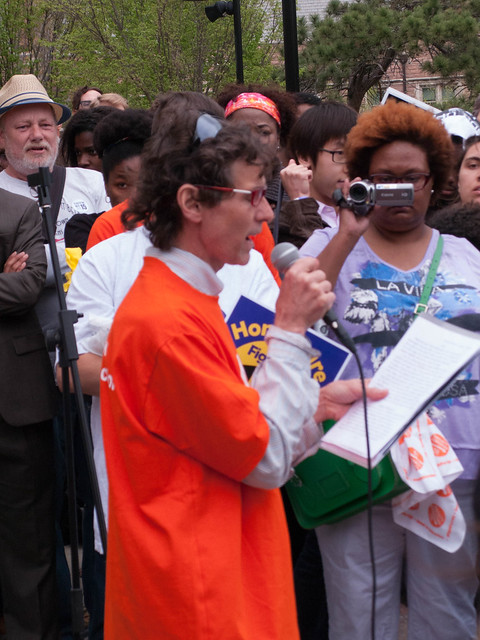
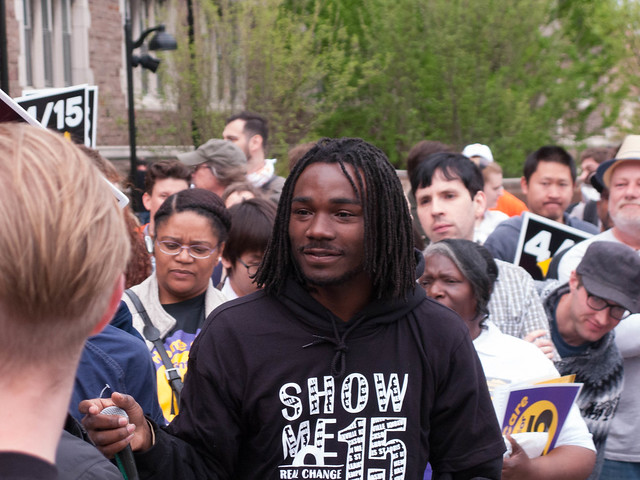
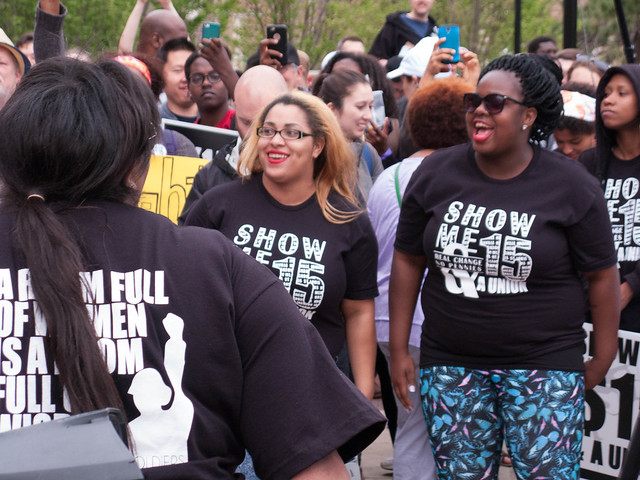
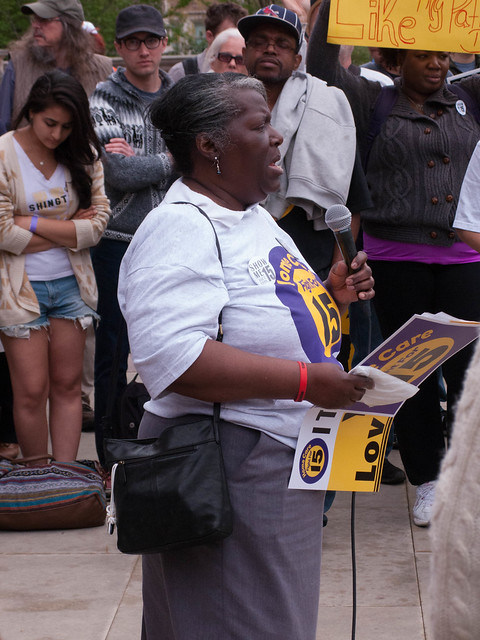
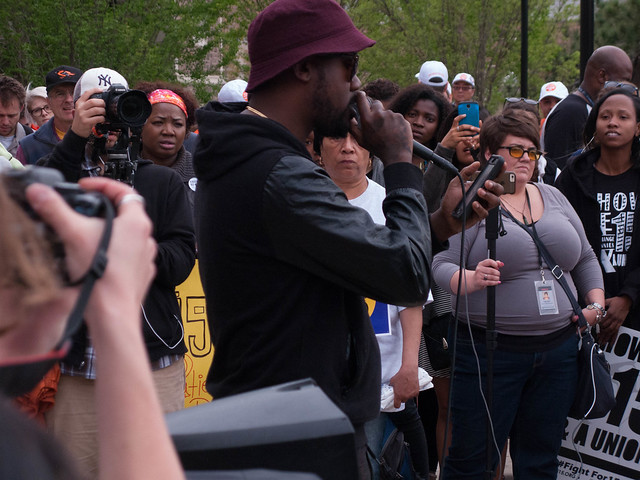
Two days ago I participated in my local ““fight for fifteen” (a union effort asking $15.00 an hour for various groups of hourly wage earners, and $15k per course for adjuncts who do most of the teaching in today’s colleges and universities). By all accounts the event must have been pretty effective around the world. Our event in St. Louis began in a variety of locations and culminated in a large rally at Washington University (Washu) followed by a march to the Delmar Loop that was joined by groups from Tennessee and Arkansas.

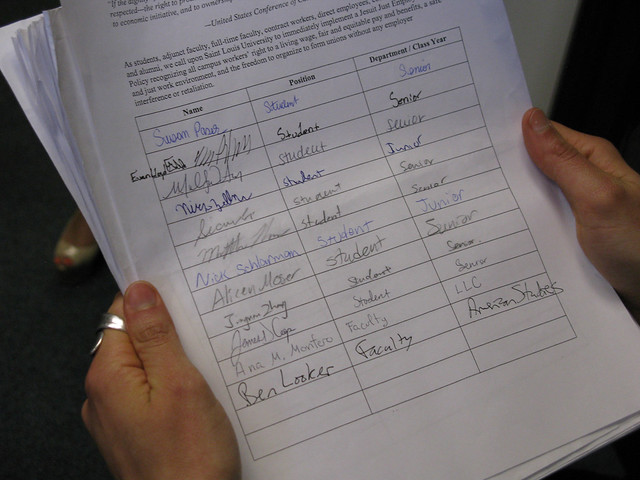
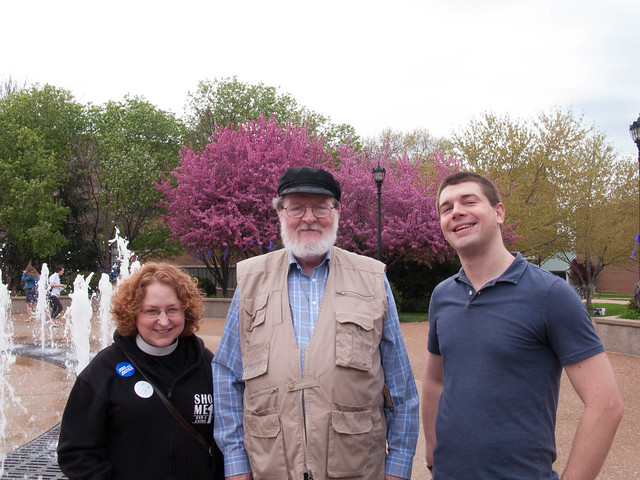
Here I am with Rev. Teresa Danieley, the Rector of my church, and Brendan Lambert, a co-parishioner, as we assembled around 2:00 at the Clock Tower at Saint Louis University (SLU) before walking to the president’s office to deliver a petition with over 600 signatures asking the university to recognize our union effort and allow organizing to go forward without interference.

IMG_1926.jpg

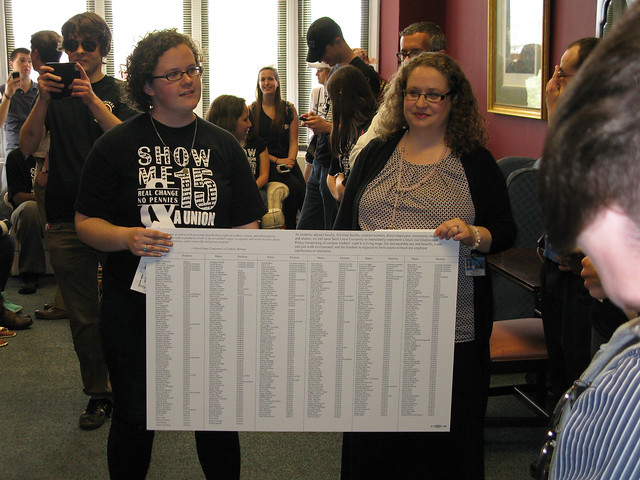
Here are some forty of us in an anteroom at the executive suite in Du Bourg Hall with a placard that showed 500 of the names affixed to the petition.

IMG_1939.jpg

And here’s a shot of the sheaf of pages containing all 601 signatures we delivered. Note how many on this page are students.

IMG_1940.jpg

My involvement with this movement goes back over a year to a meeting I attended at the Missouri History Museum, sponsored by the Service Employees International Union (SEIU), when I heard the first serious discussions with which I have had any personal contact about a nationwide effort to organize adjunct faculty in colleges and universities. That meeting and one other I attended, in Chicago last October, focused on organizing adjunct faculty in the Catholic colleges and universities. I’m going to write another blog post about moral and political issues at stake in this effort for higher education and particularly for Catholic higher education. Today I want do my best to display yesterday’s events and point with pride.

The effort to collect signatures at SLU contiues and is of course part of a larger effort that we hope will eventuate in the formation of an SEIU local at SLU. Parallel organizing efforts are underway at a number of St. Louis colleges and universities. Washu adjuncts have formed a union and are presently negotiating with the Washu administration over slaries, benefits and working conditions. Adjuncts at Webster University are about to vote whether to organize. The effort to hold a union election at Saint Louis Community College has presently been blocked by the administration in Jefferson City, but it is hoped that an election can be held this summer.

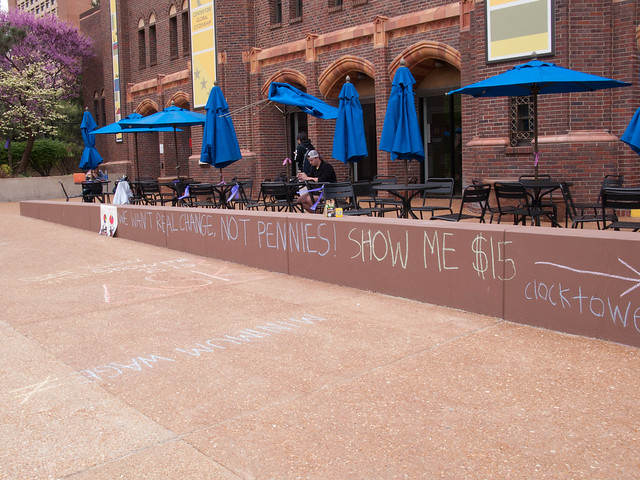
Here are some photos I took on the way from the clock tower to Du Bourg: A nicely chalked wall in front of the Center for Global Citizenship,

IMG_1929.jpg

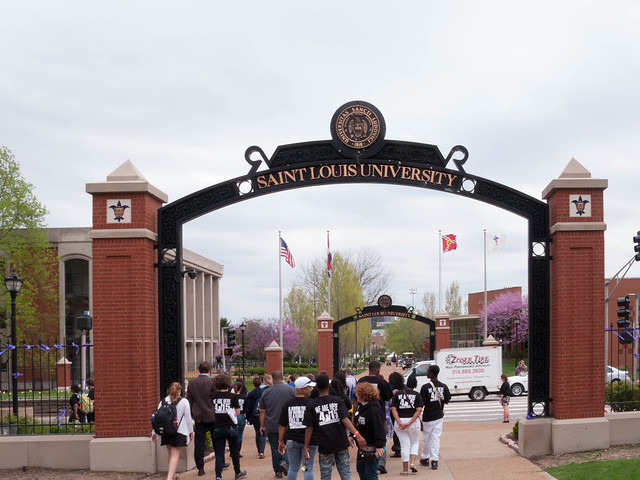
and some of us passing underneath the archway at the main Grand Bloulevard crossing just adjacent to Du Bourg.

IMG_1933.jpg

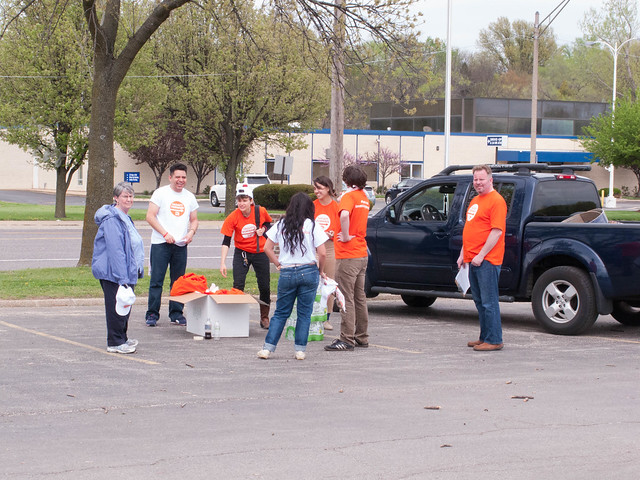
After we delivered the SLU petition our SLU group dispersed for various other activities and eventual transportation to Washu. Kathleen joined me after her class at about 3:00. We drove out to University City, and parked in a large grocery store parking lot, where we got T shirts, hats, and a ride to Brookings Hall at Washu. Here’s Kathleen at Seafood City with a small group of rally participants.

IMG_1947.jpg

And here she is again just as we arrived at Washu. The place looks pretty empty so far, but this is early.

IMG_1949.jpg

The Washu rally had been scheduled to begin at 4:15 (get it?), but we didn’t start on time because many groups (I suspect the groups from Tenessee and Arkansas among them) were caught in the late afternoon traffic snarl around Forest Park and arrived late. The schedule didn’t matter though, because the crowd at Washu was plenty big and made a beautiful noise (The Post-Dispatch estimates there were around 300 assembled as the rally culminated on the steps of Brookings Hall.

Here are a few photos I shot before the rally began.

Milling around:

IMG_1957.jpg

Solidarity:

IMG_1963.jpg

Kathleen with poster:

IMG_1970.jpg

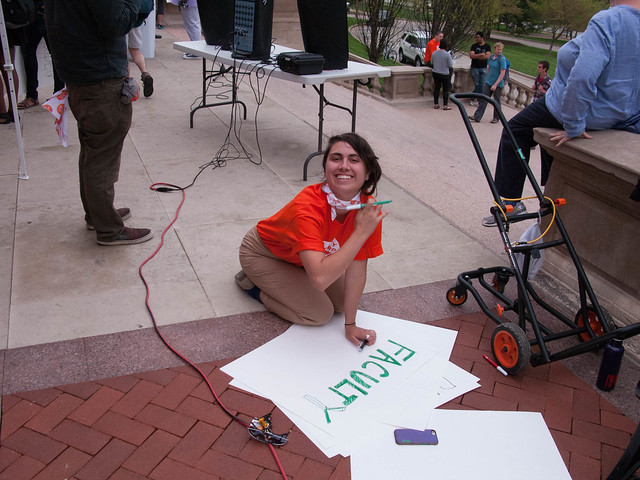
Making impromptu posters:

IMG_1975.jpg

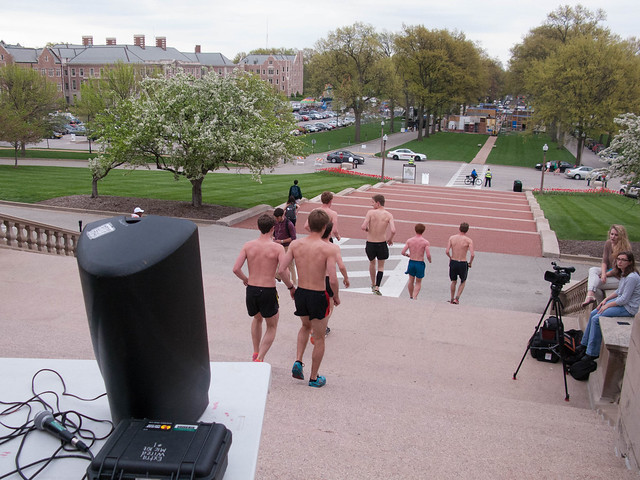
Some of Washu’s finest, coming through:

IMG_1980.jpg

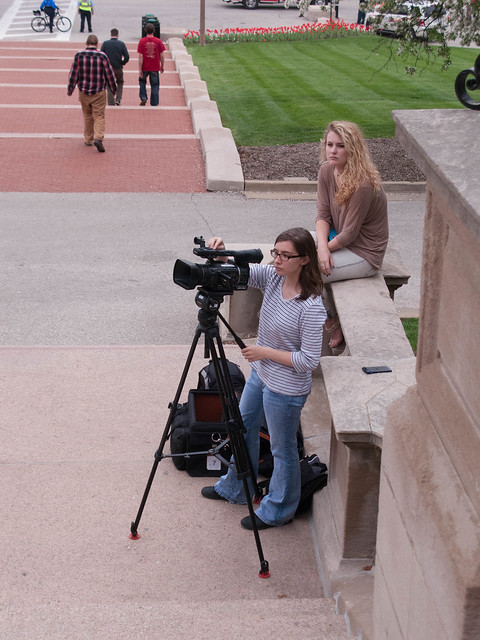
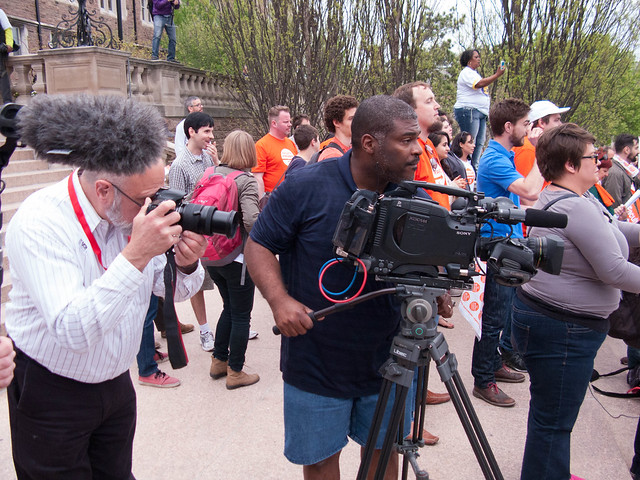
Media observed:

IMG_1981.jpg

IMG_2012.jpg

IMG_2010.jpg

IMG_2013.jpg

“What do we want? FIFTEEN! When do we want it? NOW!”

IMG_1987.jpg

After this things moved pretty fast as some large groups of folks arrived. This one was the most dramatic. It seemed they streamed all the way back to Forest Park, which would be in the far background of some of these photos if you could see through the trees.

IMG_1999.jpg

IMG_2000.jpg

IMG_2002.jpg

Here’s another group arriving. I’m at the top of the stairs, looking down.

IMG_2029.jpg

And here’s a shot of the thick of the crowd.

IMG_2035.jpg

There was cheerleading and speechifying. Here are a few of the performers.

IMG_2021.jpg

IMG_2027.jpg

IMG_2028.jpg

IMG_2036.jpg

IMG_2038.jpg

IMG_2040.jpg

IMG_2047.jpg

IMG_2049.jpg

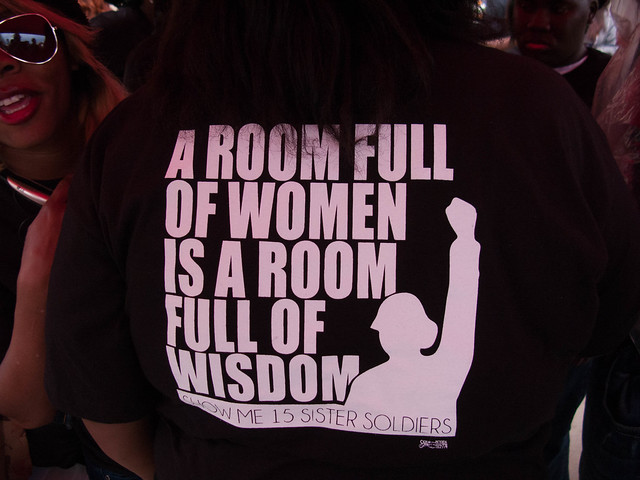
Here’s the day’s best T-shirt slogan.

IMG_2044.jpg

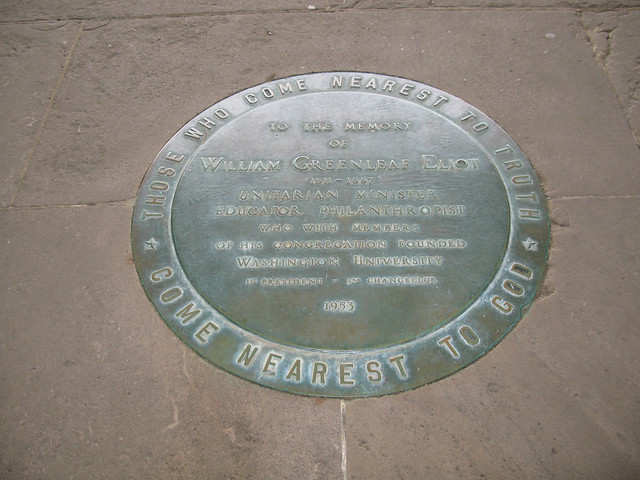
And at the end of it all, T. Eliot’s grandfather, the founder of Washu. The monument sits just under the arch that formed the background of the rally. I couldn’t resist ending with it.

IMG_2051.jpg

We left after the rally, tired and hungry. I hope somebody else got some photos of the do on the loop. More later about why I’m in this.

secure in our persons

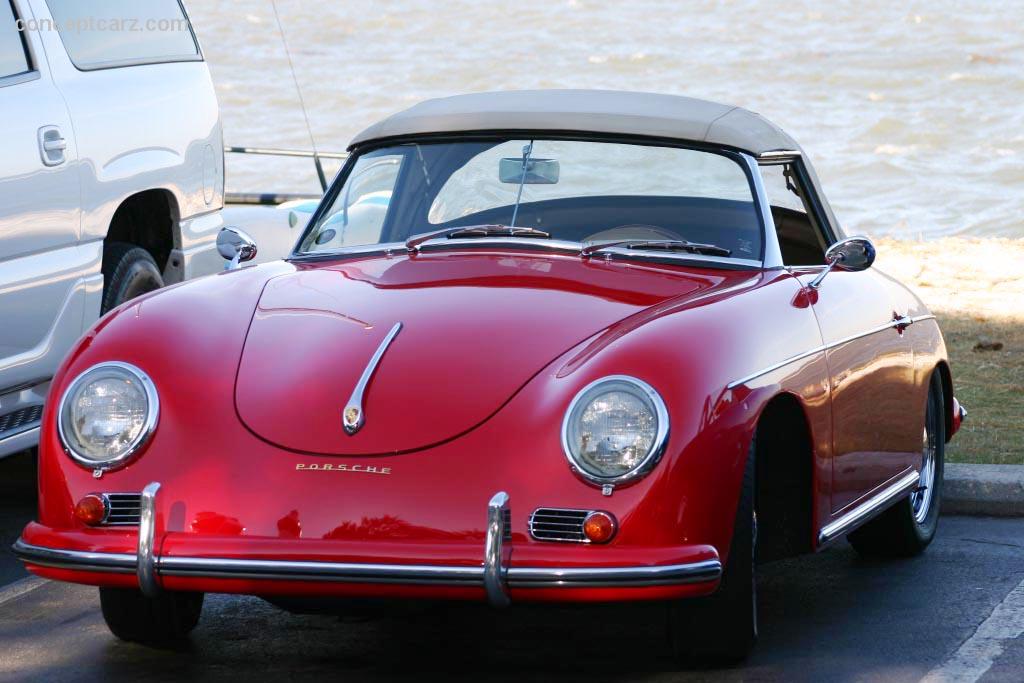
Between the years of 1969 and 1972 I had a brief love-hate relationship with a 1959 Porsche. The model on the right is from 1958 and somewhat cleaner than the car I owned, but in all other respects that’s my car. Also during those years I commuted back and forth four days a week from Durham, N. C., where I lived, to Fort Bragg, N. C., where I was attached to a branch of North Carolina State University.

My work was in the evenings. Usually I finished teaching at 9:30 and drove back to Durham after that. I didn’t drive the Porsche much because it wasn’t entirely dependable and I had visions of being stranded in the dark on the lonely farm road between Spring Lake and Lillington. But on one particular night, when circumstance had dictated that I drive the Porsche, I had an interesting encounter.

Somewhere on that dark stretch of road I mention, full of curves and declivities that could fill up with fog and make for chancy driving, especially in an old vehicle with a six-volt electrical system, I noticed that a car behind me kept moving up uncomfortably close to my rear bumper and then falling back. At some point I began to move over as far as I could to the right edge of the road (which had no shoulders) and blink my lights to invite the car to pass, but to no avail.

Finally I saw a flashing blue light and pulled off the road onto a grassy patch. After I showed the policeman my bona fides, I was asked what I was doing on the road at night. And though I had every right to be where I was and knew I had broken no law, I explained politely that I worked at NCSU Ft. Bragg and was on my way home to Durham after an evening of teaching my classes.

The policeman then told me that he had stopped me because I seemed to be driving erratically, weaving about on the road, and he had feared I might be drowsy. Both he and I knew that I had only been weaving about because his intrusive headlights had alarmed me, but I thanked him for the warning nevertheless. He returned my bona fides, reminding me to be careful, and allowed me to go on my way.

I had been profiled. I was driving a strange foreign car on a N. C. farm road at night where I didn’t belong. I don’t know what that young police officer thought he would find in my car, but he was surprised not to find it and a bit chagrined, I thought. These days I would likely have been ordered to get out of my car, perhaps required to submit to a search. That was then.

XXX

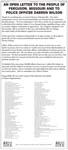
The dog days finally arrived in St. Louis last week as the streets of Ferguson cooled down. Sunday’s Post Dispatch carried a full page ad from the National Association of Police Organizations expressing support for Officer Darren Wilson and portraying police nationwide as suffering public servants intent upon the protection of citizens and grief stricken that “a life was cut short in this case.” It’s a well-crafted letter, but its claim of solidarity with the motto “To Serve and Protect” rings false to me in light of the spectacle we have witnessed in this city. To my mind the militarized and provocative police response to citizen outrage over the killing of Michael Brown is of a piece with the killing, itself; and both are cases which display the disturbing fact that citizen control of police has become a mere myth. Police are out of control, and the law protects them.

To be sure there were looters among the protesters. Shots were fired. Molotov cocktails were thrown. Some journalists abused their freedom. But most arrests were for procedural violations, mouthing off at police, stepping off a sidewalk, failure to move rapidly when ordered to do so by police. A few carefully crafted photo ops showing Captain Ron Johnson of the Missouri Highway patrol hugging protesters hardly weigh in the balance existentially, however much they may have done from a public relations standpoint. In spite of the change on the ground after Governor Nixon replaced local police with the Highway patrol, what we have seen in this city, and what we continued to see as protests continued, is far more correctly characterized by a statement from a Los Angeles police officer quoted in Daily Kos several days ago [emphasis added].

Regardless of what happened with Mike Brown, in the overwhelming majority of cases it is not the cops, but the people they stop, who can prevent detentions from turning into tragedies. […]

Even though it might sound harsh and impolitic, here is the bottom line: if you don’t want to get shot, tased, pepper-sprayed, struck with a baton or thrown to the ground, just do what I tell you. Don’t argue with me, don’t call me names, don’t tell me that I can’t stop you, don’t say I’m a racist pig, don’t threaten that you’ll sue me and take away my badge. Don’t scream at me that you pay my salary, and don’t even think of aggressively walking towards me. Most field stops are complete in minutes. How difficult is it to cooperate for that long?

Much has been written about the lack of transparency in official responses to the shooting of Michael Brown, but lack of transparency is hardly the issue when Ferguson police have seemed inclined to shield Oficer Wilson and to portray Michael Brown as a criminal. And in the final analysis whether Brown was armed, how many times he was shot, whether his hands were up, indeed all the aspects of this miscarriage of justice that “shock the conscience,” will carry little, if any, weight in law. For present law is so skewed in favor of police power as to make it well-nigh impossible to hold a police officer accouuntable for injuring or killing a citizen, no matter how egregious the officer’s conduct may have been.

The stern likelihood is that there will be no justice for Michael Brown. The probability is that Officer Wilson, who (as the Post Dispatch pointed out in an early editorial) is being given all the benefit of the due process his actions denied Michael Brown, will be found to have acted within established guidelines for police conduct. What actually happened in the Brown/Wilson confrontation may remain in dispute. And even if clear and irrefutable evidence emerges that Wilson shot Brown after Brown had made a gesture of surrender, a court would only have to find that Wilson had a “reasonable perception of being threatened with bodily harm” in order to exonerate him.

Even if the officer made a mistake in shooting, that will not be enough to support criminal charges so long as his mistake was reasonable — a determination in which the officer will receive some benefit of the doubt because of the split-second judgments that he had to make.

Or again:

Experts on police shootings say the investigation, including the grand jury deliberations, will focus on whether Wilson had a reasonable perception of being threatened with bodily harm. The experts say it does not matter how many bullets Wilson fired. Police are trained to shoot at the center of mass and stop the threat.

The Supreme Court established the reasonable expectation standard in the 1989 Graham v. Connor decision, denying redress under the fourteenth Amendment to a diabetic victim of police brutality who had been assaulted in a situation where he had committed no crime, had sustained multiple injuries including a broken foot, and then had been unceremoniously dumped in his front yard by police when they could find no crime to charge him with. The court also narrowed the fourth amendment protection in this case requiring that the defendant prove that police had injured him “maliciously and sadistically for the very purpose of causing harm,” in effect requiring proof of premeditation, a standard so high as to render citizen redress almost impossible. The consequence of this deplorable decision has been to give police carte blanche to abuse citizens. And of course the most egregious abuse this decision has fostered has fallen upon members of socially marginalized groups, racial and ethnic minorities, the mentally ill, the elderly.

Nevertheless it appears that there is popular support for the standard. St Louis Police shot and killed Kajieme Powell a few days ago, an apparently mentally ill man who behaved erratically, brandished a knife, and called out to police to kill him. Acording to a witness, “The man was agitated and animated. He said, ‘Kill me!’ They didn’t have any alternative.” Nobody seems to be questioning that assessment. Police killed the man, declared the incident to be suicide by cop, and that was that. The Supreme Court’s mapulation of law regarding the bill of rights over the past half century or more now allows police to kill citizens even when police behavior “shocks the conscience.” And with a handy citizen witness whose conscience was not shocked by the Powell shooting, everything seems perfectly copacetic. (See James Boyd White, Justice as Translation, 103ff., re “shocks the conscience”).

Senator Claire McKaskill intends to conduct hearings into the police militarization that was on display in Ferguson over the past few weeks. We should all support those hearings. But unless Congress and the courts act to restrict police power to conduct searches and seizures, there’s very little hope of changing the culture of policing or the relationship between police and citizens. Here’s the fourth amendment.

The right of the people to be secure in their persons, houses, papers, and effects, against unreasonable searches and seizures, shall not be violated, and no warrants shall issue, but upon probable cause, supported by oath or affirmation, and particularly describing the place to be searched, and the persons or things to be seized.

Long before the appearance of privacy issues that inform most popular concern over the fourth amendment these days, citizens of this country were no longer secure in our persons. And after all is said and done about the many economic, societal, and historical injustices that may have combined to produce the spectacle we have witnessed in Ferguson, Missouri over the past several weeks, it is the loss of the right to be secure in our persons that ought to disturb us the most.