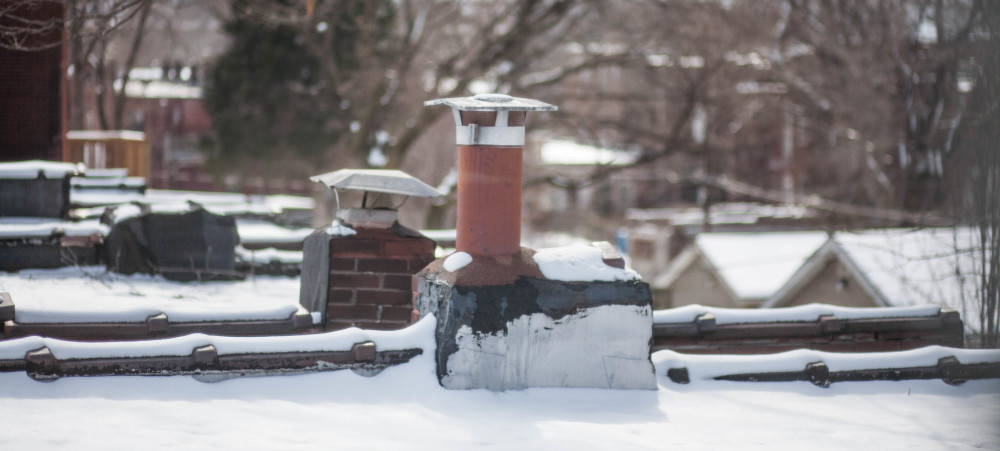
NOTE: I’ve given some thought to posting over Christmas and into the new year and decided not to do so but rather to republish this piece from November 17, 2014 and let it sit at the head of the blog for a while. The context in which I wrote it is clear in the text, I think. If you’re looking for my advent pieces for this year you’ll find them listed in the sidebar.
Oh boys, take me back,
I want to ride in Geronimo’s Cadillac!
These are night thoughts. Looking over the past year I see that I haven’t written much. I could perhaps defend myself by pointing out that I was seriously ill last summer. But besides being a cop-out that doesn’t account for time outside the six weeks or so of my illness and recovery. I’m now thinking the real reason for my relative silence is that I’m more and more persuaded that my country is in a sort of semi-fascist historical trough, the kind we have experienced from time to time in the past, when the worst of us as a people and the worst of our social and political potential are in charge. I’ll not dilate upon this much. The mere fact that here in Saint Louis we are waiting for the Ferguson grand jury verdict like armies on the eve of a great battle says multitudes to me, with the governor provocatively having already called up the National Guard and declared a 30-day state of emergency. I plan to do what I can to help with the sanctuary effort of my church in the event of widespread protest. I’ve already made clear what I think about the murder of Michael Brown; but until the law of the land changes there will be more Michael Browns, and their deaths will continue the procession of wrongs without remedy that our present governing classes seem not only willing but also sometimes eager to inflict upon the rest of us.
Why we tolerate this deplorable state of affairs I’m not certain. But at the end of a long and disappointing summer, I’m proposing to myself as a tentative analytic that it is less a function of our divisions as a people than a sign that we have lost heart. The liberal state in our time has become bogged down in bureaucratic confusion and thralldom to the corporate interests that have been its chief financial underwriters in recent years. It has also fallen victim to a kind of paranoia of which our globally ambitious surveillance effort is one arm and our local epidemic of publicly supported police violence is another. These two phenomena have grown vigorous while and because nobody is steering the ship of state.
And in the absence of governance we have experienced the growth of a spate of power centers, industries if you will, that have developed huge economic appetites and require steady streams of human fuel while producing equally steady streams of human waste. Witness the growth of higher education which now discharges the majority of its clients with burdens of debt that will consign them to the human waste pile from the beginning of their post-college lives (I don’t say their careers because most of these students will not have careers in the way that their parents had them). Or witness the growth of the prison industrial complex, our chief contemporary human landfill.
I think the real significance of the economic crash of 2008 may turn out to be that it was the end of our culture’s ability to meet citizen demand for the means to the good life, or the introduction of permanent scarcity and its accompanying social consequences. We mounted no serious effort to overcome or mitigate the consequences of the 2008 crisis as we did in the 1930s during the great depression. We now experience the same social ills that afflicted us during that terrible period, but we have made no corresponding efforts to cure them. In the absence of governance our chief response to the deplorable state of our republic is helplessness. We have become expert at turning away from cruelty. Some of us wring our hands and cast about for partial and/or inadequate remedies for the suffering we see around us, and others (many of them turning handsome profits from the misery of their fellow creatures) smile, talk about trickle-down economics, and support laws against feeding the homeless.
Several times now I’ve said that I want to write something about why I love my country, but I’ve almost come to the conclusion that one cannot love a country such as ours. One experiences one’s country through its history and one’s small participation in it. That is sometimes very difficult to love. An honest modern person will acknowledge the fear and disgust that political engagement sometimes generates. A more serious person may suspect that patriotism is grounded in a need to escape from that fear and disgust, as Leguin’s Genly Ai puts it, or in the terror of history, to steal from Eliade. More to the point, perhaps, my desire to express love of my country may be a desire of the boy I once was, and still am deep down somewhere. That boy would have written a peroration that quoted Walt Whitman and Robert Frost—God love him. He could love his country for what he thought it might become and bracket his knowledge of the occupied place his country actually was.
But when my now near octogenarian mind plays over remembered experiences in which I have felt the most intense pleadings of love I naïvely associated with my country, I find that these are grounded in particular historical moments and in awareness of being, or having been, imbedded in the complex ecologies of particular places. I have a great love for the plains of West Texas where I did most of my growing up; for the high deserts of northern New Mexico where I was born. I went to school in these places and was loved and fostered by teachers who knew of my father’s death in the war, as I became that boy who loved Frost and Whitman but perhaps lacked some toughness they may have had. For in those environs more than the deer and the antelope played: Geronimo, Cochise, Kit Carson, Charles Goodnight, Sul Ross, William Bonney, Cynthia Ann and Quannah Parker, Lew Wallace, Padre Martinez and Bishop Lamy, my own mother and father, and many another had their day, came and went, loved and hated and sometimes killed one another and one another’s kin.
I love and will always love the memory of the serendipitous regions of North Carolina where I lived for fifteen years. There the speech of the people lounges on a great porch crowded with wisteria, its branches sometimes thicker than my arm. There music rises up out of the pine barrens and tobacco fields like the flash of a bug zapper in the night. There Moses still shouts, “Let my people go!” And I now have arrived with a new love in my heart on the banks of this continent’s great river, for the old brick and mortar city where I now reside, named for a not-so-good French king, where great barges push their cargoes up and down river and the progeny of immigrants past and present from Somalia to Bosnia to Italy and Poland to the Sudan to Thailand and Vietnam to Mississippi and Alabama (and Texas) contend for space amongst gangways, bluffs, and caves, where the great silent water flows by in the night, laden now with ice floes to which morning may bring eagles searching for fish.
For many years I sought to love my country thinking the betrayals I experienced, that all lovers of justice have experienced in the past sixty plus years, were aberrations that would in the long run be put right. But guess what, those betrayals are the norm. For all the high-sounding stuff in our founding documents and hymns to our exceptionalism, we Americans are just like everybody else. We rob and rape and steal and kill and cheat our friends, and we hope to get away with it, just as we think we have escaped our country’s genocidal past. Indeed we have become skilled at creating complex abstract denials of that past that proclaim our righteousness in getting away with it (at this moment in our history we are doing a lot of that). For a while I thought I couldn’t love my country because Country (capital C) is another abstraction, but that’s only partly true. I can love abstractions all the way from the third law of thermodynamics to the music of Bach. But there are abstractions and abstractions, depending on the way the knife cuts. Maybe I can love my country’s history but not the hypocrisy of it, just as I love my friends and my kin and their places and mine and the memories they generated, but reject much of our foolishness, like the blackface act that friends and I once performed on my high-school stage. Or maybe I both love and need the hypocrisy too. Or maybe love and despising aren’t that far apart. Clearly I both love and despise memories I, myself, have generated; and perhaps that’s part of it too.
I mention Eliade above. Eliade’s distinction between linear and cyclic time rests on the difference between the historical and the cosmic. One’s engagement in the life of one’s country plunges one into history, into the political, into the constant ebb and flow and strife of events, essentially meaningless in itself, but perhaps touched by love. If in the final analysis, love of one’s country is grounded in the concreteness of places and people and events rather than in their ideological trappings, then one can also love people with whom one disagrees and is sometimes angry, perhaps even people whose ideas one despises, as one loves oneself. These possess materiality. They have existential force and stand out from the stream of experience. There is no taint in loving them. They are real and whole, and one’s love is a response to their reality and wholeness. Love urges us to find meaning in things and sometimes cures anger and the other historical passions. This is what Faulkner meant when he described Old Ben, the bear, as taintless and incorruptible. It requires a cosmic perspective too, to care about land, to struggle against the ruination of land and people and animals. Enmeshed in history there is only the struggle that is today. It is from a cosmic perspective that beauty and the possibility of a deeper love emerge, even love for the terrible darkness of the worst we do, and that is as it must be. There is no place else for us to go.
I have seen these ways of God: I know of no reason
For fire and change and torture and the old returnings.
He being sufficient might be still. I think they admit no reason; they are the ways of my love.
Unmeasured power, incredible passion, enormous craft: no thought apparent but burns darkly
Smothered with its own smoke in the human brain-vault: . . .
If one can love speech and voices and music, abstracted from their agents or not, perhaps one can also love history that one deplores. Geronimo lies buried at Fort Sill. He, and the folk he killed, and the folk who made him a prisoner and a caricature in his own place, are all long dead. In his grave and in the memories he generated, Geronimo is timeless. If there is a saving grace in humanity, if there is any real human hope, it is not in prophetic politics as Whitman would have had it. It is in place, in land and water, in the topsoil that Wendell Berry reveres, in song, in the twang of the banjo and the yelp of the coyote, and in the names of things and people, in our clumsy and beautiful bodies, in the gristle and boniness of us, and in our stubborn persistence. Finally perhaps, it is in the peace that may come to us as we contemplate these things at the end of a long day when greed and the other savage hungers have receded. At such times without sleep as new snow stirs the darkness outside one’s window one can, almost surprisingly, find oneself native to the places one has lived, to one’s times and ways and kinships. In and amongst these things we live and move and have our being. And in and amongst them too, we lie down at last.


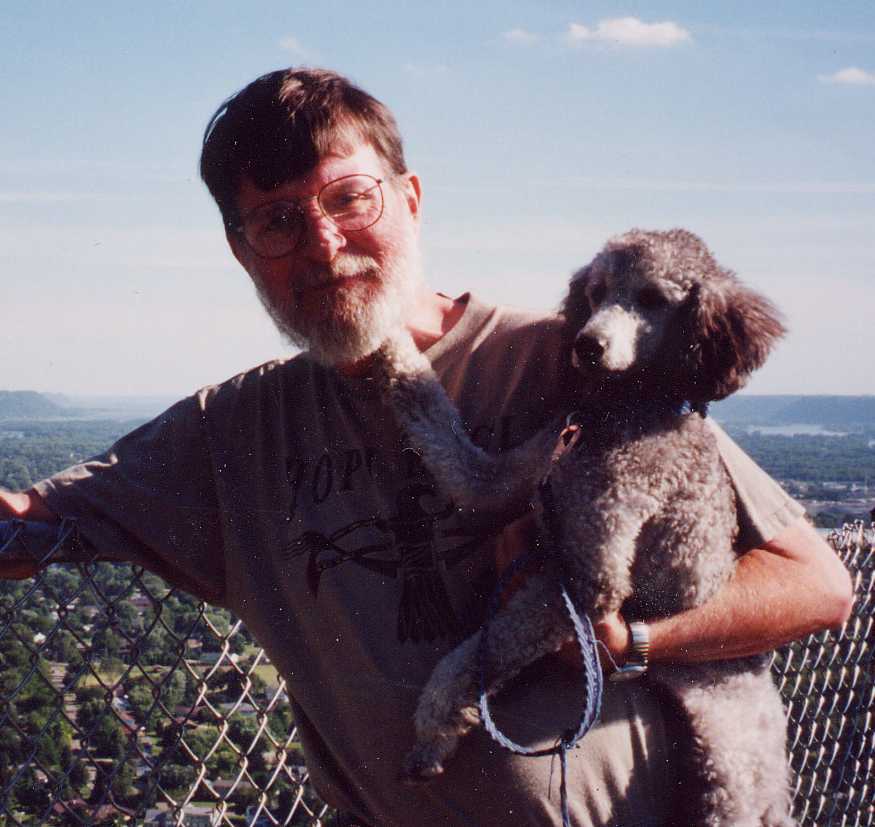
 Kathleen called me from a conference in Washington D. C. in late May that year to tell me that she had found a new dog. She described him to me and asked, “Can I keep him?” The question was pro forma, and I knew it. We were pretty sure of one another then. So I answered her question with a question. “What’s his name?” I asked. “Murphy,” she replied. He has been my constant companion since we all moved in together in late August, 2002. Here’s one of my favorite pictures of him perched on the bed in our bedroom.