remembering a great singer

Jon Vickers is dead. A Google search for his name now turns up a number of obituaries. In the last century, so replete with great singers, Vickers stood out as monumental. His stage presence and vocal strength were widely celebrated and sometimes debunked, as were his intransigence, hot temper, and moral rigidity. But he was a great singer, a dramatic tenor who could sing a lyric line like no other if he chose to do so. His career encompassed the most demanding roles for dramatic tenor (except Siegfried, which tends to kill those who attempt it) and a number of big lyric roles as well. In all he sang with seriousness, to be sure, but also with that quality William Hazlitt famously called Gusto, “power or passion defining any object.” Hazlitt found this quality primarily in the works of Titian, Michaelangelo, Reubens, and in Greek sculpture.

Vickers’ held himself to a standard that required him to become fluent in German and Italian. He said in a late interview that his French was only passable. But he didn’t consult his vocal coaches, for whom he had high praise, in order to study the roles he performed linguistically. For that study he consulted language professors who could teach him idiom and nuance. He wanted to understand his operatic and oratorio roles comprehensively, like a method actor. Indeed he was a singing actor in an age that saw the revival of bel canto. Some did not think his voice beautiful. I did.

And I sang with him once, in 1958 in the Cherubini Medea in which he played opposite Maria Callas in the second season of what was then the Dallas Civic Opera. A few years ago I acquired the recording of that performance, released in 2000 after years of dormancy somewhere. I hadn’t known it existed until I discovered it quite by accident looking for something else. Singing as a chorister with such people—I had recently turned twenty-one at the time—was a heady experience for a very young man from West Texas, made more memorable by other aspects of the ensemble.

Our stage director was Alexis Minotis, of the Greek National Theatre, whose 1990 New York Times obituary credits with speaking “a resonant English.” We in Dallas experienced that resonance, but were very seldom able to understand Minotis’ directions—they were Greek to us. Fortunately, Franco Zeffirelli, on hand to direct the Traviata we also sang that year with Callas, was able to translate. I have sometimes wondered if Zeffirelli collected a fee for all his work on the Medea, for which, of course, he had no billing. Minotis would instruct us, and we would do our best to translate those directions into stage behavior with the result that Minotis would scream I don’t know what epithets at us and then hurriedly consult Zeffirelli in Greek, who would tell us what to do so that we could do it.

Rudolph Bing had fired Callas at the Metropolitan Opera just days before she was to perform in Dallas that year as well. We wondered if she would stiff us as she had Bing, but she came to Dallas, more or less resurrected her career, and acquired a devoted biographer in John Ardoin, who made his own career writing about her afterwards. Reviews of the Callas 1958/59 Medea focus on her—there were four performances, I believe, in different cities. But the Dallas performance may be the most renowned of her many performances of the role in and out of opera. And the young Vickers held his own as Giasone, bringing “his huge, glorious voice to this rather one-dimensional role,” as one reviewer put it. I remembered him as a big bluff man who liked to joke around about his ranching life until a Met broadcast of Das Rheingold in the late 1960s changed my perception of him forever.

Of all the Vickers postings I have seen around in the last day or two, this one is to me the most moving. I am grateful to my son, Julian, for it. Here, Vickers sings the great Aria “Total Eclipse,” from Handel’s Samson. The source is Milton’s closet drama, Samson Agonistes. Newburgh Hamilton’s libretto recalls the Poet’s language, often quoting directly. Here’s the specific Miltonic text that stands behind the aria, though Hamilton and Handel give most of the Poet’s theology of light to other characters and to the chorus:

O dark, dark, dark, amid the blaze of noon,
Irrecoverably dark, total Eclipse
Without all hope of day!
O first created Beam, and thou great Word,
Let there be light, and light was over all;
Why am I thus bereav’d thy prime decree?

In his later career Vickers was known almost as much for the role of Handel’s Samson as he was known for Peter Grimes. I think Vickers understood the philosophical chiaroscuro of the Hamilton libretto. I have no idea whether he had read Milton, though it would fit the profile of a singer who consulted professors about turns of language if he had. I think I hear the Poet’s voice in Vickers’ reading of this aria, ‘finding no dawn.’ And I can characterize Vickers’ performance no better than to quote my son: “for me this somehow captures the enormous scale of his artistry in a way that many things don’t.” It’s the difference between Samson and Pagliacci, between tragedy and melodrama.
naming the animals

A Facebook friend has recently inspired me by quoting John Muir—“The mountains are calling, and I must go”—and I’ve been reading Wendell Berry this spring. It takes a poet to call up the land, whether wilderness or human land, with the understanding that land contains us. It takes a great poet, perhaps, to call up the great land or the great water we have never seen or touched with a similar understanding. “Much have I traveled,”wrote such a great poet of imagined encounters with oceans he had never seen, would never see, from the wine-dark sea of Homer to the great Pacific as it unfolded itself to the first European, Cortez, he thought incorrectly.

Summer is coming. As I mow and plant and plan, as I sit on my back porch at dusk and watch the fireflies begin their seasonal dance, I think it isn’t just land that contains us. After a year underground the common firefly makes a brief pilgrimage into the outer air, only to flash briefly, mate, and die; though the mating ensures that the cycle goes on, female fireflies being less than parthenogenetic creatures. And if I raise my eyes to those other beacons; the great ones, Venus and Jupiter—I’ve been searching for Saturn—that present themselves in the evening sky above the chimneys and rooftops that make up my back porch horizon, when I think of the distances that separate them from us who perceive their light after millennia, I think a great mystery contains us, and I understand the ancient psalmist’s need to call it Lord.

These things beyond us are so familiar as to have become clichés, breeding a contempt (as the saying goes) that can blind one to how remarkable they are. None of us was present at the making of any one of them, as El Shaddai reminded his servant, Job. We inhabit a place that is also theirs. We dwell alongside them. And my summer mood as it comes on tells me it is far better to hold these things in reverence, these things we cannot, did not, make: great land and water, the forest primeval that opens Longfellow’s poem, the heavens, the topsoil at our feet, our fellow creatures that inhabit various places alongside us, than to pursue the ruinous course of vandalism we call industry upon which we westerners have been embarked for the last four centuries or so. Industry has produced its own magnificence, but a survey of the world’s great cities, as they presently realistically are, does not engender much optimism as to the sustainability of present-day industrial logic. From Bangkok to Shanghai to Chernobyl to Detroit to the ruin of New Orleans’ wetlands and the Gulf of Mexico, we humans have left a trail of the waste of our passage that would be tragic if we did not arrogantly continue to pursue the same goals and strategies that have produced waste and destruction on such a scale in the first place.

But this summer of all summers time seems to be turning a corner for me. There’s a freshness in the air sometimes I can’t account for. Now and again I’m surprised by an impulse to be kind to a stranger. We went to the zoo last weekend, and the crowds hardly bothered me at all. We had gone primarily to see St. Louis’s new Polar Bear. I worried he might be too hot, but he had plenty of water to get into to cool off. I accept that zoos are problematic, but they are so familiar to me for so many years that going to the zoo seems normal enough, especially on a beautiful day with an explosion of sunshine and temperatures in the eighties. Though I sometimes think humankind is on the verge of calamity, I could find no presentiment of such a thing in my weekend thoughts, enjoying an afternoon in the park with several thousand of my fellow creatures, human and not. As we threaded our way across the big bridge that traverses the zoo’s central pond we watched pelicans and flamingos, swans and geese, a family of ducks with the little ones swimming after their mother. There we were, in the middle of a space created by capital and industry—everything we saw was named for some benefactor, from the benches and water fountains to the large program areas—and all of it a museum of a kind, built to contain not artifacts but specimens, semblances (some of them living) that put me in mind of the great worth of the world.

To walk in such a place with a cynical detachment seems wrong, no matter the morality of zoos. I thought of some lines from Edna St. Vincent Millay:

The world stands out on either side
No wider than the heart is wide;
Above the world is stretched the sky,—
No higher than the soul is high. . . .

But I think there is no innocence to which we might return, no illo tempore in which we might dwell as free animals amongst the unnamed others. The story of Adam naming the animals, like so many of the stories in Genesis, suggests that the rift in nature is aboriginal. We, the humans, stand one side of it, and the rest stands over against us. But what if it doesn’t? What if the rift is merely a trick of the light, so to speak, not so much a creation of human language as a condition of its use. Prometheus brought fire, but fire burns and cares not a whit who is scorched. It’s up to us humans to care. It’s up to us humans to take up the world in our arms, the world that includes ourselves. Wendell Berry’s critique, to which I mostly subscribe, is teaching me a way of thinking about this taking up.

Central to Berry’s conception of agriculture, which he distinguishes from agribusiness, is that agricultural husbandry (if I can use the old-fashioned expression Berry uses) is always local, always focuses on a particular place, its character, its qualities and capabilities, its particular weather, topography, and of course its history. Even wilderness as we think of it, has a history. There are now no truly wild places left on our planet, save in the great oceanic depths perhaps. I think it is important for us to continue to preserve what we call wilderness, albeit our habit of valuing wilderness areas as recreational places is now beginning to undermine them, with hotels, casinos, and condominiums threatening to overwhelm the Grand Canyon, to name one instance. But the great planetary need, as Berry argues forcefully, is for an adequate ethics in regard to working land. I think we Americans have had quite enough of the frontier mentality that regards land and water as resources to be used up before we move on to the next prairie, the next river, the next mountain, to be destroyed in the service of commerce.

And I think we postmodern humans might well ask ourselves what may be the end point of our extractive industrial logic. What will be the value of the money we have heaped in banks when the real wealth of the planet is gone. Having asked that question, I think we might collectively turn to the places where we live and find that we are native to them. When I lived in the south I thought nostalgically about place as a category of experience, the sense of place as a thing mostly lost; but I am learning from Berry to think that the sense of place is a function of attention and care. Most of us are now native to places that are not capable of the self sufficiency Berry envisions for the ideal family farm. But that’s a myth, even for Berry, or a transcendent archetype. What we could do, as citizens of the mixed places in which we now dwell, is to study the conditions that might enable their renewed flourishing. That flourishing would, for most of us, require the continued importation of many goods and concomitant reliance on services obtained from afar. But we might wish to study conditions required for the preservation and health of the local institutions on which we continue to rely to heal the sick, to educate our children, to put roofs over our heads and food on our tables, to get us from one place to another, to manage and store the funds required by our local systems of exchange, to preserve public order, in general the institutions that support the persons who do the myriad of local jobs that are necessary to the integrity of the local, civilized places in which dwell.

As I continue to think through the things I am learning from Berry, I’ll likely have more to say about these and other matters of local concern, more specific things. But for now, my summer is starting well. I can only wish a similar good fortune to all who read these pages.

fight for fifteen, part two

In my last post I described my participation in last month’s Adjunct Action rally in Saint Louis. Adjunct Action is a project of the Service Employees International Union (SEIU). I’ve since participated in two meetings between adjuncts and upper administration on the Saint Louis University (SLU) campus and learned with some considerable sadness that the effort to organize adjuncts at Webster University across town has failed for the present.

I am an adjunct, though not a typical one. I teach only one course, a senior seminar. As a retiree I have benefits such as health insurance, and I do not need to make my living as an adjunct. I am what is termed a volunteer professional in the current iteration of the Jesuit Just Employment Policy, which we adjuncts at Saint Louis University are asking our administration to adopt. But I have met many young adjuncts since I first became involved in this movement who are making their living as adjuncts, teaching (some of them) upwards of eighteen classes a year at several universities and colleges in order to make ends meet in their busy lives, serving as part of the pool of just-in-time casual labor on which most universities rely to do most teaching of basic courses, and sometimes more, these days.

I have found these young people to be bright, energetic, competent, and savvy. It is not their fault that their academic careers did not open with tenure-track jobs upon their graduation with terminal degrees. It is a mournful fact that the majority of graduates of today’s graduate schools find that their academic careers end with the acquisition of terminal degrees. Marc Bousquet has documented the phenomenon exhaustively in his 2008 book, How the University Works. This result is produced by an insidious system that protects the privilege of “professional” faculty, who don’t have to teach much (which is just as well since many of them find teaching distasteful) and the sometimes redundant graduate programs that employ them as specialists, and of the now vastly inflated administrator class in colleges and universities.

The relegation of responsibility for core mission to a cheap and disposable cadre of casual employees benefits institutional bottom lines as well, which benefit leaves trustees and legislative overseers free to pursue more important concerns such as athletics, property, and alumni relations. In short, today’s university system is designed to serve the interests of everyone but students, their parents, who often pay exorbitant amounts to send their children to colleges and universities whose faculties and administrations hold them in contempt, and the casual faculty itself.

If you think this is extreme, take a look at at a piece in yesterday’s Huffington Post, in which Keith M. Parsons details his message to a group of college freshmen. My Western Civ professor years ago ended the year by telling us ignoramuses that he had “enjoyed” casting his pearls before us swine. This is about the level of Professor Parsons’ discourse. Professor Parsons claims that his students are adults and therefore need only to be led to the fountain of learning (a rhetorical confusion if his audience is a student audience—to whom is he preaching?). Why not treat his students as adults and speak to them as adults. Why the condescension, the posturing, the self-aggrandizement?

I am your professor, not your teacher. There is a difference. Up to now your instruction has been in the hands of teachers, and a teacher’s job is to make sure that you learn. Teachers are evaluated on the basis of learning outcomes, generally as measured by standardized tests. If you don’t learn, then your teacher is blamed. However, things are very different for a university professor. It is no part of my job to make you learn. At university, learning is your job — and yours alone.

To be clear, I am seriously opposed to high-stakes testing and its consequences, particularly the sort of teaching to the test that is becoming standard in schools. But arrogance is arrogance—Professor Parsons is a beautiful illustration of the fact. And begging his pardon, learning is a shared job, in university as in school. To assume the mantle of professor is to assume a huge responsibility. Professor Parsons, rather than accepting that responsibility and taking it seriously, seems intent only upon asserting his superiority to the great unwashed. But Professor Parsons is not an anomaly. He represents the norm, or one aspect of it. He represents the regular part of the professoriate, tenured (or tenurable), privileged in the sense of being allowed relative autonomy to practice his craft (which somehow doesn’t exactly include teaching), and relatively well paid.

But here is how the casual faculty lives and works. Their wages are kept low; the academic job market is a buyer’s market after all, and individual adjuncts have no power to negotiate better wages. (The norm for adjunct compensation at SLU is $3000 per course.) Adjunct employment is restricted at part-time, which restriction avoids the necessity for paying benefits and the possibility of de-facto tenure in the case of adjuncts employed year in and year out. Many universities are now employing their own PhD graduates as adjuncts for a year or two, sometimes more. This is especially true for universities who created PhD programs during the 1970s when post World War II expansion seemed to promise endless economic growth on campus. Many of these mediocre graduate programs no longer have a market justification, but of course their faculties have to be kept busy.

A normal adjunct is employed to teach, and the mere fact that now more than half of the teaching in colleges and universities is done by low-paid adjuncts indicates more than any other fact or set of facts just how seriously colleges and universities take their teaching responsibility. The contempt with which university trustees, administrators, and professional faculties view the basic teaching function is, I believe, primarily to be measured by the fact that what is becoming a majority of the university teaching faculty is being forced into academic peonage. Adjuncts are typically disdained by regular faculty. They do not attend faculty meetings as a rule. They have no vote on matters of policy that concern them. And the best that administrators seem to be able to come up with as an improvement to this system of peonage is to continue it in one form or another, perhaps offering adjuncts yearly contracts with some benefits and a better wage but continuing to enforce their serfdom.

Higher education in America is under grave stress. On the one hand there is much to criticize in the behavior of our major universities and elite colleges. And on the other, every few weeks now we read of wantonly destructive policy changes aimed at these treasured institutions by venal trustees and politicians out to score points with Americans who are presumed to have no affinity for learning or to disestablish academic institutions in the interest of right-wing ideology, junk science, or no science at all. But a more important problem may be that colleges and universities expanded too far too fast after World War II and produced a system that would inevitably have proved unsustainable at the end of the baby-boomer generation. Professor Parsons and others like him for whom the professoriate is an entitlement rather than a responsibility are protected from market forces by the scores of adjuncts who have neither status nor tenure nor job security but do the work of generalists in today’s system of higher education.

Adjuncts are organizing all over the country now, and are winning concessions from university administrations. This is important, I believe, because I am persuaded that higher education in America is in decline and the competition to control the decline is serious and fierce. I am further persuaded that adjuncts are the voiceless in today’s scheme of higher education. I see SEIU Adjunct Action as potentially giving adjuncts a voice, potentially a place at the negotiating table as we as a people attempt to manage the dislocation and human destructiveness of a declining system.

—and that is why I have joined up.

fight for fifteen

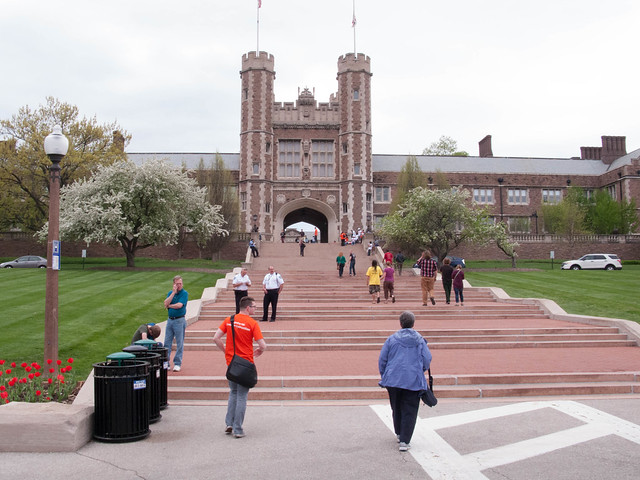
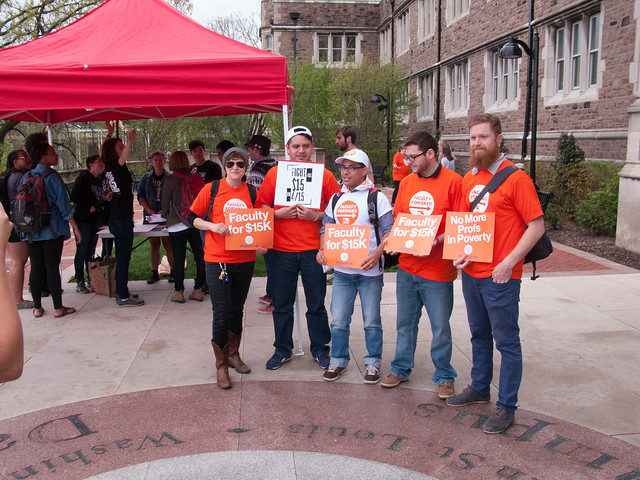
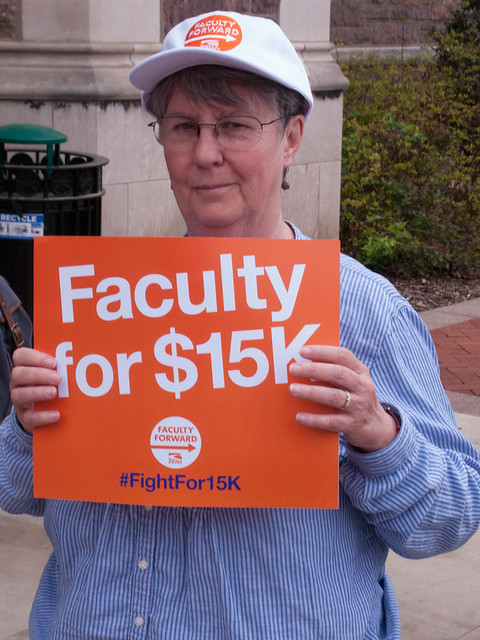
Two days ago I participated in my local ““fight for fifteen” (a union effort asking $15.00 an hour for various groups of hourly wage earners, and $15k per course for adjuncts who do most of the teaching in today’s colleges and universities). By all accounts the event must have been pretty effective around the world. Our event in St. Louis began in a variety of locations and culminated in a large rally at Washington University (Washu) followed by a march to the Delmar Loop that was joined by groups from Tennessee and Arkansas.

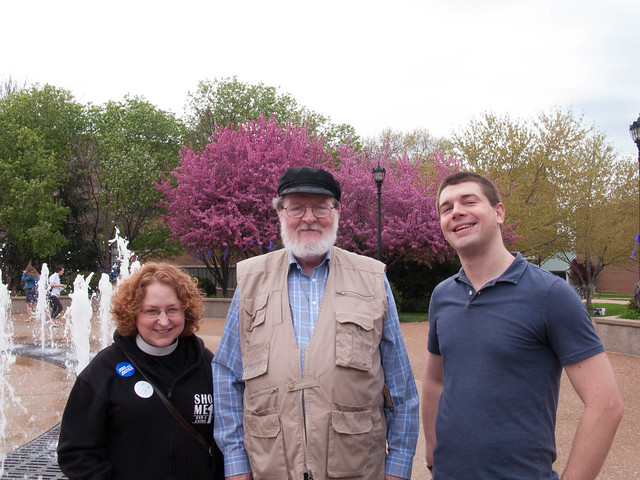
Here I am with Rev. Teresa Danieley, the Rector of my church, and Brendan Lambert, a co-parishioner, as we assembled around 2:00 at the Clock Tower at Saint Louis University (SLU) before walking to the president’s office to deliver a petition with over 600 signatures asking the university to recognize our union effort and allow organizing to go forward without interference.

IMG_1926.jpg

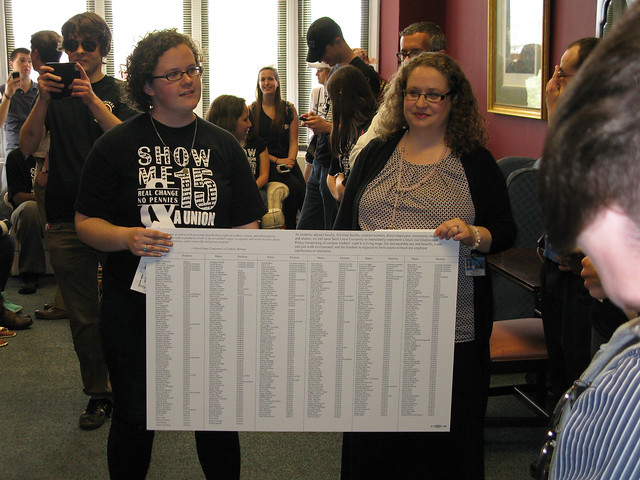
Here are some forty of us in an anteroom at the executive suite in Du Bourg Hall with a placard that showed 500 of the names affixed to the petition.

IMG_1939.jpg

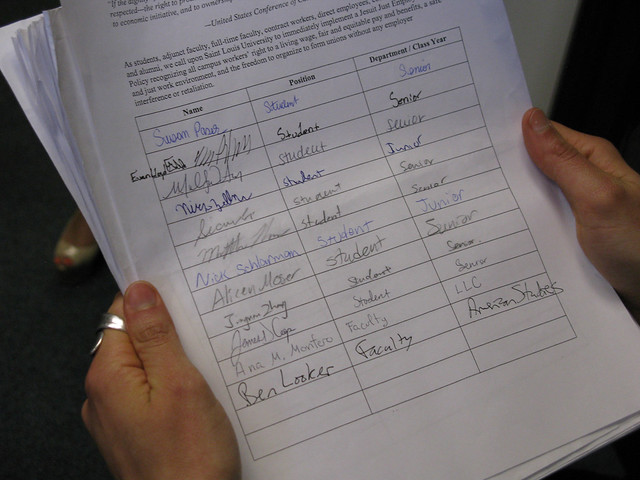
And here’s a shot of the sheaf of pages containing all 601 signatures we delivered. Note how many on this page are students.

IMG_1940.jpg

My involvement with this movement goes back over a year to a meeting I attended at the Missouri History Museum, sponsored by the Service Employees International Union (SEIU), when I heard the first serious discussions with which I have had any personal contact about a nationwide effort to organize adjunct faculty in colleges and universities. That meeting and one other I attended, in Chicago last October, focused on organizing adjunct faculty in the Catholic colleges and universities. I’m going to write another blog post about moral and political issues at stake in this effort for higher education and particularly for Catholic higher education. Today I want do my best to display yesterday’s events and point with pride.

The effort to collect signatures at SLU contiues and is of course part of a larger effort that we hope will eventuate in the formation of an SEIU local at SLU. Parallel organizing efforts are underway at a number of St. Louis colleges and universities. Washu adjuncts have formed a union and are presently negotiating with the Washu administration over slaries, benefits and working conditions. Adjuncts at Webster University are about to vote whether to organize. The effort to hold a union election at Saint Louis Community College has presently been blocked by the administration in Jefferson City, but it is hoped that an election can be held this summer.

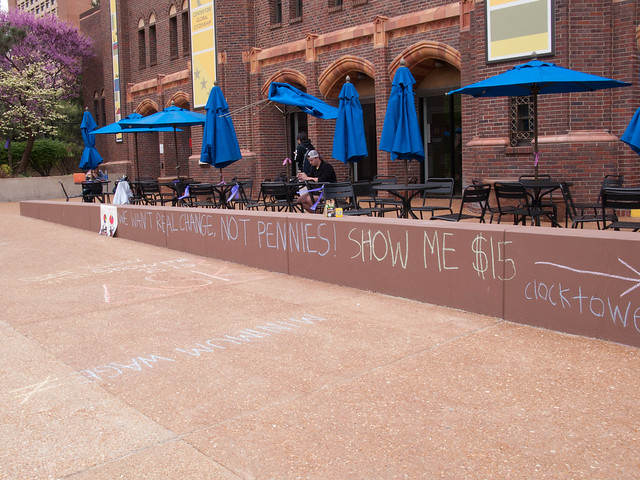
Here are some photos I took on the way from the clock tower to Du Bourg: A nicely chalked wall in front of the Center for Global Citizenship,

IMG_1929.jpg

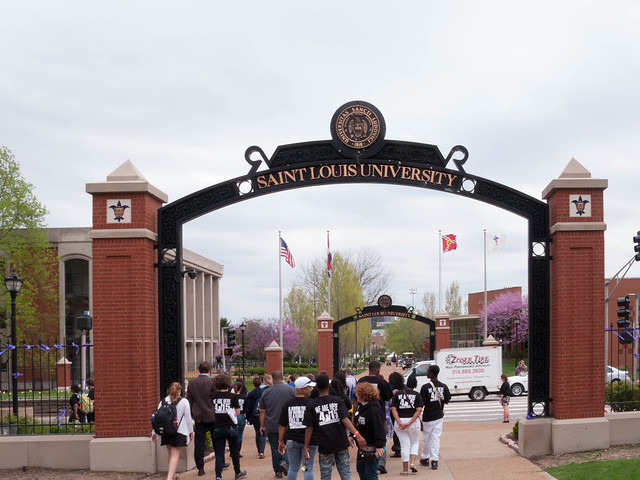
and some of us passing underneath the archway at the main Grand Bloulevard crossing just adjacent to Du Bourg.

IMG_1933.jpg

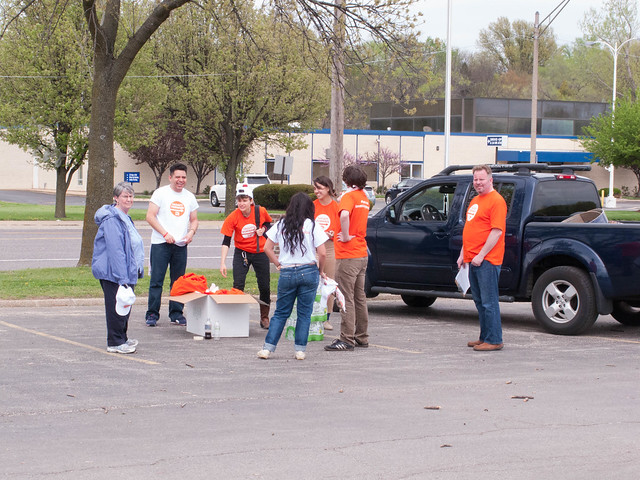
After we delivered the SLU petition our SLU group dispersed for various other activities and eventual transportation to Washu. Kathleen joined me after her class at about 3:00. We drove out to University City, and parked in a large grocery store parking lot, where we got T shirts, hats, and a ride to Brookings Hall at Washu. Here’s Kathleen at Seafood City with a small group of rally participants.

IMG_1947.jpg

And here she is again just as we arrived at Washu. The place looks pretty empty so far, but this is early.

IMG_1949.jpg

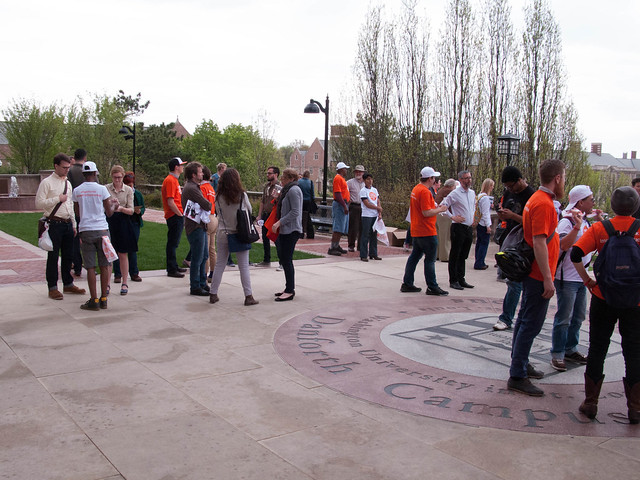
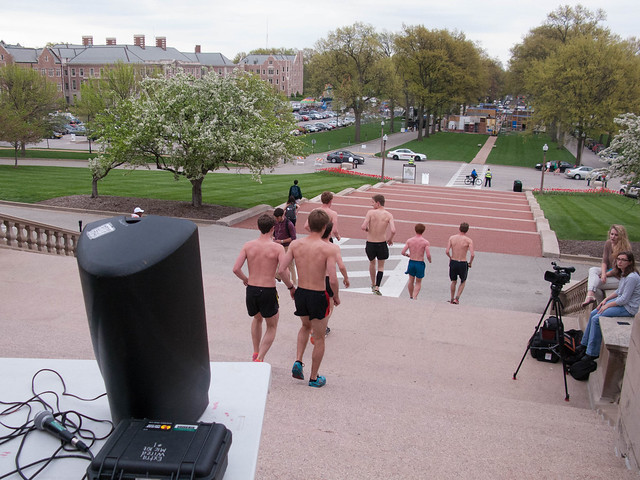
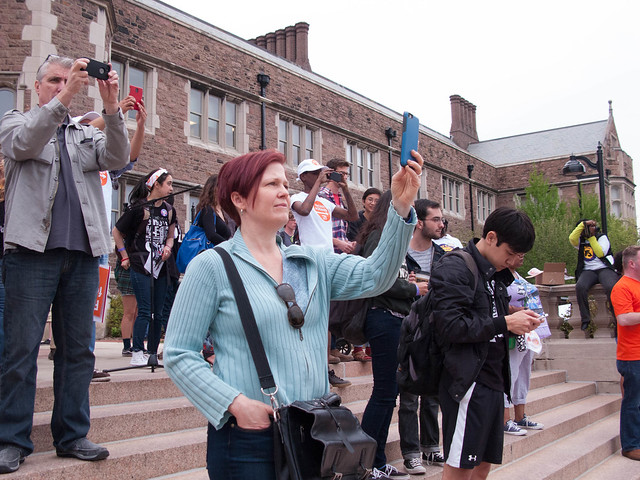
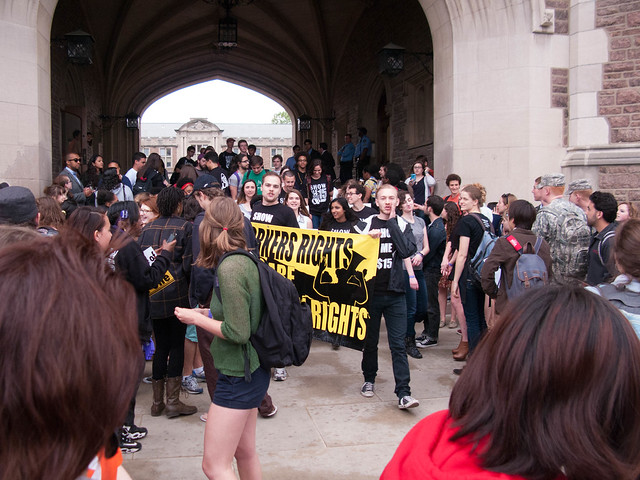
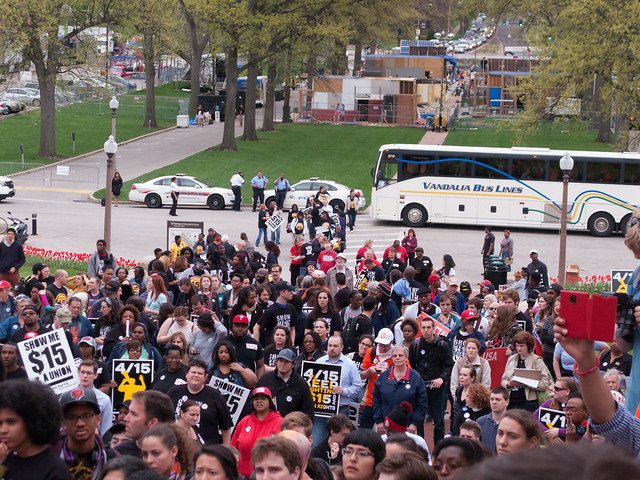
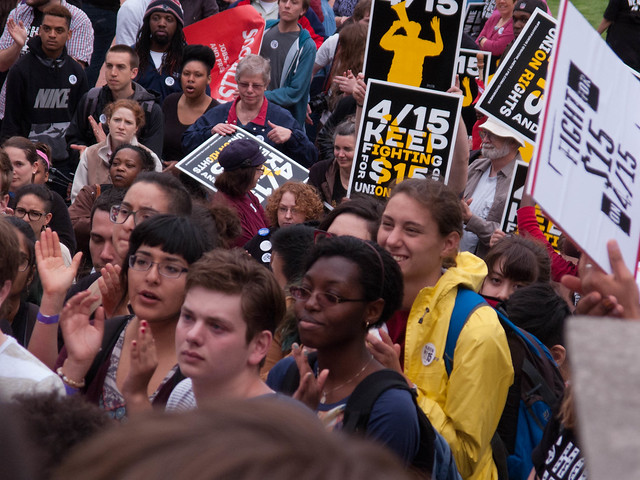
The Washu rally had been scheduled to begin at 4:15 (get it?), but we didn’t start on time because many groups (I suspect the groups from Tenessee and Arkansas among them) were caught in the late afternoon traffic snarl around Forest Park and arrived late. The schedule didn’t matter though, because the crowd at Washu was plenty big and made a beautiful noise (The Post-Dispatch estimates there were around 300 assembled as the rally culminated on the steps of Brookings Hall.

Here are a few photos I shot before the rally began.

Milling around:

IMG_1957.jpg

Solidarity:

IMG_1963.jpg

Kathleen with poster:

IMG_1970.jpg

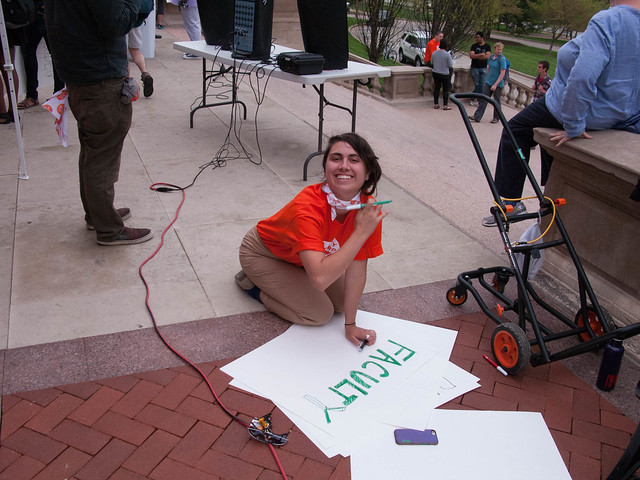
Making impromptu posters:

IMG_1975.jpg

Some of Washu’s finest, coming through:

IMG_1980.jpg

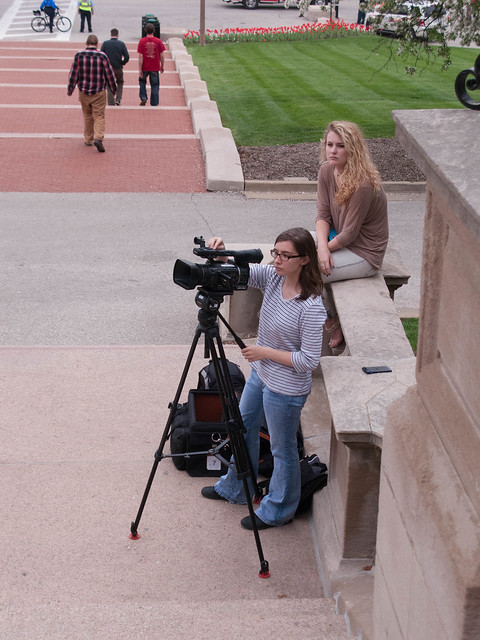
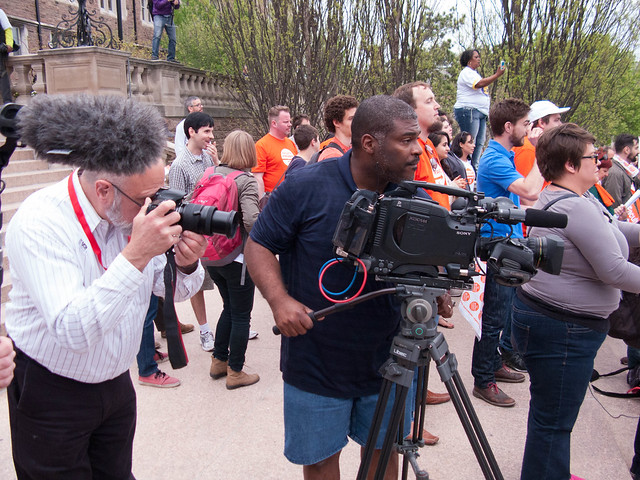
Media observed:

IMG_1981.jpg

IMG_2012.jpg

IMG_2010.jpg

IMG_2013.jpg

“What do we want? FIFTEEN! When do we want it? NOW!”

IMG_1987.jpg

After this things moved pretty fast as some large groups of folks arrived. This one was the most dramatic. It seemed they streamed all the way back to Forest Park, which would be in the far background of some of these photos if you could see through the trees.

IMG_1999.jpg

IMG_2000.jpg

IMG_2002.jpg

Here’s another group arriving. I’m at the top of the stairs, looking down.

IMG_2029.jpg

And here’s a shot of the thick of the crowd.

IMG_2035.jpg

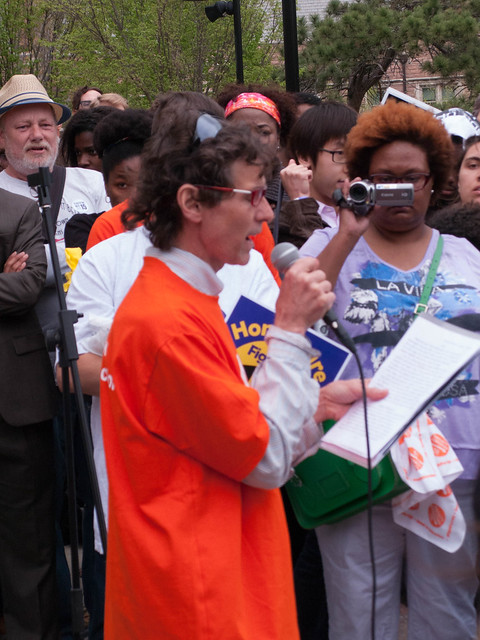
There was cheerleading and speechifying. Here are a few of the performers.

IMG_2021.jpg

IMG_2027.jpg

IMG_2028.jpg

IMG_2036.jpg

IMG_2038.jpg

IMG_2040.jpg

IMG_2047.jpg

IMG_2049.jpg

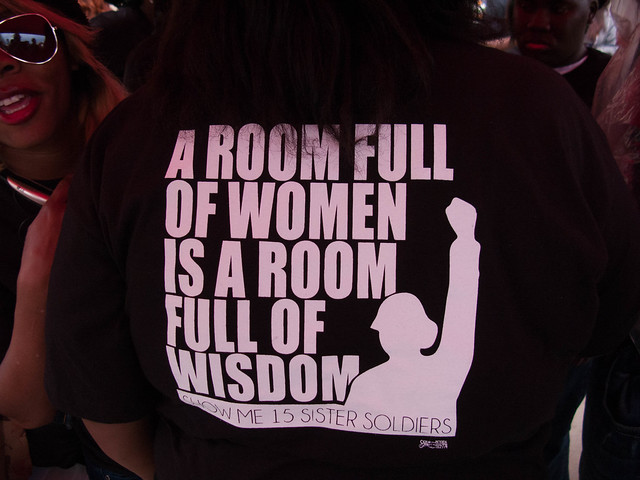
Here’s the day’s best T-shirt slogan.

IMG_2044.jpg

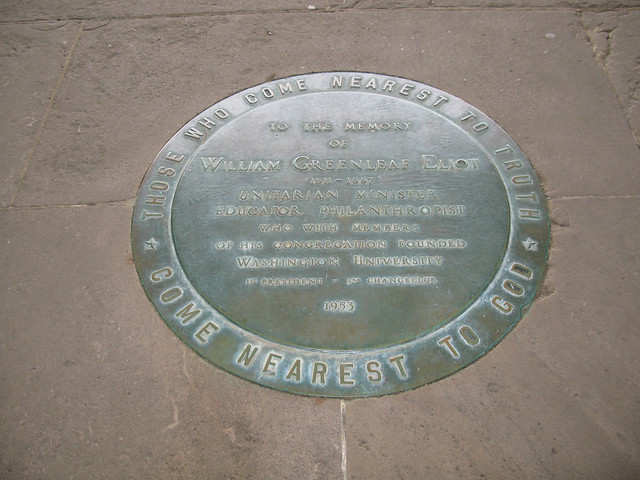
And at the end of it all, T. Eliot’s grandfather, the founder of Washu. The monument sits just under the arch that formed the background of the rally. I couldn’t resist ending with it.

IMG_2051.jpg

We left after the rally, tired and hungry. I hope somebody else got some photos of the do on the loop. More later about why I’m in this.