
doing the wrong thing for the wrong reason

The Philadelphia Orchestra’s bankruptcy filing is worse than unfortunate. Orchestra management is seeking to dump its pension obligations in the lap of the Pension Benefit Guaranty Corporation, and potentially in the lap of of the generality of taxpaying citizens who may be called upon to make up PBGC’s deficit. That’s bad enough, but the move will harm Philadelphia’s musicians and staff first, many of whom are owed more than the federal guarantee allows in pension payments. And the orchestra further seeks to shed its obligation to the American Federation of Musicians and Employers Pension Fund, a move which will harm other orchestras, though Philadelphia management denies that its actions will have that result.

Two principles of present life seem to be involved. The first is that economics trumps ethics, a notion so widely accepted in today’s society as to be axiomatic. And the second principle is that where philanthropic institutions are concerned survival supersedes mission. What is perhaps more interesting than Philadelphia’s crass disregard for the welfare of its musicians and staff is its apparent disregard for the social contracts to which it is party and for its own artistic future. The New York Times quotes Philadelphia’s management as follows:

The Philadelphia Orchestra’s president and chief executive, Allison Vulgamore, took strong exception to the notion that the move might harm other orchestras. “The Philadelphia Orchestra is managing its own situation with choices that are available to it,” she said. “I would not say that anything that is happening translates to other orchestras. I wouldn’t be so presumptuous.”

Choices that are available—no mention of ethics. So again we are confronted by the spectacle of a socially constituted not-for-profit corporate entity, whose actions should be above reproach, behaving like Wal-Mart.

“I would not say that anything that is happening translates to other orchestras. I wouldn’t be so presumptuous,” says Ms. Vulgamore. The issue is not whether other orchestras will rush to shed their own pension obligations in a rash of bankrupty filings, but that other orchestras will now find it difficult to maintain the American Federation pension fund, particularly if the bankruptcy judge allows Philadelphia to default on its $35 million debt to that fund. It’s worse than sad that such cynical business practices should come to represent a once great institution.

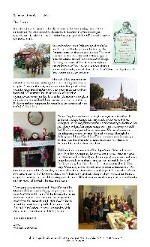
Tidings of comfort and joy . . .

“O Magnum Mysterium” is one of the responsories in the Gregorian liturgy of Christmas and as such is much older than “In Dulci Jubilo,” which dates from the early fourteenth century. “O Magnum Mysterium” has about it a formality and high seriousness that one writer refers to the irony of the Incarnation, “the fact that the field animals—mere beasts of burden trying to sleep in the same manger—would witness the birth of the holy Christ child.” “In Dulci Jubilo,” in which we are asked to sing and be merry around the manger, is less formal but also bears the signs of liturgical trope. Both texts depend upon the “in praesepio,” theme from Luke’s gospel.

Unsres Herzens Wonne leit in praesepio.

. . . ut animalia viderent Dominum natum jacentem in praesepio.

. . . et venerunt festinantes et invenerunt Mariam et Ioseph et infantem positum in praesepio.

And they came with haste, and found Mary, and Joseph, and the babe lying in a manger.

It’s a lovely story, taken all together, the holy birth surrounded by signs and portents, the plain circumstances suffused with swarms of angels and the the swagger of magician kings. And it’s part of a larger story that one could wish were true even in the face of certain conviction to the contrary, As professor Tolkien has put it:

There is no tale ever told that men would rather find was true, and none which so many sceptical men have accepted as true on its own merits. For the Art of it has the supremely convincing tone of Primary Art, that is, of Creation. To reject it leads either to sadness or to wrath.1

The text of the story surely came first, but I love this image of Giotto’s that foregrounds the animalia,2 with its wonderful donkey and the angels hiding in the attic. “O Magnum Mysterium” foregrounds the mystery, but “In Dulci Jubilo” seems to address the Christ child, himself, much as Dante addressed Beatrice on the margin of the earthly paradise, Alpha es et O, “Blessed are you who come.”

1See “On Fairy Stories,” in Essays Presented to Charles Williams, edited by C. S. Lewis, Erdmans, 1966 [1947].
2The original is in the Scrovegny Chapel.

Unsres Herzens Wonne

We’re sending this letter to family members and as many friends as we can find this season. If you’re a Facebook friend or someone who reads this blog occasionally, we wish you the same happiness we wish others. We are persuaded that one can never have too many friends.

I posted Morten Lauridsen’s “O Magnum Mysterium” at Christmas a couple of years ago, but that performance has disappeared from You Tube. Here’s a link to another performance I like a lot, this one by the Los Angeles Master Chorale.

And while I’m posting music, here’s Chanticleer performing what has become a signature piece for them, the “Ave Maria” of Franz Biebl. My favorite Chanticleer album is still their 1992 Christmas album, Our Heart’s Joy, which was remastered and re-released in 2004 (I have the earlier CD). Here’s a performance of the carol that gave that album it’s title, though this is a performance by a later instantiation of Chanticleer, from their 2003 Portrait CD.

We used to call verse that mixed vernacular and Latin text Macaronics. It’s interesting, to me at least, that translations and paraphrases of this carol, perhaps the Macaronic original, like the fairly well-known though not very good 1837 paraphrase by Robert Pearsall, retain the Latin untranslated (except “Good Christian Men, Rejoice”). Of course one loses the effect of the Macaronic if the whole is translated; though I expect the real reason for the practice is that any educated person, before our own benighted time, could rede the Latin text, perhaps even understand that in German Latin, dulci is “dultsi.”

—Happy Christmas to all. In dulci jubilo!