
Notes from past weeks

I sometimes wonder if this blog has any use, much less any readers. I don’t write here regularly enough and tend not to keep resolutions to change for the better. Yesterday, though, I had a note in the mail from a chance reader in Germany inquiring about the inspiration for my poem “Flatbush Waltz.” I was flattered and answered quickly. I wrote the poem because I had fallen in love with Itzhak Perlman’s recording of that Andy Statmen tune. You can hear it here on YouTube.

Writing that poem also gave me occasion to search out a copy of a book I loved back in the 1970s, Thad Stem’s First Reader. Thad was one of a group of writers I knew in North Carolina in those years, who practiced their craft in the state’s network of newspapers, many of them small weeklies, an informal fraternity that that included Sam Ragan, Cliff Blue and others. The Late Tom Wicker got his start among them, writing for The Sandhill Citizen.

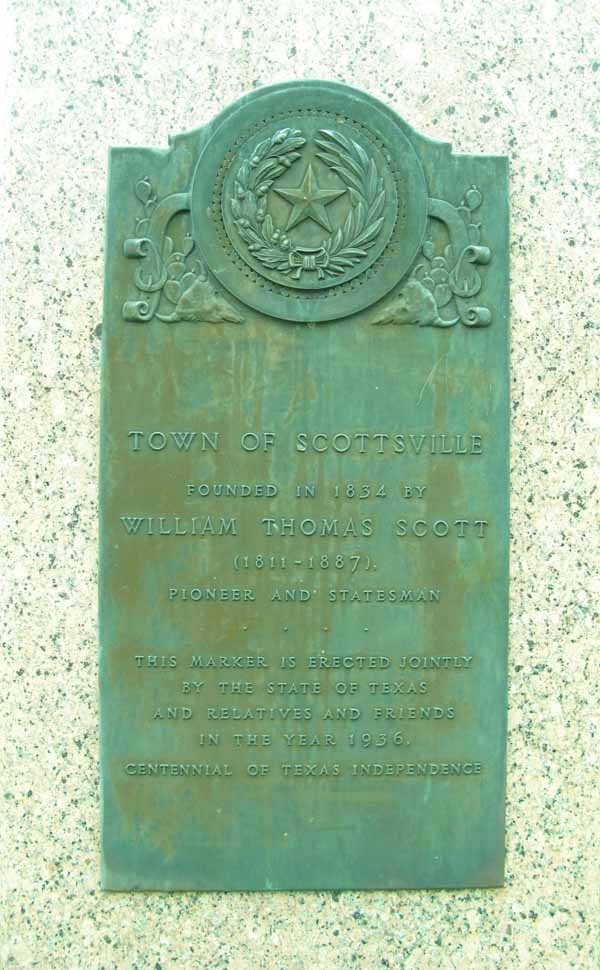
Over spring break, my beloved and I made a fast trip to Texas. On our way home we stopped off in Marshall for a few hours. Marshall is in Harrison County; my mother’s people settled there in 1834, hoping, I think, to escape the abolition of slavery in the United States by migrating to the fledgling Republic of Texas. They claimed large tracts of land adjoining Caddo Lake and eventually named the place Scottsville.


We found a few remnants of Scottsville on our visit: a cemetery dedicated to the memory of the Confederacy, and the Scott house, where My Grandfather was born in 1879. The old dwelling was originally built by W. T. Scott in 1840, according to a pamphlet kindly provided to us by Beverly Smith, whom we met at the Scott cemetery chapel. I grew up with a wealth of stories about the Scotts, some of them lurid; and I told a few of those stories in a piece I published back in 1992. I am thinking of telling them again, more thoroughly and at greater length.

Snakes-to-go

This is another post in a series that honors my long ago major professor’s habit of coming into the classroom some Fridays and saying “Let’s talk about snakes,” which meant we would spend the class talking about whatever was on our minds.

Ashes-to-go: My church is in the news today because we, along with partners in Isaiah 58 Ministries, offered ashes-to-go at the corner of Grand and Arsenal as we have for the past good many years. This year’s program made the front page of the St. Louis Post Dispatch and was featured in The Washington Post in a piece that circulated widely crediting our Pastor, The Rev. Teresa K. M. Danieley, with the original idea. Apparently the idea was not Pastor Teresa’s but originated in a Bible study group of which she was part. Pastor Teresa has asked the Post to publish a correction and has published a disclaimer at Facebook. But that hasn’t prevented a person from California, who claims to have originated the program, himself, from writing flaming posts on Pastor Teresa’s Facebook page. Perhaps he should write to God.

Planned parenthood: Two days ago in The Washington Post Melinda Henneberger opined that the birth control controversy is playing out to benefit Democrats. Says Henneberger:

The beauty of the current birth-control conversation for Democrats is that they not only have public opinion on their side but have cannily managed to make contraception a front-burner election-year campaign issue — by complaining that Republicans are making it front-burner election-year campaign issue.

I couldn’t be happier, and I’m happier still if Andrew Sullivan is right in a piece to which Henneberger refers, in claiming that President Obama lured Republicans into the birth-control swamp by design.

Cardinal Dolan: Timothy Dolan is back in this country, where he celebrated Mass for Ash Wednesday at St. Patrick’s Cathedral in New York and distributed some ceremonial bags of food to the hungry. Though he wore Lenten purple and affected to care little for the trappings of his new status as Cardinal, saying “The fact that I’m wearing red amounts to a hill of beans,” his vestments were still pretty grand and he wore a red zucchetto. Much is being made of Dolan’s new status in St. Louis, where he is regarded almost as a native son. But the writer of one letter to the editor in today’s paper isn’t entirely thrilled:

It is impressive indeed to see St. Louis proud of Ballwin native Timothy Dolan, who was “elevated” to the status of “prince” of the church and member of the “club” of cardinals who are charged with electing the pope’s successor (“He’s got a million of ’em,” Feb. 18). His humor, wit and understanding of the people are rare and often unseen qualities in much of the existing male hierarchy of the Roman Catholic Church.

As a Catholic, however, I continue to be mystified by the lack of understanding by the hierarchy of the humble servant mentality of Jesus Christ. Magnificent jeweled pectoral crosses, gold rings, flamboyant tailor-made vestments, days of celebration and dining out do not seem to fit in with the simplicity and humility of Jesus, the carpenter who washed the feet of His disciples. Nor does (sic) the terms “elevated” or “prince” describe Jesus, who came to serve and not to be served.

It will be interesting to see what Dolan does with his newly expanded superstardom. I am inclined to agree with Andrew Sullivan who has written, in a piece to which I have already referred, that Dolan and other American Bishops have staked out positions on social issues that do not reflect “Christian engagement with a changing world” but rather presage a retreat into fundamentalism; but I think it would be more accurate to characterize the Bishops’ retreat from social justice as a retreat into majesterium; though a few bags of food doled out to presumably hungry folk makes a good photo op, I’ll admit.

Benefit of clergy

Whether or not the recent unanimous decision of the Supreme Court in Hosanna-Tabor Evangelical Lutheran Church and School v. Equal Employment Opportunity Commission was just (I do not think it was), it’s clear that Cheryl Perich was not fired for religious reasons or indeed for any secularly legitimate reason.1 Her firing would have been illegal had it been carried out by a secular organization. Shortly after the verdict was announced, The New York Times spoke out against it in a fairly sharp editorial. After reviewing the facts of the case and the court’s reasoning, the Times argued as follows:

The court’s conception of the ministerial role is more encompassing than it has been defined by state and federal appellate courts. Its sweeping deference to churches does not serve them or society wisely.

Recent legal decisions have so enlarged the scope of clerical benefit where it can be argued to pertain to religious establishjments and not to individuals as to constitute an establishment of religion (or so it seems to me) in clear violation of both the spirit and the letter of the first amendment. We’re now seeing this establishment flex its new muscles in ongoing disputes regarding the availability of health insurance coverage for contraception and abortion under the new federal health care law, in which Catholics and Evangelicals seem to be forming a political alliance that is going so far as to claim that its opposition to contraceptive coverage is based upon respect for the individual conscience and to demand a broad conscientious exemption that would include “employers with religious people running them or other people of conviction who are running them.”

If we follow the reasoning of the Supreme Court and the allied Bishops and Evangelicals we are not permitted to judge the morality of their position on the basis of it’s social consequences or it’s consequences to individuals who will be denied access to legal redress and necessary health protective services. This is a position that I believe can only be maintained by trivialization of the persons affected and the importance of the health care issues involved, more or less on the order of Foster Friess’s comments about birth control this past week; or as Melissa Moschella writes in the National Review Online:

Forcing employers or insurers to fund an activity that they believe to be gravely wrong is a denial of individual conscience rights. Is free access to contraceptives an equally fundamental moral right to be protected even at the cost of others’ conscience rights? Is it a prerequisite for a free and ordered society? Anyone inclined to say yes should consider the following question: Would it be worth risking one’s life or livelihood, emigrating to an unknown land, or fighting a revolution to secure all-expenses-paid access to contraceptive services? Only for those who have made sexual expression their religion.

It is in the nature of the sort of casuistry being used by the “religious” with respect to this issue to set up and attack straw persons and to pretend that wolves are sheep. The Catholic bishops’ design to impose Catholic teaching upon Catholics and non-Catholics alike is patently obvious.2 It is laughable for Timothy Dolan to present himself and his fellow princes of the church as victims of presidential overreach. Indeed, according to a recent article in the National Catholic Reporter,

Perhaps Obama saw, as many of us do, the bishops’ actions as an attempt to legislate beliefs that they cannot get their own people to obey. . . . The sad truth is, if the numbers of Catholics leaving the church are any indication, most Catholics in the United States probably see the hierarchy more as victimizers than victimized.

Here’s some more casuistry. I’ve just received an email from Senator Roy Blunt in answer to a call I made last week to Senator McCaskill’s office urging her to oppose Blunt’s amendment to a transportation bill that would have attempted to repeal the contraception mandate. It reads in part:

In August 2011, the Administration announced its decision to mandate that all insurance companies and employers cover contraception and sterilizations with no copay. This unprecedented decision is an affront to the deeply held convictions of millions of Americans, which is why I introduced legislation to repeal the mandate. . . . The government should not force doctors to perform procedures or employers to provide coverage for services they view as immoral any more than the government should force treatments on Americans. The federal government has no business in a doctor’s examining room and the Administration’s actions have put our nation’s deep commitment to religious freedom in jeopardy.

But the controversy isn’t about anybody’s conscience.3 It’s about power, or more precisely it’s about the ability of the Catholic hierarchy and allied Evangelical groups to to command the power of the state to manage the lives and welfare of those millions of Americans Mr. Blunt pretends to represent. And of course Mr. Blunt and the Republicans don’t want to keep the government out of doctors’ examing rooms in states requiring that women seeking abortions undergo ultrasound examination. In Texas and Oklahoma the government requires doctors to force women to view the procedure, and in some other states the government forces doctors to perform invasive vaginal ultrasound examinations when that is required in order to perform the procedure during the first trimester of pregnancy.

Catholic and other religious organizations receive huge infusions of public monies from federal, state, and local sources, and for these purposes claim to be secular institutions, as I have pointed out in a previous post. One would think that such institutions would not then be able to claim (or be so mendacious as to claim) benefit of clergy. But consistency and common sense don’t matter in contests like this one. And now the legislature of my enlightened state is taking up the issue. As Planned Parenthood reports today:

SB749 sponsored by Senator John Lamping of St. Louis and HCR 41 from Representative Paul Curtman of Pacific seek to undo the new federal rule and allow any employer to deny birth control coverage to their employees simply because they have a “moral” objection to birth control.

Of course, using public money to fund access to contraception has been part of federal law since 1970, when the idea was introduced by a Representative from Texas, George Herbert Walker Bush.4 The enabling legislation passed the house by a majority of 298 to 32 and passed the Senate unanimously. It was signed into law by Richard Nixon. But the religious right aren’t going after Nixon or Bush the first. Their target is the current president.

More later—

Notes

1Reviews of the case may be found here and here.
2As is the fact that Catholic teaching forbids most forms of contraception. In a related matter, Reed Abelson reports in today’s New York Times that Catholic hospitals are expanding by buying other hospitals and changing their character. See “Catholic Hospitals Expand, Religious Strings Attached.” In both cases the church’s practice is not persuasive but coercive.
3Ellis West, a constitutional scholar, has reviewed the issue of conscientious objection in the Richmond Times-Dispatch. Among many enlightened things he writes is this: “At the time of the ratification of the Constitution, both its proponents and opponents agreed that the national government should have no jurisdiction over religion, i.e., should pass no laws dealing primarily or directly with religious beliefs and practices, and the religion clauses were added to the Constitution to make that clear. No one suggested then that they were also intended to prevent laws that the government could pass from being applied to persons or groups who did not want to obey them for reasons of conscience.” See “Catholic claims stretch the first amendment.”
4See Ann Gerhart’s piece in yesterday’s Washington Post, “Birth control as election issue? Why?

Metaphysical politics

The Podium, The Pulpit, and the Republicans:
How Presidential Candidates Use Religious Language in American Political Debate

by Frederick R. Stecker

229 pp., Praeger, $44.99

An old friend has written an astute book about political language. He is Frederick R. Stecker, an Episcopal Priest, retired from the parish ministry and now an adjunct professor at Colby Sawyer College in New London, New Hampshire. Fr. Stecker also holds a doctorate from the Institute for the Study of Violence of the Boston Graduate School of Psychoanalysis. For his dissertation, as he explains in his introduction, he “studied the heavily rehearsed language of the presidential debates of 2000 and 2004,” from a perspective informed by George Lakoff’s work on political language in Moral Politics (1996) and by other work in the literature relating to ways we humans process fear and rage, form world views, develop identity and group identification, etc.1 The present book appears to have expanded and enlarged the work of the dissertation to include, among other things, an analysis of the language of the 2008 presidential campaign.

Fr. Stecker’s book is both incisive and informed. It avoids the clichés of contemporary media discourse while speaking directly to the categories that enframe those clichés. Here’s an example from chapter five:

[George W.] Bush first rocked the political world when he was asked in a debate, prior to the 1999 Iowa caucus, about his favorite philosopher. Bush responded, “Jesus, because he changed my heart.” The Des Moines Register reported that Governor Bush had misunderstood the question to be “Who’s had the most influence on your life?” However it was heard, Governor Bush changed the direction of the political discourse from that moment on. Orrin Hatch, who followed Bush, noted Abraham Lincoln as his favorite philosopher, but then added, “I bear witness to Christ, too.” Then Gary Bauer chimed in and echoed Bush’s testimony. John McCain was the only one of the six candidates who did not reference God that night; there were, in all, 20 such references by the other five. What started out as a misunderstood question resonated with the citizens of Iowa that polled 40 percent of caucus participants to be evangelical or “born again.” It set the tone for all that followed.

Particularly cogent in displaying how certain religious tropes resonate with various groups of voters, Fr. Stecker’s documentation is impressive, presented informally in the text. Like Lakoff, Fr. Stecker could be charged with speaking as a liberal, but that doesn’t trouble me; and I think the quantitative evidence in this qualitative study is forceful.

That’s not what I want to talk about, however. Fr. Stecker traces the rise of the religious right in post-1960s American politics in his second and third chapters and links that history both with the economic interests it serves and with its growth as a counter-culture. Central to his primary argument in the chapters that follow is an analysis of how George W. Bush and Richard Cheney (perhaps under the tutelage of Karl Rove) combined use of religious language identifying themselves with the supposed certainties of “faith” and skillful manipulation of the fear of terrorism to foster and maintain a siege mentality in the public mind during the years following 9/11 until support for the Iraq war began to erode.

A chief finding of Fr. Stecker’s research is that these rhetorical gestures and the gestures they provoked from Democratic candidates were successful for Republicans in 2000 and 2004 and validate Lakoff’s “nation as family” metaphors; but a further finding is that Barack Obama was able to turn the Republicans’ rhetoric against them and reclaim both the language of faith and the language of patriotism for his own campaign and best “the Republicans at their own game” in 2008. It is this latter finding for which I am particularly grateful.

Back in 2008 my beloved and I met a young couple from Oklahoma and their small children as we were all standing in line at the Edward Jones Dome to be admitted to an Obama rally. Even on a cold winter evening the crowd was huge, but we gained admission easily and had a pleasant time talking as we waited. I wrote about that conversation here. As the years have gone by and I have watched the Obama presidency develop, It has come more and more to seem to me that the president should be judged not on foreign policy, though I have much to say about that, and not on his performance with respect to the economic meltdown he inherited, but rather in relation to the hopes and dreams of young people like the couple we met at that long ago rally. They had driven all the way from southwestern Oklahoma to hear candidate Obama speak. They are part of that generation of Americans who do not expect the social safety net to be there for them but who remain hopeful that their children will inherit the American dream.

I have been severely critical of President Obama. I have been and am still a conscientious objector to his apparent willingness to keep the prison at Guantanamo Bay open, to his apparent willingness to sanction suspension of the right of habeas corpus, and to his apparent validation of Bush era policies that subjected enemy combatants (so called) to torture in spite of his claims to the contrary. But I have also been distressed that President Obama has apparently been unable, or unwilling, until very recently to pursue economic policies that fostered the hopes of Americans like me who believe that government policy has for thirty years favored the interests of a wealthy minority to the detriment of the great majority of Americans. My distress reached its apogee (or nadir) last summer with the President’s capitulation to a vicious Republican minority in the matter of the debt ceiling.

We live in a time of political ambiguity brought about by decades of irreconcilable disputes, as Fr. Stecker notes. Republicans have successfully demanded attention to these disputes as the price of attention to all other matters. In addition, Republicans have preempted the public sphere with absolutist religious and moral claims. The idea that morality is dependent upon religion is an absurdity. Even more absurd is the spectacle of political alliances between religious groups who do not expect to meet one another in heaven. Still, there’s a hard truth in all of this. These groups share a commitment to what Isaiah Berlin termed metaphysical politics.

Berlin begins his famous 1958 essay on two kinds of liberty with the observation that “Where ends are agreed, the only questions left are those of means, and these are not political but technical, that is to say, capable of being settled by experts or machines, like arguments between engineers or doctors.” Berlin characterizes this outlook as Utopian, but it might just as readily be called ideological.2 Berlin’s ideas were formed in the shadow of the Nazi terror that he and his family had escaped. It seemed self-evident that “fanatically held social and political doctrines” were as dangerous as the technologies of death they engendered in Germany and Eastern Europe during much of the twentieth century.

But what Berlin calls the metaphysical view of politics seems protean in human affairs. It has renewed itself in American politics since 1980 and seems to be renewing itself in European politics as well.3 Indeed, future historians may characterize our time as a time of resurgent fundamentalism worldwide—though we need a better term; contemporary French sumptuary laws forbidding the wearing of the veil by Islamic women, for instance, reflect a reified secularism that is metaphysical in Berlin’s sense but not precisely fundamentalist even in the broad sense in which we presently use the term.

I was a strong supporter of President Obama in 2008. I did not think him a superhero, but I saw his candidacy and election to office as ratification of the pluralist society we have built in this country since the time of my childhood. Like Berlin I believe “that human goals are many, not all of them commensurable, and in perpetual rivalry with one another.” I believe that we humans “choose between ultimate values; . . . because [our] life and thought are determined by fundamental moral categories and concepts that are . . . over large stretches of time and space, and whatever their ultimate origins, a part of [our] being and thought and sense of [our] own identity; part of what makes [us] human.” I believe that pluralism in politics and the willingness to proceed ad hoc are positive goods because over time these values seem to generate more liberty for more of us humans than does devotion to some dream of future perfection or past excellence or adherence to some system of practice believed to be rooted in the natural order or authorized by divine command.

I don’t mean to imply that I think Fr. Stecker shares these views. His purpose in writing seems to have been modest. At the outset of his last chapter, he makes this claim:

Since 9/11, it has become imperative to monitor our own responses to political pronouncements. We must be able to pause and reflect on our reactions as well as to examine the information we’ve been given. I use the pew to sort out issues. It provides a transitional space for me to help grasp what’s important-authority, not power.

Then after a recapitulation of his book’s major themes he says further:

As I write this, America now focuses on vitriol in politics. The attempt to assassinate Representative Gabrielle Giffords (D-AZ) brings the focus on linguistics to new heights; it is time that we stop finding unity solely in sorrow. By mid-2011, we will begin to see candidates testing the waters (and our credibility) once more. Keep an ear to the use of religious language and to the nuanced use of fear. I’ll be willing to bet that both will continue to resurface; it is a lightning rod that touches our emotions; it works every time, unless we become aware.

After some reflection I remain at least provisionally convinced that President Obama’s tenure in office affirms the ideals of human flourishing4 that I believe represent my country at its best. But that best is always open to critique, subject to correction, contingent, and historical. I am being persuaded by writers like Andrew Sullivan, James Falows, and now Frederick Stecker, that I should reevaluate my reaction to the president’s first term. I’m grateful to these persuasive writers; and though I agree with Fallows that the president will likely be regarded a failure if he does not win reelection, I begin to be hopeful about that eventuality. Frederick Stecker’s book lends credence to the view, more and more expressed these days, that President Obama is capable of deflecting the rhetorical weapons that will be used against him and turning them to his advantage as a candidate, that he takes a long view of the times and the tasks he has set for himself as president, and that he has always intended to serve two full terms.

Notes

1Fr. Stecker’s book is cross-disciplinary, citing work in psychology, pychiatry, history, rhetorical criticism, and other disciplines.
2I am thinking of Mannheim here, especially.
3See Tony Judt, Ill Fares the Land (2010) and here.
4I have the term from Martha Nussbaum.