“O Magnum Mysterium” is one of the responsories in the Gregorian liturgy of Christmas and as such is much older than “In Dulci Jubilo,” which dates from the early fourteenth century. “O Magnum Mysterium” has about it a formality and high seriousness that one writer refers to the irony of the Incarnation, “the fact that the field animals—mere beasts of burden trying to sleep in the same manger—would witness the birth of the holy Christ child.” “In Dulci Jubilo,” in which we are asked to sing and be merry around the manger, is less formal but also bears the signs of liturgical trope. Both texts depend upon the “in praesepio,” theme from Luke’s gospel.
Unsres Herzens Wonne leit in praesepio.
. . . ut animalia viderent Dominum natum jacentem in praesepio.
. . . et venerunt festinantes et invenerunt Mariam et Ioseph et infantem positum in praesepio.
And they came with haste, and found Mary, and Joseph, and the babe lying in a manger.
It’s a lovely story, taken all together, the holy birth surrounded by signs and portents, the plain circumstances suffused with swarms of angels and the the swagger of magician kings. And it’s part of a larger story that one could wish were true even in the face of certain conviction to the contrary, As professor Tolkien has put it:
There is no tale ever told that men would rather find was true, and none which so many sceptical men have accepted as true on its own merits. For the Art of it has the supremely convincing tone of Primary Art, that is, of Creation. To reject it leads either to sadness or to wrath.1
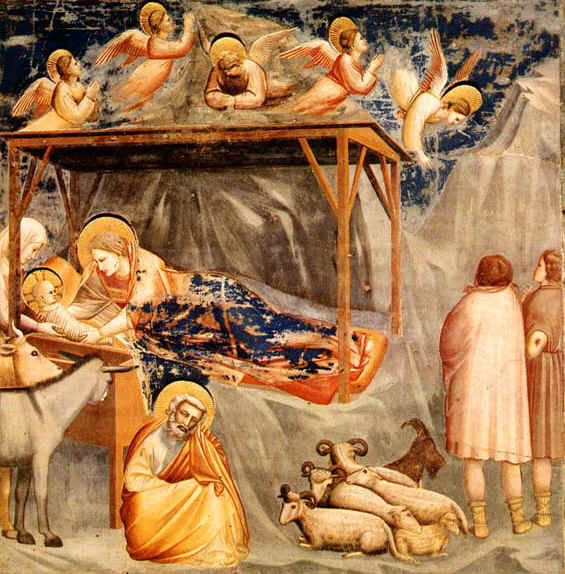
The text of the story surely came first, but I love this image of Giotto’s that foregrounds the animalia,2 with its wonderful donkey and the angels hiding in the attic. “O Magnum Mysterium” foregrounds the mystery, but “In Dulci Jubilo” seems to address the Christ child, himself, much as Dante addressed Beatrice on the margin of the earthly paradise, Alpha es et O, “Blessed are you who come.”
1See “On Fairy Stories,” in Essays Presented to Charles Williams, edited by C. S. Lewis, Erdmans, 1966 [1947].
2The original is in the Scrovegny Chapel.