after Advent III

Yesterday I joined a new network of blogging Episcopalians. I had been part of an older network that seems to have gone defunct, but this new one has garnered twenty-nine members already and looks to have a good future. One reason I joined is that I got a very nice invitation, written as a comment on my last blog post, from proprietor, Lisa Jones. I’m convinced that folks like Lisa and her young family are the best hope we have as Episcopalians looking at declining church numbers. That’s certainly been the case in my parish.

St. John’s Episcopal Church is the second oldest surviving Episcopal church in the city of St. Louis, founded in 1841. Only Christ Church Cathedral is older. I served two terms as Senior Warden of St. Johns, from 2006 until 2012. During that time we increased membership and budgets so that the parish now supports a strong pastoral size congregation that is on the verge of becoming program size. Here is a photo of our present building, where the congregation moved in 1908. And here’s a video (embedded below) that tells our story. It was made by the national church in 2012 and illustrates what I think is needed if our national church is to reverse its present decline.

St. John’s had declined to a handful of members at the fime I first attended a service, partly because of changing demographics and partly for other reasons. One index of our growth is that we now have a thriving children’s program supported by a number of young families who have joined us over the past eight or ten years. We built some new nursery and sunday school spaces in 2010. Here is a picture that we recently featured on our Facebook page. It includes many of our youngest members. If you look at our Facebook page today, You’ll see a spread of photos from last Sunday’s Christmas Pageant in which you’ll see these same children and others. We’re blessed.

And we informally call St. John’s Tower Grove Church, affirming that we strive to be relevant to the Tower Grove/South Grand community in which we are embedded, with programs such as Peace Meal, Isaiah 58 Ministries, Integrity, and our partnership with Mann School. Also as we are called to a progressive ministry of relevance to the times in which we find ourselves, we seek to continue the work of the gospel as we are given to understand it.

In my last post I wrote about why I need the dark time of Advent, as the days grow shorter whilst a new liturgical year begins. It’s appropriate, I think, that we begin a new Christian year with a time set aside for reflection and waiting. What begins is the familiar story of the history of salvation, which is also the history of human being. We are called annually to renew that history in a world from which suffering and death and injustice and hypocrisy and crime have not only never disappeared but have also remained parts of our fundamental experience in the richest nation on earth.

Like many churches, my church has several congregations. We serve a meal every Saturday that is free and open to all who come, not just during Advent but all year. Some who come are homeless. However, in advent we might reflect that in serving this meal we honor Jesus’ Parable of the Banquet, which ought to remind us that the risk to our spiritual lives is always the practice of indifference to misfortune, and in modern times particularly the practice of ideological indifference. Advent reminds us that there is a darkness deeper than winter and calls us to a particular mindfulness. The vulnerability of the homeless, the hungry, the destitute, is our own.

Kyrie Eleison—God bless us every one!

birthrights and summer nights

We’re getting the old house in as good shape as we can in anticipation of a barbecue this weekend. Our book group is meeting at our house at three, and a crowd of other friends are coming at five thirty on Saturday. Our god daughter, Emma, will be here with her mom—they are honorary members of the book group.

Normally, we would have barbecued on Independence Day, but Emma couldn’t come on the fourth this year. She’s working lots of hours as a lifeguard this summer and saving as much as she can in her college fund. In August she matriculates at Oberlin College. We’re very proud of her. She graduated with high honors from Iowa City High School in May. She’s not going to Oberlin for music, and we don’t know what she will decide to do with her life, What we do know is that she will do the deciding, just as she chose Oberlin because of its diverse faculty and student body and because she felt after visiting a good many schools that Oberlin offered the kind of challenge she is inclined to take on now.

For the past several days I’ve been trying to think of something to say about why I love my country, but that immediately puts me at odds with many people I know and love who believe that the country I love, the creation of a liberal establishment, needs to be dismantled in the name of freedom and creativity. I am now to understand that greed is not only good but socially redemptive as well; to accept the destruction of the fundamental institutions of a great nation, everything from public universities to highways and bridges in the name of privatization or that will-o-the-wisp, reform; and to adjust to a public sphere in which swaggering thugs strut about brandishing assault rifles.

So I’ll wave no flags this year. Instead, I’ll think about what it was like to be as young as Emma, when the things I most loved to do came easily. I’ll remember swimming in the lake, canoeing out to a floating pier at Lake Junaluska as Pat Boone’s voice crooned “April Love” out over the water. I worked there in the summer of 1956 as a singer. We created a stir by protesting the segregated swimming pool. I’ll think about rides up the mountain in my roommate’s convertible, and rides back down after dark with the girl I fancied then. I’ll think about how open the world seemed. I didn’t think of that openness as an unearned privilege, but of course it was. I had a ticket to the American meritocracy—that was my birthright.

But tonight after ice cream at Ted Drewes on old Route 66, I’m not inclined to be analytical or judgmental. I’m enjoying a fine summer in the last days of my seventy-fifth year. My garden is grown up as never before. My cup runneth over, because you see I’m still privileged. The world remains open to my concerns and desires. Pat Boone is still singing out over the lake somewhere; and somewhere fine young people who are kin to me, their bodies lithe, their faces devoid of guile, paddle out to a floating pier, tie up their small boats, and share the evening. They’ll swim, some of them will kiss or exchange other endearments; they’ll talk and their talk will be fine summer talk, talk for the time being, talk of the wondrous open world they share. And that’s a good thing.

It’s the best thing I have to celebrate this Independence Day season, except perhaps for the crowds lined up at and around Ted Drewes, some waiting to buy at the windows where young people who will go to college with Ted Drewes’ assistance serve us concretes and banana splits—just ahead of me a beautiful little girl has helped her father collect two huge banana splits to be shared with their family of four as they speak Spanish together. And some across the street sitting on the wall in front of a bank, leaning against it, eating ice cream, some like us who simply lean against the iron rail of Ted Drewes’ parking lot and watch our neighbors as we consume two identical butterscotch mini-concretes. All around us the blessing of openness, of a parking lot one can get in and out of, of camaraderie at the service window (I have met foreign diplomats, Salvation Army executives, priests, scholars, and baseball players there, among others), of the gift of one more blessed summer evening.

—the gift of one more blessed summer evening.
. . . late in Advent

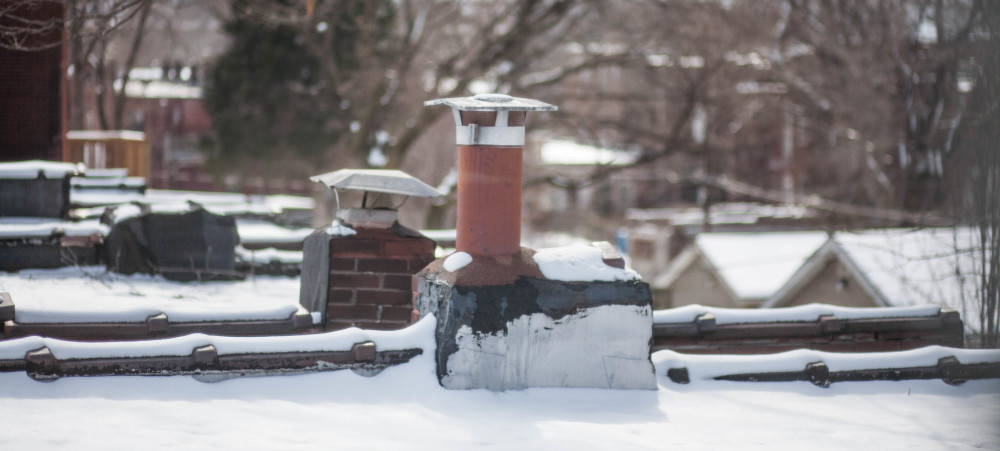
It’s always tempting to offer some borrowed eloquence; but that’s cheating, and now that I’ve lived officially three quarters of a century I’d like at least to cheat a little less than in former years. No intimation of winter yet—the season hangs indifferent, damp as the leaves in my back yard that I’ve not yet raked, neither cold enough for winter nor fruitful enough for fall. The sap wrung out of the time, I journey a sodden way towards solstice, towards the longest night.

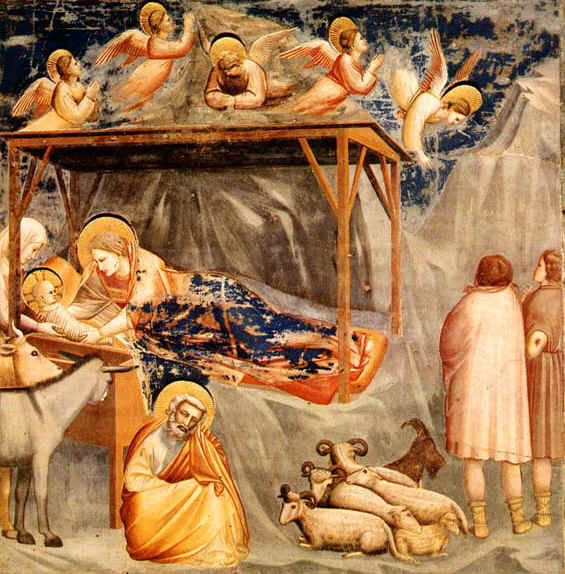
Some years the sky has opened to thousand Seraphim striding the air, their great pennons shedding dark love. Today at dusk a fat squirrel pawed through the leaves, found an acorn and scampered up the fence to the garage roof and thence to the hanging branches of the huge old oak in my neighbor’s yard three houses down. Better bury some acorns in the ground, I thought, lay down some supplies against the time when the light goes; though yesterday at the clinic smart young doctors shined lights in my eyes and pronounced them healthy.

Lord, the thing I know best is that I don’t know much of anything. I can’t imagine not being, can’t think not thinking. But the death wind blows around me, not urgently, not swiftly, but firmly nonetheless. What angels will stride in its wake this year? I read of murdered children in the news and wonder how anyone . . . so many innocent, but would fewer have been less . . . I can’t finish the sentence. I resolve to rake my leaves before year’s end (mine by possession, not by ownership), to clean my gutters, and to sit on my back porch at dusk to watch the time go afterwards.

These will be my last things for the time being—though of course I have good memories, hierophanies some of them and those I don’t like to use too much, don’t want to wear them thin. But if you come by again, I’ll be as ready as I can be, having recalled that once you astonished me in the old red brick church, so that I ran out into the night with tears streaming down my face. After that you dropped in occasionally, like that time in the Intimate Bookshop when I picked up “A Song for Simeon.” But mostly you’ve stayed hidden in the world, the “still unspeaking and unspoken word” I wait upon.

—Come, Emmanuel.