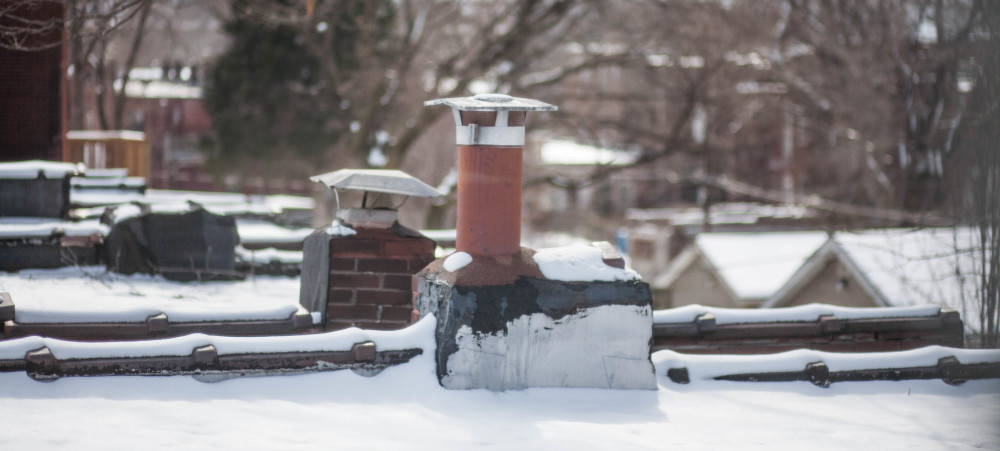
I grew up with books. From the time I was eight or nine years old I had a library card. It seems strange to me now, but from the time I got that library card I was allowed to walk from my grandparents’ house on Merchant Street to the old Abilene Public Library building on the edge of downtown. That building has long since been replaced, and my second home town now boasts branch libraries in addition. Present plans call for moving the main library to the building that once housed my old high school. Talk about deja-vu all over again.
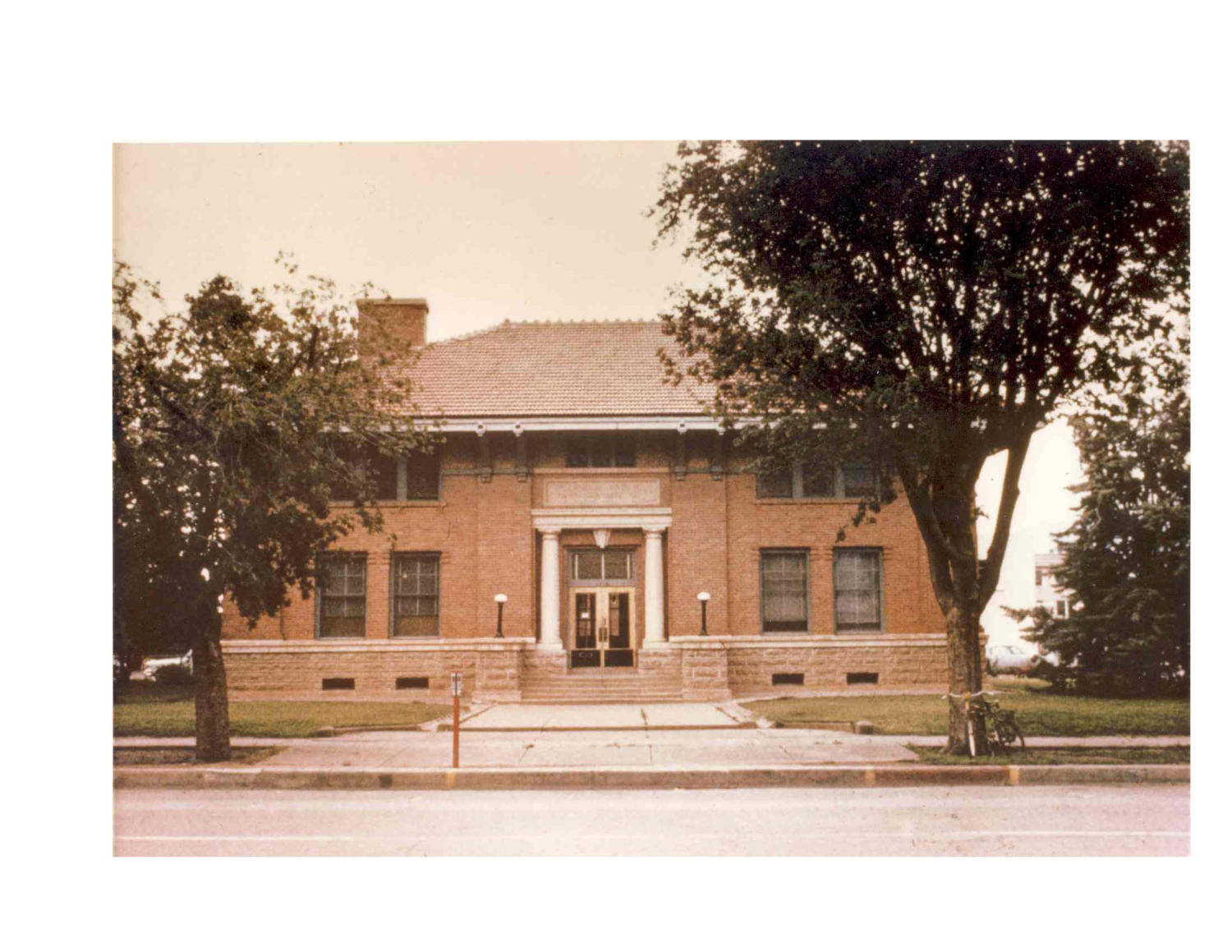 Thinking of that place as it was in former times conjures up memories of sitting on dusty, hardwood floors between the stacks as cicadas shrilled outdoors and an occasional blue-jay shrieked, of studying for school projects and debate cases with friends around the old oak tables there, of chatting with Mrs. Hutto, my favorite librarian, at the circulation desk on the main floor. This photo hardly does justice to my memories, but it is what I could find. I share love of that remembered place with my friend, the late A. C. Greene, as I share the fact that the librarians allowed me to check books out of the adult stacks from the time I was twelve or so. In those days, our library in Abilene was housed in this airy, two-story structure, built of native sandstone; and it was a Carnegie Library, having been built during the years when grants of $10,000 could be got for the purpose from the Carnegie foundation.
But it’s the books on our shelves at home that I chiefly remember. I recall reading “the Barrel Organ” and “The Highwayman” in one of a couple of English poetry anthologies my mother had left from her college days, and falling in love with Edna St. Vincent Millay, whose “Recuerdo” I can still quote from memory, of being frightened by the anti-war poems of Wilfred Owen and comforted by Yeats’ “Lake Isle of Innisfree.” I remember some books of my father’s as well. Mother had sold the equipment and books from my father’s Albuquerque medical office after his death was confirmed in 1945 (he was originally listed as missing in action) but had kept his books on the shelves at home mixed in with hers.
I vividly remember reading two of my father’s books. One was entitled Devils, Drugs, and Doctors, by Howard Wilcox Haggard, the other An American Doctor’s Odyssey: Adventures in Forty-Five Countries. The woodcuts reproduced in Devils, Drugs, and Doctors rivetted my thirteen year old attention and drew me into the stories as much as Haggard’s vivid story telling. Afterwards I binged on books about the history of medicine and surgery for a while.
Both books are now out of print but still available, and if you browse through the Amazon buying options and reviews you will perhaps see why. Both are still relevant to the study of Public Health. The first is a history of childbed fever; the second a memoir that describes “conditions on ships and trains, in cities and country sides around the world,” as told by one Amazon reviewer. The author is Victor George Heiser, who served as chief health officer at the American colony in the Philippines and later as public health adviser to the international public health team of the Rockefeller Foundation. It occurs to me that my father may have run across him during the 1930s when he held a series of Rockefeller Fellowships to study at the Johns Hopkins School of Public Health and earned a master’s degree there in 1939. In one of his letters home, my father writes favorably from the Philippines of public health initiatives about which he had studied at Hopkins.
All of which perhaps explains why the idea of public health, that is the idea that society as a whole has an interest in the health of individuals, seems normal to me and why I have been troubled to discover the disarray and disestablishment into which our American system of public health (if we can even call it that any more) has fallen over the decades since we began dismantling it in favor of the present fee for service medical system we see struggling on every hand to combat the pandemic we now face. My father served in the United States Public Health Service during the 1930s, then made the choice the rest of the country would ultimately make. He resigned from the Service in 1939 and entered the private practice of medicine. Unfortunately for us all, his National Guard unit was called up in late 1940, a circumstance that would be for him a death sentence. I have written about him many times, Here is an essay that will connect you with some of them, if you’d like to read.
But it is the idea of public health that many Americans have now determined to be excessively burdensome in this era of late capitalism. I’ll not list the ways Americans have found to protest current public health initiatives; they are all too familiar and there is nothing new in them. We have always endured anti-vaxxers and others who have protested, refused, and otherwise attempted to stymie public health initiatives. Many Americans still smoke. The Catholic church staunchly maintains its opposition to artificial birth control. Once in the not too distant past, during the 1918/1919 influenza pandemic, we have even experienced a bad government in this country which, like our present government, attempted to suppress public knowledge of the spread of the deadly disease for political reasons. And there is a dark side to the history of the public health idea. We recall the Nazi determination to eradicate everything from Jewry to epilepsy in a series of racialized public health initiatives. Some of us recall with horror our American experiments with eugenics and the notorious Tuskegee syphilis study.
Much recent public behavior might recall those past examples of radical indifference to cruelty and suffering. We are all familiar with a photo depicting an armed protester wearing no mask as he screams obscenities in the faces of masked guards stationed outside the Michigan state capital building. We are now familiar with a politics that urges sacrificing the elderly and vulnerable in order to ‘reopen’ our consumption driven economy. Even more insidious is a species of argumentation that recommends against social distancing measures on the grounds that pandemics are a ‘natural’ part of our planet’s ecology, a means to control population. etc. This argumentation moves quickly (and incoherently) from claiming that social distancing doesn’t work to questioning the numbers of deaths being reported in the media and asserting that some balance needs to be struck in public policy between concern for the suffering and death caused directly by the pandemic and other so called “deaths of despair” presumed to be occasioned by social distancing. A recent good piece in the Arizona Mirror reviews these arguments.
What to do with this when one is an asthmatic octogenarian with COPD and heart failure and a stroke survivor as well. I am among the most vulnerable segment of my country’s population when viewed from this perspective. But from another perspective, I am comfortably retired, own my own home, and can stay more or less out of harm’s way as long as my spouse and my son, who must make periodic trips out to purchase provisions, do not contract the virus. My experience over the past many months has taught me to live with risk, though I must say I became convinced many years ago that my life hangs by a thread. The pandemic adds a further level of risk to my life, but it has not made me fearful. I should be fearful if I were homeless, or in want, or in jail, or forced to work in a meat-packing plant, or live in a nursing home. Perhaps I am not fearful because I am conscious of being blessed, or in a condition that resembles being blessed.
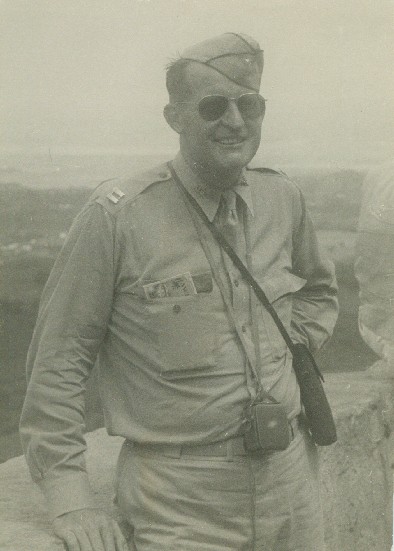 But this memorial day I am thinking again about my father and about this very fine polemic by Marilynne Robinson in the June 11 issue of The New York Review of Books. I cannot know what my father would have made of our present crisis in America, but I like to think he would have recalled his own years in the United States Public Health Service in some meaningful way, for public health as an idea, as a dream, points steadfastly at the same truths Robinson asserts in this essay. Our notion that a system of authentic human flourishing could be based on a competition for wealth could never have been sustained. Such a competition inevitably leads to the vast inequalities we now see as the system collapses around us leaving some of us well off and others destitute, or near destitute. It is at this juncture, when deaths by virus and deaths by despair may be seen to converge. For public health cannot be sustained by a winner-take-all casino economy such as ours. A public subjected to the tyranny of the marketplace is by definition unhealthy. Any public will be sustained in health either by a generalized good will or not at all. And that good will in turn must be sustained by an economy that puts no one in want. Our problem as Americans is that we have subscribed to a zero sum economic ideology that requires poverty in order to generate wealth. We are presently living with a public health system that is characterized by manufactured scarcity, and in that environment “for [many] ordinary people there is no success, no benefit” no means to a healthy life to be had from the common cost benefit analyses to which we are traditionally accustomed. This present might lead us to a common perception of human fragility not unlike my own. Robinson hopes it will, to a revaluation of human nature that might enable us to see again both how fragile we are and how wonderful. As the psalmist knew, we are both ‘fearfully and wonderfully made.’ But there is a sequel to this essay, that I’ll not write today. It might begin (or may) with Robinson’s perception that given our present chaos, and “allowing for regional variations, to the degree that democratic habits persist, the country will get by.”
As I write these thoughts in advance of tomorrow’s Memorial Day I think of headlines in this evening’s Washington Post to the effect that Covid-19 is now surging in rural American areas where there are no longer hospitals to care for the sick. Nevertheless, crowds have thronged nearby Lake of the Ozarks in defiance of the conventions of social distancing. This is the chaos of present day American life. It takes my breath away and makes my heart heavy. Still, for every image of chaos in our media there are other images of philanthropy, from Bill Gates (whom I mention because he is the subject of a particularly distasteful conspiracy theory) to my friends who are risking their lives daily to deliver meals to the homeless on our downtown Saint Louis streets. If only we made nobody homeless. If only we made nobody poor. That’s not Karl Marx, by the way; it’s William Blake. My wish for my fellow citizens this memorial day is that we collectively desire the health, safety, and security of others as we desire our own.