the coming terror

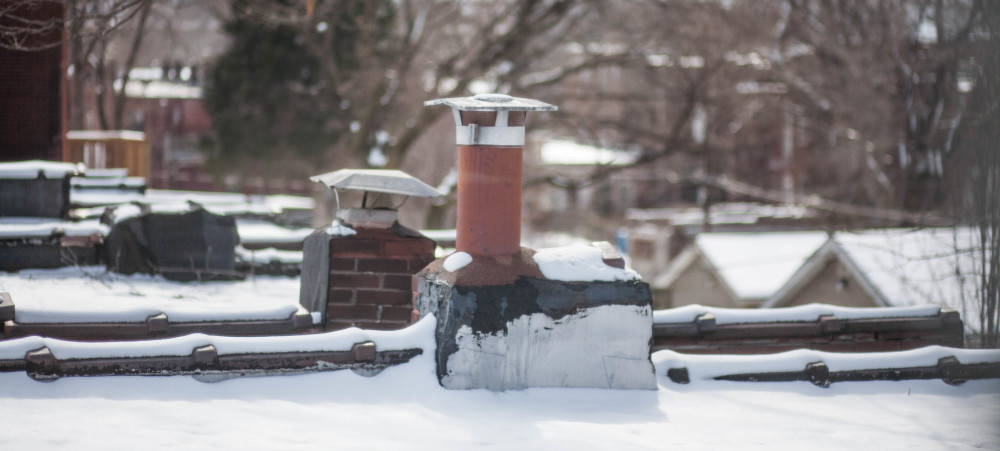
John Lewis is dead. It is to be hoped there will be appropriate national gestures to honor him. A friend posted this memorial photo at Facebook this morning. Somehow—I’m not sure how—it captures the poignancy of the moment, this moment of John Lewis’s death and what may become his enduring legacy. Authorities in Selma may rename the Edmund Pettus bridge for him, but the abomination of institutional racism continues unabated in the land despite the struggle, despite his struggle, the struggle of his lifetime that continues and will continue in spite of attempts to crush it. In that regard it is at least interesting to note that praise for Lewis is now coming from both sides of the political divide.

However, In 1965, in the aftermath of almost universal horror as news reports displayed the casual brutality of the police attack on protestors attempting to cross the Edmund Pettus Bridge on the way to Montgomery, a second march was allowed to proceed with the protection of federalized National Guard troops. Not so today, as a fascist federal secret police force now roams city streets in Portland, Oregon carrying on a work of suppression no less sinister than that visited upon Lewis and other protestors during the first “bloody Sunday” march from Selma to Montgomery. It is an irony that shouldn’t be lost on us. It undercuts the claims of rightist political figures such as Mike Pence and Mitch McConnell who have stated publicly how much they loved and respected “John” even going so far as to use his first name, a usage that in itself makes an obscene claim of solidarity with his legacy.

Lewis’s death, and that of C. T. Vivian, his companion in the struggle, both come at a time of terrifying constitutional crisis in the land, a time that exposes deep flaws in our constitutional system. And the terrible irony is that these flaws have been exposed again and again in our history by reformers such as Lewis and Vivian, some of whom have become martyrs, like Eugene Debs and Dr. KIng. But the efforts, the suffering, and the deaths of these martyrs have yet to make headway against the intransigence of the people. I speak of systemic racism, but it was the people who installed our present regime, and it is the people who may very well unleash the full potential of this regime to foment terror in order to ensure its survival. The senate’s refusal to remove the president from office should assure all of us that the congress will not stop the terror. The willingness of the highest court in the land to reauthorize the federal death penalty should assure us all that courts will not stop the terror.

Downstairs just now I noticed that a poster welcoming refugees still hangs in my front window. Passing my front door I noticed the Black Lives Matter sign I share with my neighbor. Some days ago when protests were beginning along my street I welcomed them. I have absolutely no fear of protestors; I would join them if I could. On the night I speak of I opened my front door and waved at groups of them. But I fear the terror and chaos a deranged president with ambitions to be a dictator may unleash on the rest of us as he continues to confront reports of his failure to cope with the pandemic and his falling poll numbers. I fear that terror because the signs of its emergence are becoming plainer each day. I do not know whether we will be able to hold an election this fall. Last post I quoted George Will, but I did not mention his most ominous paragraph, which is this one:

This nation built the Empire State Building, groundbreaking to official opening, in 410 days during the Depression, and the Pentagon in 16 months during wartime. Today’s less serious nation is unable to competently combat a pandemic, or even reliably conduct elections. This is what national decline looks like.

“National decline,” says will? “and worse can be confidently expected.”

The desk where I write now sports my two modern stoic medallions. Memento mori reminds me that death stalks me. When I look down the staircase where I fell only last year I sometimes wonder “Will it be here?” These more or less grisly thoughts are my companions these days, but they background a concern that I should like not to die just yet. Off and on during my adult life I have felt that I was living towards some high point in my country’s history. That’s the real dream of liberalism, a word I still use to describe myself, a word I have never believed could be abused beyond efficacy by its detractors or its adherents. I believe in what Richard Rorty called liberal hope.

My own liberal hope is grounded in Christian humanism, unlike Rorty’s, which was grounded in an atheism for which he made an eloquent lifelong defense. But if you read Rorty you will realize that his version of liberal hope does not invalidate mine. Christian humanism gives me my final vocabulary, a term I learned from Rorty. But Rorty’s final vocabulary is the history of Western philosophy. We can agree to disagree. My own liberalism contains the naive hope that my country might one day come to resemble the kingdom of heaven, of which the writer of Hebrews remained confident in the face of disconfirming data because she could “see Jesus.” In a time when even Jesus has been almost entirely coopted into Rightist idolatry, it is difficult to envision the Prince of Peace.  I now have a lifetime’s experience of confrontation with that idolatry, which is presently enjoying a cultural ascendancy I cannot recall ever having observed before.

Twelve years ago my beloved and I stood in a line outside the Edward Jones center waiting to be admitted to a rally in support of Barack Obama. We fell into conversation with a family from Oklahoma, young farmers they were with a couple of children, bright, educated. They were passionate as we were about this young man who promised to be a transformational president. Here is something I wrote about Obama back then.

Obama reminds me how it felt to make one with my sisters and brothers and students and colleagues in the marches of the sixties, how it felt to sing “We Shall Overcome” in those days when we lost a lot of fights, but won some too. Obama reminds me what it was like to win (even when we lost), what “Glory, Hallelujah!” meant to us then and how it almost became the national anthem. He reminds me what it was like to love my country when I loved my country with a passion that’s perhaps only possible when one is young. We’ve lost a lot of fights recently, but Obama gives me hope that we might still win a big one or two before what for me will be the end.

I’ve lived another twelve years now, long enough to have weathered my own personal disillusion with Obama. His fatal flaw was a desire for bipartisan governance, which we now know that Republicans conspired from the beginning to deny him, but he remains for me chief among modern presidents as exemplar of liberal hope.

I should like not to die before his portrait goes up on the White House wall.

everything old is new again

Today I went searching for something John Dos Passos wrote in The Big Money about the execution of alleged murderers Nicola Sacco and Bartolomeo Vanzetti. I had read the USA trilogy, which contains The Big Money, back in the 1950s, when its radicalism seemed a little dated, given that of Allen Ginsberg. I didn’t know it at the time, but Dos Passos had already completed a transition from 30s radical to 50s neocon, as so many American writers of his generation did. Still, the passage in question has stuck with me over the years as a cry of hopeless rage on the order of Ginsberg’s Howl.

they have clubbed us off the streets they are stronger they are rich they hire and fire the politicians the newspapereditors the old judges the small men with reputations the collegepresidents the wardheelers (listen businessmen collegepresidents judges America will not forget her betrayers) they hire the men with guns the uniforms the policecars the patrolwagons

all right you have won you will kill the brave men our friends tonight

there is nothing left to do we are beaten

….they have built the electricchair and hired the executioners to throw the switch

all right we are two nations

America our nation has been beaten by strangers who have bought the laws and fenced off the meadows and cut down the woods for pulp and turned our pleasant cities into slums and sweated the wealth out of our people and when they want to they hire the executioner to throw the switch . . .

I found it in plenty of places; a poignant blog by Kevin Drum came up among them. “Everything old is new again,” Drum writes at the end, echoing the Peter Allen song. And it all seems to coalesce into a huge pile of significance today as I read reports of a federal secret police unit raging round the city of Portland, Oregon detaining and maiming peaceful protestors and fast backward to the re-institution of the federal death penalty by a venal Attorney General and a Supreme court that can hardly be trusted to avoid equal venality.

I add these abominations to the list of crimes the president and his minions (among whom I include his enablers in the United States Senate) have got away with: cheating to win the 2016 election and then covering it up, the latest chapter in that sorry story being the Roger Stone commutation; wholesale scapegoating of immigrants including the now infamous separation policies, concentration camps, and other efforts to subvert immigration statutes, undermining our nation’s public health service as part of an overall attack upon the provisions of the Affordable Care Act with the result that we now have the worst of the worldwide coronavirus epidemics whose death toll is now over 140,000 and rising; attempting to seize control of messaging to the nation about the current pandemic first by holding daily press briefings that were little more than campaign rallies and when that didn’t work launching a series of attacks on Anthony Fauci and when that began to backfire demanding that hospitals and states bypass the CDC and submit coronavirus data to the White House; subverting half a century of foreign policy in eastern Europe to further the geopolitical ambitions of Vladimir Putin while ignoring Putin’s cash bounties for the lives of American soldiers. The list goes on and on. George Will has charged that our country “is now being administered by a gangster regime.” I agree.

The Sacco and Vanzetti execution was clearly a miscarriage of justice by legal standards that constituted norms only yesterday. We can now add those norms to the list our present regime seeks to overturn. Support for that regime continues to wane as the coronavirus pandemic grows worse, but leaders, supporters, and enablers of the regime continue to laud and to pursue its criminal agenda, all the while attempting to ratchet up its authority. As of today I am no longer interested in the niceties of analysis. Like George Will I hope for an electoral tsunami in November so profound that it destroys this present regime and the Republican Party with it.

While I intend to vote for Joe Biden, I believe Biden will have to relent about Medicare for All and abandon his historic commitments to the banking and insurance industries. He will also have to confront his record of uncritical support of policing This present Republican regime has exhibited the death throes of late capitalism, particularly its violence against struggling minorities. Perhaps late capitalism will maintain itself by force among us; it can only do so by displaying its illegitimacy for all the world to see. Democratic socialism is the way of any viable path out of our present decadence. What stands against democratic socialism is massing now to support the continuation of our present kleptocracy. Its playbook will include the time-honored tactics of smear and voter suppression, which loom particularly large this election cycle because of the pandemic. Added to the usual tools of voter suppression now are lack of federal support for election reform and the current effort by Republicans to destroy the US Postal Service, which will be charged with transporting the millions of mail-in ballots expected to be cast. But the most disturbing elements of that emerging Republican playbook are a federal secret police of unknown size and the thousands of militarized police forces throughout the country who through their national union have now declared support for the Republican gangsters and their president.

The Fraternal Order of Police supported Obama and Biden in past elections but endorsed Trump over Clinton in 2016 claiming that she ‘snubbed’ them. It is time for Biden to repudiate police militancy if he is to represent the hopes and dreams of the thousands of Americans who have now taken to the streets. This will be a massive task, but it might begin with a truth and reconciliation commission, modeled on the South African experience but with some added legal authority. A more massive task will be to restore the rule of law. It isn’t true that we’ve never before been where we are now as a people, or that the character of our times “isn’t who we are.” But it is true that we have never before confronted so massive a task as it will be to establish justice in a land that can no longer forget its sins nor sweep them under the rug.

America our nation has been beaten by strangers who have bought the laws and fenced off the meadows and cut down the woods for pulp and turned our pleasant cities into slums and sweated the wealth out of our people and when they want to they hire the executioner to throw the switch . . .

But we are the strangers who beat our nation bloody. We are the crooks and liars who bought the laws and fenced off the meadows and cut down the woods for pulp. We turned our pleasant cities into slums and sweated the wealth out of our people, and we didn’t care as long as it wasn’t us who got herded into those slums and factories and sweatshops. And we have now got this miserable excuse for a government because we voted for it. And it may be too late to vote it out. We can now certainly not vote it out before countless more Americans die. We have hired the executioner to administer the lethal dose.
Yet once more . . .

And I am crushed by the knowledge that another black man has been lynched, this time in Minneapolis in full view of spectators who were able to film at least part of it. At a time when I am numb with outrage already, yet another detestable, brutal, violent injustice. And I reach for words—because I am old, I feel impotent as a citizen, I am shamed.

All the usual responses are in evidence, as if prepared. Police who lynched George Floyd have been fired but are yet to be charged with any crime. Protests began almost immediately and continue, eliciting predictable responses from local police, who have denied reports of rubber bullets, but cannot deny reports of fire hoses and tear gas. Social media again fill with support for the protestors side by side with now familiar attempts to exonerate fired police. Black lives matter memes circulate widely; no doubt there will also be memes asserting the primacy of blue lives once a justification of this new murder coalesces on the political right.

Now, notice of Larry Kramer’s death reminds me that the pandemic goes on, that my doctor yesterday reminded me to get a pneumonia vaccination when even massive suffering and death can no longer move many of my fellow Americans, as it failed (or fails) to move many during the continuing AIDS crisis, which has killed 675,000 since its beginning and continues to kill some 13,000 people each year. I’ll get my pneumonia vaccination the next time I can visit a doctor in person, and I’ll continue to be shamed by the cesspool my country has become. How is it that we tolerate this present regime as lynchings, mass murders, antisemitism, and the other trappings of fascism surround us daily. I want to scream, to run into the streets with the protesters. I find myself understanding, perhaps for the first time in my life, the impulse to throw a bomb.

It takes training to return violence with violence, force with force. I lack such training, but I begin to understand how one might become so desperate as to go in search of it. I am developing some new understanding of what it might mean to become radicalized. And at the same time, I’m troubled to be using such language. Do I really want to incite violence? Normally, I’d have answered “No” with alacrity, but today I am angry, and my anger puts me at odds with myself. In order to write my anger I should have to overcome my own stoicism and in the act of that face the question, “Do I really want to do this?” I don’t want to face that question, but perhaps I should.

What I am describing is the dilemma that gave rise to Stevens’ “Mozart 1935,” a poem I’ve written about before in the aftermath of the Michael Brown verdict. As I read back over what I wrote then, I find that I used Stevens’ poem to image a feeling of being marooned that is similar to what I feel today, and I remember something Isaiah Berlin Says of Verdi.

He was the last master to paint with positive, clear, primary colors, to give direct expression to the eternal, major human emotions: love and hate, jealousy and fear, indignation and passion; grief, fury, mockery, cruelty, irony, fanaticism, faith—the passions that all men know.

Verdi, as praised by Berlin, was perhaps the last Major European humanist who was not at war with himself.

When Haemon asks his father Creon if it is reasonable never to listen to reason as the catastrophe of Antigone unfolds, the answer is obvious—the question is merely rhetorical. But in our time perhaps a different answer might be returned. In a time when even God can be put on trial, as in Guenter Rutenborn’s The Sign of Jonah, when the world as we know it seems poised on the brink of a new era of Fascist strife, and nobody seems able to stop it, and “good” people seem determined to inflict it upon the rest of us, perhaps it is no longer reasonable to listen to reason.

If they throw stones upon the roof
While you practice arpeggios,
It is because they carry down the stairs
A body in rags.

Perhaps ours is less a time to ‘return to Mozart’

He was young, and we, we are old.

than to join the stone throwers.