
in the act of finding

Since I began this blog there have often been periods when I’ve not posted or times when I’ve put off writing particular pieces I’ve promised in favor of paying attention to events. I’ve posted nothing for the past six months partly because I’ve been paying attention to events in a way that is new for me and has seemed more conducive to silence than to speech. (Writing is speech for me, perhaps because I am old fashioned, or just old, perhaps because I am a poet). In this essay I hope to be able to delineate what I think I have learned, or am learning, in my new round of attending.

As a way of beginning I am recalling a conversation with an old friend, the Rev. Jimmye Kimmey, a priest of The Episcopal church for whom I have lasting and deep admiration and affection. I don’t remember the context, what it was that caused me to ask my friend what I asked her, but I do remember that it was something in the news of the times towards the end of the last century, something that disturbed me with the suggestion that misogyny was far more widespread than I thought. “I’m wondering for the first time,” I said, “if most men hate women. Is that really true?” Her answer surprised me. Very quickly and quietly she said, “Yes, men hate women.” No qualifier, nothing to let me off the hook as a man, but as we continued to talk it was as though she had touched my hand when she spoke. We were in one of those communicative moments when difference falls away and humans confront one another outside the norms of prejudiced discourse.

Another friend, Rob Anderson, has studied such moments, He and his partner, Kenneth Cissna, have written extensively about what they call Moments of Meeting, in a study of conversations between Carl Rogers and Martin Buber that was published by SUNY Press in 2002. Whether such moments, or some public equivalent or set of equivalents can be constructed as part of an attempt to retain or revive mass participation in various performances of the public good among us, I don’t begin to know. But I mention Rob and Ken’s book as a way of making a generalized statement at the outset about what I think is at stake for us in this century as peoples who in the final analysis must live together on this small planet as we confront what is coming to seem more and more like a worldwide backlash against the liberal world order we have known (and taken for granted) during most of my lifetime. Could a transformational moment of meeting take place between congressional Republicans deeply invested in the confirmation of Brett Kavanaugh to the Supreme Court and women just as deeply invested in frustrating that confirmation? We already know the answer to that question. Here’s another. can we imagine such a moment of meeting between a group of women who oppose the Kavanaugh nomination and women who are now defending it?

And of course there’s a larger question behind these questions about a particular historical circumstance involving particular cultural commitments and instrumentalities. It’s the question we, like J. Alfred Prufrock, have had dropped on our plate by the new century which seems to be turning the world upside down. I’ve been trying to think about what’s at stake in my own confrontation with this question, as well as how to frame an interpretation of it that will suffice for the time being. At the head of this piece I am returning, as I often do, To Wallace Stevens:

The poem of the mind in the act of finding
What will suffice. It has not always had
To find: the scene was set; it repeated what
Was in the script.
        Then the theatre was changed
To something else. Its past was a souvenir.

In declaring my desire to find a poem, I ask for something I think precedes defending the public good. What factors, conventions, instrumentalities impinge on my taking the public good seriously. What commitments do I have as a human individual with my particular history and acculturation that may impinge upon my thinking; and if I find myself at fault, what can I do about it? Another old friend, the late A. C. Greene, said to me once that he thought one should have a personal reason for whatever one believed about life. At the time I thought the remark was a fairly shallow obiter dictum, but I no longer think so.

And for a while, too, I was satisfied with the recommendation I have made in a number of essays, that we as a people need to revive politics and participatory democracy. But I now think something else has to happen before I can recommend conventional politics seriously to any young person who believes that voting is a sham and that direct action, protest, union organizing, and like modes of social action are superior to established ways of what we now call bringing about change. What needs to change after all? Isaiah Berlin says at the outset of his first essay on liberty that when ends are agreed upon in a polity all politics is instrumental. We now live with the reality that questions about the ends of life and society form occasions for bitter and irreconcilable dispute among us. Some even take the view, famously associated with Margaret Thatcher, that society doesn’t exist. As I think about my country these days, I am less able to return a political answer to Chernyshevsky’s question, “What is to be done?” than I was when I wrote about it in 2016 shortly after the election.

Much has been said as the present U. S. regime has run its increasingly destructive course almost to its midpoint, about the undoubted fact that this regime has flouted most norms of decent behavior. But the conflict over the Kavanaugh appointment has exposed another set of norms that the majority of Americans who oppose the present regime find embarrassing and distressful. I am one such American. As a descendant of slave owners I have directly benefitted from the peculiar institution. My mother’s parents were shaped by post-reconstruction southern ideology. I grew up in the twilight of the Jim Crow era, internalized its values, attended segregated schools. As a descendant on my father’s side of white settlers who came to the southwest in the last days of the Oklahoma land rush I am a beneficiary of ethnic cleansing of the North American continent, of Manifest Destiny, as well. What these facts mean to me now is that my thinking for most of my life has been embedded in acceptance of a social hierarchy that assigns roles to its members on the basis of the accidents of birth and history. It’s all very well for us to tout American meritocracy, but in my case privilege came before any merit of my own

When someone like Brett Kavanaugh proclaims that he got into Yale by virtue of virtue when in fact his was a legacy admission, we understand how meritocracy works at a different scale of entitlement from mine. Leaving race and ethnicity aside for the moment, I have been struck in the past few days by how often I have heard it claimed that all of us men, if we are honest, will have to admit to attempting to rape a woman, or women, when we were young; and that therefore, if Kavanaugh is found to be guilty of moral transgression as a young man, how will the rest of us escape whipping? In the immediate aftermath of Lindsay Graham’s tirades against women and the Democrats in the U. S. Senate, it was this argument that was the subject of a number of telling critiques of masculinity written by women, of which this one might serve as an example. I think I am one of a number of men who have never raped, or attempted to rape anyone; but I have had a long and complex education in regard to my own participation in the sexist hierarchy that dominates modern culture worldwide, no less so in this presumably enlightened place than in those “shithole countries” our enlightened leader enjoys stigmatizing. But if Graham’s target was more Democrats than women, then his tirades take on a further dimension as critiques of Democrats who support Dr. Blasey Ford against Brett Kavanaugh but defended Bill Clinton in an impeachment trial in which Graham was the prosecutor. You can’t have it two ways Graham seems to tell us. If you defend the essential innocence of Dr. Blasey Ford against the youthful depravity of Brett Kavanaugh, then you should at least acknowledge your culpability when you defended Bill Clinton against defenders of Monica Lewinsky. Consent aside, the power differential between Clinton and Lewinsky should have caused you to vote for impeachment.

Of course the Clinton impeachment trial was not about whether the president “had sex” with Monica Lewinsky. It was about obstruction of justice. Clinton lied, as was argued, to protect both his privacy and that of the young woman. But the legal issue of a trial, even an impeachment trial, is sometimes a mask for more profound issues, as countless episodes of Law and Order have now taught us. The Clinton trial was about the relative importance to the republic of Clinton and Lewinsky. Recent Republican strategy has sought to make the Kavanaugh hearings about the same issue. The participants have not cooperated to the fullest extent, but there remains tremendous cultural pressure to protect the norm which decrees that the life and the reputation of an entitled white male transcend in importance the life and reputation of any woman, however accomplished she may be or however wronged by said entitled white male. Many who defend Kavanaugh are resorting to claims that Dr. Blasey Ford’s memory is faulty, or that she was paid to lie as part of Democrat conspiracy. May they continue to be comforted by these rationalizations as events unfold; for if the present FBI investigation turns out to be the whitewash many of us expect, the facts of Kavanaugh’s young life will continue to emerge as enterprising reporters dig for them. The bottom line is that Kavanaugh’s privilege is the privilege of his historical moment and also both deeply and tragically human and deeply and tragically American, as Clarence Thomas’s privilege was in 1991, as Bill Clinton’s was in 1998.

Which leaves me where?

The culture of violence against young women and the drinking cultures of many American prep schools and the colleges and universities to which their graduates regularly gain admission are widely known and widely tolerated in the liberal establishment. This toleration crosses political boundaries and is as prevalent among voters for liberal political candidates as among those who voted for the present regime. I say these things on the basis of long experience. They constitute an open scandal. One cannot with integrity deny or defend it, no matter one’s political persuasion. Graham’s attack on women and the Democrats is wrong, not so much wrong headed as wrong hearted, expressive of an almost sociopathic absence of empathy, but it points to a discomfort that all of us, male and female, who gave Bill Clinton a pass must feel. And beyond the Clinton experience, such discomfort is the condition of our time. It is exacerbated on every hand by the inhumanity of the present regime, but it is a discomfort in which we all know, or ought to know, ourselves implicated—all of us who are part of the privileged liberal political class, who vote, or contribute, or organize, or protest. We may seek innocence in driving hybrid automobiles, in working to overturn discriminatory laws and policies, in opposing rape culture, in striving to redeem our public schools, in helping to feed the hungry and clothe the naked. But there is no innocence to be had in these pursuits. That doesn’t mean that we shouldn’t follow them, only that we should understand that our hearts are not pure.

It seems more than a month since the funeral of John McCain, for that remarkable social event is now a world away. But for me what was most remarkable about the McCain funeral and what keeps the memory of it fresh in my mind was not only that it illustrated the vitality of American civil religion and its clear opposition to the anti-religion of right-wing piety, but also that it was seen to do so. It was heartening for a while as I thought about it, but the cultural fissure it revealed began to trouble me almost immediately. Marilynne Robinson persuades me in her new book, What Are We Doing Here (Farrar, Straus and Giroux, 2018) that American liberalism, whether religious or not, has its roots in English puritanism, which gave rise to the abolitionist movement as well. But there were also those Anglicans, Methodists, Baptists, and members of smaller groups who embraced the southern cause during the civil war, some of whom remained outside the national consensus even if they participated in postbellum reunifications. I was baptized in the Methodist Episcopal Church South, that is the historically pro-slavery southern Methodist church. I was a member of a Methodist Church in Durham, North Carolina in the 1960s that nearly split apart over whether it would admit African Americans to attend Sunday services.

We live now—I live now, with the deep conviction that the political and legal fixes we installed in the last century hoping to create a more equitable and just society than the one we had inherited have in some crucial way failed. They have changed some behavior, but they have not changed our hearts. As a thinking citizen, I can adjust my behavior to reflect a decent respect for demands for equality from those marginalized and oppressed by the social system in which we all live. I have been doing so all my life as I have come to understand those demands and desire to be allied with those who make them rather than with those who oppose them. But at eighty something I understand that my managed behavior is on the social surface. My heart is not the heart of a man who hates women or persons of color or practitioners of religions other than my own, but it remains tainted by the bigotry that is built into the social milieu within which I act and whose assumptions I internalized as a child. My education as a social being over the past forty to fifty years has been an embarrassment of occasions upon which I have been forced to recognize the casual homophobia, the casual sexism, or the casual racism, of my behavior and to know what these casual misbehaviors reflect. I think sometimes that I remain a religious person, in spite of a broad area of apostasy in my makeup, because I remain profoundly aware of sin, mostly in myself, trapped somewhere in the wisdom of Solomon—“As a man thinketh in his heart, so is he.” I can no more shed this awareness than I can shed the privilege that sometimes masks it.

So if I were to find the poem I seek, it would be a poem of the heart, a poem that would evoke some moment of meaning in which a speaker and an invisible polyglot audience fold themselves into one another like lovers, heeding neither the craft nor sullen art of any language, certainly not mine. A poem that would evoke a moment of love we fail to find as citizens. Prayer aspires to it.

Big pig, little pig

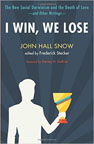
I Win, We Lose:
The New Social Darwinism and the Death of Love, and Other Writings

by John Hall Snow
edited by Frederick Stecker
229 pp., Wipf and Stock, $34

White Trash:
The 400-Year Untold History of Class in America

by Nancy Isenberg
476 pp., Viking, $28


During the years I worked at Fort Bragg I had various old cars as companions along the country roads of North Carolina. I’ve already written about my 1959 Porsche in another context. But I drove and fiddled with a Karman Ghia coupe for a while as well. The Karman Ghia had a tendency to throw fan belts, and I always carried a couple of spares with me.

One night when I was on my way home to Durham the little VW engine began to overheat. I pulled over, turned the car off, and opened the rear boot to let the engine cool a little. Then I got out some tools and sat down on the shoulder with my legs underneath the back of the car.

My head was fairly close to the edge of the boot cover, too, as I bent into the engine compartment; and that turned out to be important in a few minutes when I was startled by some strange noises coming my way from an open field just off the road. I straightened up suddenly, banged my head on the boot cover and knocked myself out.

When I awoke after what I took to be just a few minutes, I didn’t worry about what had startled me, and I was too shaken up to finish the work on my car. I locked things up, hitchhiked back to the base, took some aspirin for my headache, called home, and spent the night on a cot in my office that I kept there for just such emergencies.

The next morning early I hitchhiked back to my car. When I got there I saw that there was a small herd of medium sized hogs in what I had taken for an empty field the night before. They had been turned out to forage in the stubble of whatever crop had been harvested in that field and were still snorting around quite contentedly.

That was my introduction to the practice of turning hogs loose to forage in fields and woods. I didn’t know then but do now that the practice has a long and complex history that has been productive of culture of various kinds. It has given us songs about the Revolutionary and Civil Wars and the War of 1812, songs about cowboying, prospecting, going to Texas, being seduced by fancy men, and other profundities, in addition to providing us with lots of feral hogs. It has also given us the expression, “Root, hog, or die”—self reliance or nothing, you’re on your own old buddy—which might have meant something to me on the road back then if I had thought of it. Here’s a verse from an old song, for which I am indebted to Wikipedia.

I’m right from old Virginny wid my pocket full ob news,
I’m worth twenty shillings right square in my shoes.
It doesn’t make a bit of difference to neither you nor I
Big pig or little pig, Root, hog, or die.

The speaker would appear to be a slave, “worth twenty shillings right square in [his] shoes.” Though it dates the song 1856, the year of its first copyright, Wikipedia traces the expression “Root, hog, or die” to a time “well before 1834,” that date being the date of the publication of Davy Crocket’s Autobiography, which quotes the expression as “an old saying.”

Before he became enshrined in Texas history as one of the heroes of the Alamo, Crocket had a considerable career as a politician in Tennessee and served in the United States House of Representatives. He was a tireless defender of squatter’s rights and of the landless poor. Nancy Isenberg attributes the saying to Crocket that “It’s grit of a fellow that makes a man.”

In her new book, White Trash: The 400-year Untold History of Class In America, Isenberg also writes of the complex and racially charged history of social Darwinism among us, whose cultural roots are probably older than any songs about them. Indeed, the cluster of ideas we subsume under the social Darwinist rubric has been around in America since before we had a term for it, before Darwin’s Origin of Species (1859), and before the career of Herbert Spencer, who gave the phrase “survival of the fittest” its characteristically modern spin.

On the other hand, the Rev. John Hall Snow’s analysis of social Darwinism, as revealed in a new book edited by the Rev. Frederick Stecker, doesn’t explore its folkloric or other cultural antecedents, perhaps because Snow seems less interested in social Darwinism’s American history and more interested in the corporate consequences of the faith (after it had become a faith), particularly in its having resulted in a culture of winners and losers. Indeed the most telling and interesting sections of I Win, We Lose concern how winning came to be the American conception of “survival of the fittest.”

Fr. Stecker found the manuscript of this little book among Fr. Snow’s literary remains together with a number of unpublished sermons. Indeed, some of the most valuable parts of this book are to be found in the sermon excerpts that Fr. Stecker includes as commentary on the main text. I’ve read Fr. Snow’s other books since reading I Win, We Lose. Two of them, The Gospel in a Broken World and A Vocation to Risk specifically address issues of preaching to times of great change: the first in relation to the massive social changes wrought by the 1960s and the second in relation to late twentieth century culture, which Fr. Snow perceived to be in spiritual decline. The effects of social Darwinism and the American culture of winning are themes to which Fr. Snow returned again and again in his writing and preaching.

The importance of winning grows out of competitiveness through the introduction of an adversarial component into all human relationships, according to Snow. The chapters of Snow’s book detail the effects on education, racial justice, marriage, institutional life, and environmental ethics of a cultural paradigm that views social life in all its forms as a series of sites for competition. Winning is promoted and winners are rewarded with major or minor celebrity, money, etc. This is the meaning of success in America. Losing, normally identified with performance that falls short of accepted standards of achievement, but also with wage earning and poverty, is rewarded with shame. The social consequences have been devastating, as Snow details them. His understanding of the losses to public education brought about by the competition paradigm, which Snow alleges have “removed the last vestiges of true learning from the educational process” prefigure present day concerns about high stakes testing and the unfortunate social consequences of our so-called meritocracy, for instance.

For the culture of winning requires that most will be losers. “Winners are defined by the symbolic power of what they own as well as what and how much they consume.” And as the win/lose ethos expands into the creed of American exceptionalism it comes to require “the aggressive accumulation of natural resources, wealth, and technical-scientific information for the single purpose of denying them to the rest of the world as the guarantee of the survival of those currently self-defined as the most fit, namely the richest and most powerful.” Acceptance of this view and the corollary views it requires in contemporary American life puts Christians in a particularly difficult position, because “No vision of reality could be more in conflict with what Christians believe,” according to Fr. Snow. Yet American Christians have defended slavery, Indian removal, the destruction of Appalachia and other environmental devastation by extractive industry, as well as the pervasive growth of destructive technologies the world over, as beneficial and necessary to the survival of “the most comfortable, elegant, liberated life-style in the history of the world . . . .”

Professor Isenberg has other fish to fry. She traces the history of American scapegoating of the poor and the persistence of destructive class-consciousness in America to English colonial policy and practice. Our former British rulers viewed their North American colonies not merely as a source of wealth but also as a dumping ground for human trash, for the hordes of landless paupers, “vagrants, idlers, highwaymen, Irish rebels, known whores and convicts” that filled England (particularly English cities) with what the better classes termed human rubbish. It was settled British colonial policy to transport these persons to the new world for centuries, a fact amply illustrated by the history of Jamestown as Isenberg tells the story. After 1776 the newly constituted United States adopted and extended this policy through the various stages of continental expansion. But far from being valued as pioneers and settlers, the landless poor remained objects of scorn, in some cases more scorned than people of color, described as sallow, diseased, and malformed, an inferior breed of human beings.

It is a widespread conviction that Jefferson’s ringing affirmation of human equality at the opening of the Declaration of Independence entitles Americans to believe that we have created a society without invidious class distinctions. But that belief is everywhere deconstructed by the actions of Americans past and present. We tend to perceive and address the cognitive dissonances entailed by the belief by reference to the category of race in our present-day life and to erase other manifestations both from our perception of and discourse about inequality; yet we have never successfully discriminated between the natural inequalities that abound in our experience of one another and forced or artificial inequalities that are social constructions. This blurring has contributed to our history of demagogic exploitation of inequality for political purposes. Professor Isenberg provides a wealth of examples of the political exploitation of inequality from colonial times to the present in a thick social history that lends substance to Fr. Snow’s argument. Just as race has marked many as socially inferior in our history, so extreme poverty has marked others as deserving of exclusion from the goods obtained through our social contract. Historically, those identified as white trash have been regarded as naturally inferior to their more affluent betters, along with people of color, especially in the South, and their putative natural inferiority has a long history of association with partisan attempts to exclude them permanently from society’s benefits. In its most extreme form, the belief in the natural inferiority of some humans has resembled fascism in all but name.

I owe recognition of the relevance of one of his sermons to our own historical moment to Fr. Snow’s daughter, Lydia Field Snow, who called attention to it in a recent Facebook post. I quote only part of the passage to which she refers.

The precise situation that creates fascism is where society is demoralized, where the conscientious are paralyzed with guilt and leadership believes that it is no longer accountable to anyone, where social disorder is everywhere and that this disorder is everywhere met with more police using more force. It occurs when the law is set aside in the name of order and humans find that the fear, the tension, the chaos, and the guilt become unbearable. It is at that moment when the human spirit is tempted to say suddenly, No! Wrong is right, evil is good, ugliness is beauty, repression is true freedom, and the important thing is to be on the side of the strong. This is nature’s law—the weak, the stupid, the ugly, all those people who are not like me are destined to be destroyed, they are a drag on us, the truly strong. We’ve wasted enough time on them—let’s get it over with—why put up with their nonsense?”

There was a time when I didn’t believe the Republican Party really wanted to destroy the social contract. That was then, before they paraded a collection of proto fascists through a series of elections that ended up requiring all those who survived to pledge ever more stringent scenarios of social harm and that produced a final round of so-called rallies that fostered a lynch-mob ethos. Faced with the recent consequences of that ethos, we shall hardly need the renewed rallies to sustain the country’s angry mood. Our President ran for office in the familiar role of outsider, attacking government as ‘the problem’ in the tradition of Ronald Reagan. But his authoritarian approach to governing promises a police state, and as it develops it isn’t hard to predict a time when his régime will declare itself free of all obligation to ordinary human decency and give itself carte blanche to complete destruction of the social contract. And one further thing is clear. His appeal is deeply rooted in the American culture of winning. Here’s the President speaking to that point.

You’re going to be so proud of your president if I get in—and I don’t care about that—we’re going to start winning again, we’re going to win so much, we’re going to win at every level, we’re going to win economically, we’re going to win with the economy, we’re going to win with military . . . we’re going to win with every single facet, we’re going to win so much you may even get tired of winning, and you’ll say, “Please! Please! It’s too much winning! We can’t take it anymore! Mr. President! It’s too much!” And I’ll say, ˜No it isn’t! We have to keep winning! We have to win more! We’re going to win more! We’re going to win so much!

There’s some cognitive dissonance between the spectacle of Americans winning on such a scale and the destruction of the social contract that the Republican hard core desires, but winning in the presidential rallies was and is imaged as Fr. Snow described it: We need not concern ourselves with “the weak, the stupid, the ugly, all those people who are not like [us].” As the Republican program unfolds, particularly as the Affordable Care Act is repealed and great numbers of citizens lose access to health care while the middle class and the wealthy are given substantial tax breaks, it will become clear that Republican scapegoating doesn’t stop with Muslims and other immigrants but targets the poor as a social class as well. As Representative Roger Marshall (R—Kansas) put it in a recent interview: “Just like Jesus said, ‘The poor will always be with us,’ . . . There is a group of people that just don’t want health care and aren’t going to take care of themselves . . . .”

interim report

The great, glaring ways in which my society’s norms have been morally wrong have pretty much always been obvious to me; though my understanding of the subleties and nuances of these wrongs has grown and changed over the years. It has been my privilege to work to change some of those norms and to see them replaced by others that I and many of my fellow citizens hope to be more humane. But there are other, less obvious norms that are the ground of my experience as well. Last week I participated as a spectator in a forum for candidates for mayor of my city. I attended a play at the Repertory Theatre of St. Louis, known affectionately as the Rep. I attended a St. Louis Symphony concert and a church service. I spent a day judging debates at a St. Louis Urban Debate League tournament.

In these activities I participated in the civic life of my locality. I affirmed my city by living and acting in it through corporate and conventional modes of behavior. I also ate meals at restaurants and with friends, shopped for goods at local stores, drove my automobile on local streets, visited with friends in their homes and enjoyed my own. By these and countless other actions, mailing letters, using electrical appliances, keeping up with the news, watching the Super Bowl, I pursued my social and civic life as I have for almost eight decades in various places in the United States of America. From my early youth until now I have known myself as a social creature, thinking that it was both my right and my duty to participate in my society’s formal civic life but also taking for granted a host of activities and pursuits that form the accidental and complex infrastructure that gives me a physical as well as a social connection to the turning earth, the seasons, the businesses of business and of learning, modes of intentionality that are as much a part of civic life as voting.

I know myself to be a historical actor too, as we all are, living within the stream of our times. It’s tempting sometimes to think that historical milieux can change suddenly and drastically, especially in revolutionary times—but that’s usually an illusion. What looks like sudden change upon inspection turns out to be the product of a gradual evolution. Such a consequence (e.g. the turn towards fascism in the world’s contemporary democracies) appears to have happened suddenly, or relatively suddenly, only because attention was focused elsewhere, engaged with images of an order of things that had long been imperiled. I mean to speak practically, not to propound a theory of history which I am not qualified to do. I also mean to speak from my own lived experience and from no one else’s. Events that might disconfirm my argument abound, the crashing of airplanes into New York’s world trade towers being perhaps the most recent large-scale Viking raid I have witnessed personally (albeit virtually). But the tensions in the middle east in the aftermath of the founding of Israel in 1948 were nothing new in 2001, and our country’s unfortunate involvement in fomenting and increasing those tensions off and on over the years was also old news. We Americans simply thought we were invincible, that our geopolitical situation preserved us from attack.

The political changes in my country have caused me to wonder if my thinking needs to change. I have understood myself as a liberal as long as I have been an adult. But I spent my professional life working in universities except for a period in the 1970s when I worked in the community arts movement, community arts having been an establishment effort not fundamentally different from the founding of land grant universities and community colleges. I am now realizing the extent to which these experiences gave me a situation and an identity in the center of American life, not on the fringes. What I am just fully realizing is that even though I participated in protests and voter drives during the 1960s and have had an albeit sometimes rocky love affair with today’s academic left, I thought of these things as expressions of civic virtue and not as revolutionary acts. Speaking for myself, it is a mistake to identify with claims of opposition to the center. We are capitalists in the United States, as Nancy Pelosi has recently pointed out. But being capitalist is not synonymous with being American. Capitalism is and ought to be subordinate to our evolved social vision. The New Deal got part of that relationship right, but only part. For many Americans, whole social groups indeed, were left out of the New Deal and denied the goods of American life by virtue of ethnicity, gender, or social class. Our public efforts, some of them misguided, to remedy the defects of the New Deal produced systemic stresses that eventually led to the top-heavy, overly bureaucratic infrastructure that the rightist insurgency has now seized and means to exploit for its own nefarious ends. But it is the evolved democratic social vision of the twentieth century that to my understanding remains the central project of American life and that of the evolved social democracies of the rest of the world, though many of them are presently being impacted by rightist insurgencies as well.

It is also a mistake to believe that the rightist insurgency in the U. S. is a demand for small government. It may have been that in the early days (though it is hard to think of HUAC and the McCarthyist witch hunts as small government projects), but by 1964 movement conservatism was clearly an ethnic nationalist coalition opposed to emerging social change and resentful of the declining world power of the United States as the Cold War continued. Nor is today’s rightist insurgency the sole projector of neoliberal economics. One of the rifts that could destabilize our emerging rightist government could pit neoliberals, both Democratic and Republican, in the congress against the economic nationalism of the executive régime. But I think it more likely that rightist forces will unify around rolling back regulations that protect citizens from corporations coupled with various repressive social policies: scapegoating immigrants and minorities, feminists, LGBTs, public schools and universities, unions, science and scientists, professionals of all sorts—a longer list could be made. Much of this will be done in the name of religion. While it is tempting to me to identify myself entirely in opposition to the rightist insurgency, I am beginning to understand that I care most as a citizen about preserving the evolved democracy I am coming to see as the main project of my lifetime and the lives of my family and parents and grandparents.

The rightist emergence in the developed democracies of the west seems sudden (if it does) because of its determination to undo history and because of its violence. We democrats (note the small d) are accused of violence when we protest, just as we are accused of having changed the world illegitimately, albeit we represent the slow evolution of western society towards democratic institutions (e.g. universal suffrage, equal access to education, health care, and other public goods for all persons regardless of race, religion, gender, social class, place of origin, etc.) And what may have begun in this country, seems to have begun if I consult my memory and my family’s, as what was billed in my youth as an effort to ‘restore free enterprise’ has now become a movement to destroy every vestige of democratic socialism among us by any means necessary—and the harm, the pain, the social dislocation and disruption this will cause are not accidental but intended as the means of reestablishing governance by what the rightist insurgency believes to be our legitimate ruling class: white, affluent persons who subscribe not only to a radical neoliberal economic ideology but also to a reactionary and paranoid set of social beliefs that for some are reinforced by a retrograde piety that calls itself Christian. Our current Vice President is representative here more nearly than his boss, but the President adds a beefed-up nationalism and overt kleptocracy to the already toxic mix of recommended rightist practice.

One can fault Edmund Burke for many things. He could not have been a feminist. His record with respect to slavery and colonial abuse, the two great issues of his time upon which he spent the most of his energies, is mixed and problematic. He was not a democrat in any sense of the term. His most famous writing is a tract attacking the French revolution; yet he more or less supported the American. To say these things, however, is to say only that he was a man of his time. Perhaps it is more important that he was a practicing politician, spending his career in the British House of Commons, that his writings have more of the character of obiter dicta than of philosophy. The last thing I want is to endorse the uses to which Burke’s ideas have been put by American movement conservatives. Indeed what seems useful to me at the moment is more nearly what Burke has come to represent in the history of ideas than what Burke actually said about politics or history. Burke’s understanding of the French revolution was deeply flawed, his reaction to it naïve and sentimental. But his position as a politician observing and reacting to what he took to be the destruction of the evolved society just across the channel accords very well with my position with respect to my country’s present history. I have claimed now several times that we are an evolved democracy in the United States. Like Edmund Burke, our founders did not approve of democracy; but we have evolved towards democratic institutions, particularly in the last century, just as we have made some efforts to remedy the consequences of slavery, the native American genocide, and our terrible record as a colonial power. Some have said, and used Burke as their justification, that this evolution has made us weak; I believe, on the contrary, it has made us strong. Now, our evolved democracy faces, if not extinction, at least a severe and cruel curtailment. I don’t need to rehearse the horrors of the past few weeks, only to allude to them and to the fact that they are being praised enthusiastically by representatives of the rightist electorate even whilst their leaders’ behavior horrifies most Americans and indeed most of the rest of the world.

I think protests have to continue, and I will participate as I am able. Beyond protest, I think we all have to organize better than we have ever done before in order to start winning again at the polls, to fight attempts to suppress our votes in the courts and where we fail, to mount massive voter drives to obtain credentials for the disfranchised. We need to participate in local politics. We need to support our local cultural and eleemosynary institutions as well as regional and national advocacy organizations that are doing the work of democratic resistance. We in the American democratic majority have presently lost the ability to command. Some of Burke’s thoughts about France might give us pause as to why that happened; but now, we stand to lose much more. For me, at least, the realization of what I have to lose, may have lost already, is what I have to defend. It is what I think Burke saw, beyond the specifics and with all his flaws and limitations, in the idea of a developed society. Our local institutions will hold for the time being, but we have lost the ethical center of our civilization. This makes conservatives of all of us who are lifelong liberals, and it means partly that liberalism and conservatism were never a binary opposition.

But it is the specifics that count the most. It isn’t enough just to be opposed to the rightist régime because it is duplicitous, authoritarian, bigoted, and violent. That’s one of the mistakes we made in last year’s election. We have to know what things we value in our civic life, and we now more than ever need to tell their stories—the stories of all those things we had come to take for granted as permanent in our lives and in the world. Why is it that I think the rightist insurgency threatens these things? My symphony orchestra is at least half female and includes a goodly proportion of players whose ethnicity is non-white. My church officially supports the ambitions of LGBT persons. Most of the candidates for the office of mayor in my city are African American. The St. Louis Urban Debate League serves St. Louis City Public Schools, most of whose students are African American. A recent play at the Rep involved a conflict between a gay man and the mother of his dead lover. My front window now features a poster welcoming refugees. The International Center just around the corner from my house is a haven for immigrants, as is my church, which also counts a number of same sex couples among its members. I am a supporter of Planned Parenthood, NARAL, the ACLU, the Sierra Club, the Southern Poverty Law Center, and public media as well as my local art museum, botanical garden and zoo. I am a member of the League of Women Voters. From my perspective these facts are signs of the times and of my participation in the normal social life of my locality. From the perspective of the rightist insurgency, however, I am living in the middle of a politically correct community that needs to be brought into conformity with traditional values.

A Face In the Crowd

As I think about the chaos that has surrounded us in the United States since the inauguration of Donald Trump as our president, I keep finding myself in a condition T. S. Eliot describes in “East Coker,” having only learned to get the better of words for things I no longer wish to say. I have nothing more to say at this point about Donald Trump and his cabal or the Republican Party, or about my country.

Trump is being treated by his supporters and his detractors as a shiny new bauble on the tree of our public life, the new cynosure of our popular culture when we ought to be saying something like ‘surely not that again!’ For he is the worst of clichés. I don’t care whether he is smart or stupid or whether Steve Bannon is running him or not or whether the congress is using him or whether or when he will be impeached, though I don’t think impeachment is likely any time soon.

Nor do I care whether the chaos around him is accidental or part of a design to destabilize the country. Trump’s entire program is destabilizing as is the potential program of the Republican government in waiting. At this point events are in charge. I fear that neither he nor his supporters nor any of the rest of us will be able to undo the harm Trump is prepared to do—it appears he is ambitious to destabilize the world.

But we have seen his sort before again and again, the cowboy con artist with a shiv in his boot: Oliver North, Newt Gingrich, Rudy Giuliani, George W. Bush, Rick Perry. Last year there was a fashion for comparing Trump to Lonesome Rhodes, the celebrity anti-hero of Elia Kazan’s 1957 film, A Face In The Crowd, made from a story by Budd Schulberg. Turner Classic Movies aired the film on Trump’s inauguration day. Rhodes is a bad ‘un with a smarmy smile that only an actor like Andy Griffith could have embodied, but he gets his comeuppance.

Towards the end of A Face In The Crowd a survivor among Rhodes’s entourage comments ruefully to a friend, about Rhodes and others like him:

You were taken in, just as we were all taken in. But we get wise to ’em. That’s our strength. We get wise to ’em.

We can hope Trump’s charisma will fail him—it’s the arc of the action he is playing out—nobody can strut and fret forever. But he has powerful allies in the alternative fact industry whose job it is to manufacture conspiracy theories and cram them in the black hole of the rightist media.

Most Americans are already wise to Trump, have been all along. But the joke’s on us. All the while we thought we were liberals, progressives, agents of change. Now it’s a rightist minority who are driving change, people who want to pull up the last hundred years or so of international history and burn it to ashes—they are not conservatives, no matter how they describe themselves. I am a conservative. I am now, at least in some sense, a Burkean. And I don’t have words for that condition yet.