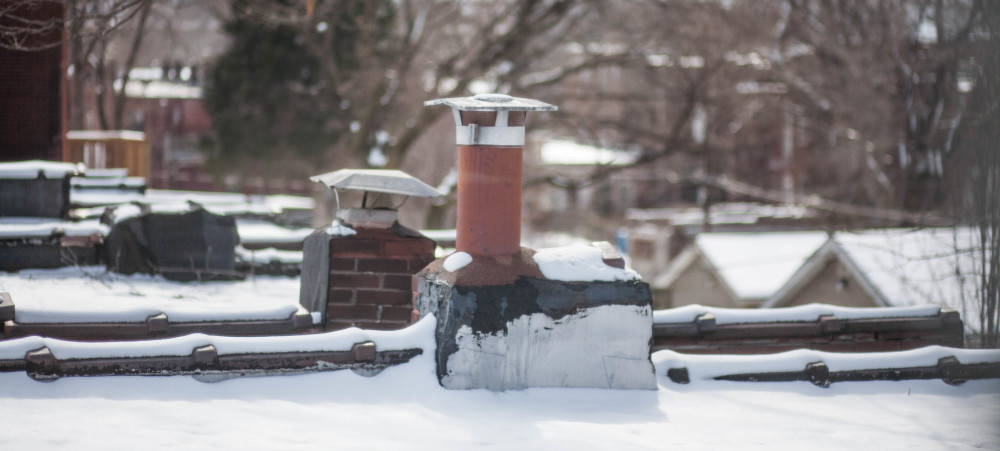
the right hand of darkness

This ‘Heavy” time, which is ours, is nothing more than the long while in which nothing speaks to us . . .
—Martin Heidegger

Advent IV: One of Donne’s Holy Sonnets begins, “What if this present were the world’s last night?” It’s a thought that can be entertained without the heavy overlay of Donne’s piety. I have great respect for that piety, though there is much piety I have to admit to myself I have no grounds to respect. And this year, especially this year, I need to think past Donne’s images of the crucified Christ to ask this question: as the late year empties itself into darkness, what if the darkness proves all-encompassing?

I have no real doubt that I shall write again about the political issues that have moved me since last August, but when that time comes I think I shall face a moral emptiness that will shape my thinking in uncomfortable and strange ways, strange to me at least. That a majority of my fellow citizens apparently approve agents of their government torturing alleged enemies so darkens my moral horizon that I fear the light may never return. And adding to that concern is the growing pushback from police all over the country against the possibility of any constraint upon their behavior.

And what if there is no dimension to my question that reaches beyond this historical moment? This is not to ask what if there is nothing beyond history. That question remains unmeaningful to me. The fact that I don’t understand what I sometimes think of as the world, sometimes the cosmos, sometimes the system of the heavens, sometimes a great economy like Wendell Berry’s doesn’t mean that these metaphors signify an absence. They are rather ways of imaging something that is constantly present.

Or maybe not.

Recently, I found myself in a discussion of hiraeth, a Welsh word for a kind of ontological homesickness, at Facebook. The discussion devolved into thoughts about homeland landscapes. I didn’t contribute much because I was almost immediately cast into my own nostalgic mood, a mood whose objectifications vary, have varied, in my life; and with which I have been familiar since I was pretty young. This year, a year in which I have surprised and been surprised by the antique character of many of my habitual resorts, I not only ponder the growing darkness around me, but also search the emerging future for some source of light whose vitality I haven’t used up.

Donne will not serve. Perhaps no antique eloquence will serve. “Work for the night is coming,” says an old hymn—a night in which no one can work—thoughts attributed to Jesus in John’s gospel. But if the coming night is a moral nothingness in which work and other human actions lose all meaning, then what? What if the darkness is total? That’s the awful possibility that my country’s present flirtation with totalitarianism opens up for me. Or to put it another way around, what if the darkness of our present American history so obscures the cosmic that contains me that I become blind to it and desensitized to its mystery. Then too, at my time of life there is another concern.

I know that one day, rather sooner than later, the world will wink out and be gone from me. Advent has always asked me to look into that darkness. This year my response to facing it is a certain apprehension, partly because I am aware of being closer to it than ever before. I have no confidence in my religion’s myths of eternity. They remain metaphorical for me, ways of imaging an ontological awareness in an epistemological void. For many years, however, I have been confident of the essential goodness of life, what Reynolds Price has called the unaccountable worth of the world—but that confidence is historical. The thought of losing it is what troubles me this year.

Last night my beloved and I trimmed our Christmas tree as we have for all the years we have been together. Afterwards we sat in our living room, whose front window is always open to the street outside, with all the lights out except those on the tree. I thought that even if my confidence in the unaccountable worth of the world were to shrink to the size of this room and the small warmth of my own hearth, that would still be something. But I am more blessed than that. When I was senior warden of my church we built a new set of rooms for our growing multitude of children. It was the windows of those rooms that were broken the night my church served as a protest sanctuary not long ago.

Now those windows are being repaired, and on Christmas Eve we shall celebrate the return of light as an extended family large enough to include even my atheist beloved, who will endure joking admonitions from friends that it really wouldn’t hurt her to take communion. We are all blessed, singly and severally, and though I approach the altar alone, as I will one day approach that final darkness, a hand will be in mine that I trust will one day close my eyes.

Advent II and an Argument for Prayer

I’ve recently read a fairly trenchant piece from my former home town of Denton, Texas that makes a few of the observations I make here today. In spite of the fact that its author looks a lot younger than I am in his profile photo, he makes the following apology: “The last thing we need is another old white guy talking just to be talking.”

Speaking as an old white guy, I’m amused at the thought that I should probably shut up and let experts, or pundits, or other more official speakers than myself have the only say about what’s happening in my country. It seems to me that the official speakers aren’t doing a particularly good job these days, and that many of their opinions are bought and paid for. It’s refreshing to see that Charles Krauthammer, with whom I have never agreed about anything before, has called the New York grand jury’s decision in the Eric Garner case totally incomprehensible.

Krauthammer brings up the issue of double jeopardy as he speculates about the federal civil rights investigation in New York, suggesting that any further state action in the matter would constitute double jeopardy for the officer accused. But about Missouri, it has been suggested fairly forcefully that Darren Wilson could still be tried for murder since the grand jury hearing did not constitute a trial. Missouri Attorney General, Chris Koster, has also admitted that the Ferguson grand jury was misled about the law.

Now, as outrage grows over the New York grand jury’s refusal to indict Eric Garner’s killer, the NYPD echoes Congressman Peter King’s inflammatory claim that Garner caused his own death and that his repeated cries of “I can’t breathe” meant that he could breathe. It’s interesting to me, at least, that this claim was issued in a particularly strident fashion by the Patrol Benevolent Association, the New York City police union.

Here in St. Louis City, where police are represented by two unions, it turns out that city police not only tear gassed Mokabe’s on November 25 but also tear gassed my church and a good many residential streets in Tower Grove Heights. Police chief Sam Dotson has responded to criticism in a particularly arrogant and cavalier manner, citing the usual police justifications for excessive force:

MoKaBe’s wants to think that they are center of the universe. This was not about MoKaBe’s, this was about safety and security on Grand, . . . When the order to disperse is given, it applies to everyone. People always say, “It’s not me, so I don’t have to leave.” The challenge for law enforcement is that we don’t know who the good guys are or who the bad guys are, because the bad guys intermingle with the good guys.

It’s pretty clear in Dotson’s remarks that he simply doesn’t care that his officers did physical harm to a large number of citizens. He, and Congressman King and the NYPD don’t seem capable of seeing human beings as such in the crowds on the street, or behind the personae of those they may take into custody, but merely unruly objects that require being bullied into submission.

Did [the tear gas] blow into the Bread Company? Yes. Did it blow into FedEx? Yes. Did it blow into MoKaBe’s? Yes, . . . [a]nd that’s just how it works. It’s in the wind, and where the wind goes, it blows. There was never any gas specifically directed toward MoKaBe’s, the business, the people on the patio, but people were given a lawful order to leave the area [emphasis mine].

Actually a number of tear gas canisters landed on Mokabe’s patio, and police were observed directing tear gas directly at the parish hall door of my church. Aside from my general anger that events like these are now part of the normal life of my city and my country and that they call up the memory of Bull Connor and his officers attacking protesters with water canons in Birmingham years ago, there are a good many things that trouble me about these reports and others I see today.

The first is the scorched earth approach to policing when crowds are involved, which affects (as in this case) large numbers of innocent folk as well as any who may be guilty. Chief Dodson cited arrests on South Grand but made no attempt to connect those arrests with his officers’ carpet bombing tactics, probably because he could not have made the connection if he had tried. This is policing that is entirely about the projection of police power. It is parallel to our national use of drones and air power in the middle east and of course to the infamous bombings of North Viet Nam and the use of Agent Orange a generation ago.

Another troubling circumstance is the contemporary policy in many U. S. cities of policing through crackdowns on minor offenses such as jaywalking, as a way putatively to discourage serious crime. It is the escalation of situations involving minor offenses that often results in the abuse or outright murder of citizens. Sometimes there is no original offense at all, and an “offense” (usually resisting arrest) is manufactured in the confrontation. It is this aspect of contemporary policing that particularly penalizes ethnic minorities, the disabled, and the mentally ill simply for being where they are and/or who they are. Contemporary news reports are replete with accounts of mentally ill or challenged individuals who have been brutalized and savaged by police when they didn’t understand why they were being detained in the first place.

I find it deeply disturbing that police now consider that they have the right to detain me when I am going about the normal business of my life. I find it even more disturbing that police claim to be able to give me orders on the public thoroughfare and if I do not respond instantly to their satisfaction have the right to assault or to kill me. But this is the consequence or our present system of laws and concomitant police procedures. This is what the rule of law has come to mean in the post 9/11 United States, and I note additionally that the U. S. Border Patrol and TSA are being given permission to continue racial profiling as part of their screening processes. I am reading that police feel alienated from the public in the wake of reaction against the murder of Eric Garner, but I see nothing but arrogance and contempt for the public in their behavior as in their claims of innocence and/or grievance.

Then there is the question of corruption. Since I have lived in St. Louis (about twelve years) police here have been caught running a ticket scalping swindle and a car theft ring in collusion with a local towing service. I need not mention the racketeering laws that have made it legal for police all over the country to seize money and property from individuals without warrants or other due process. That police are using asset seizure as a funding source is appalling. Whether they spend seized funds for equipment or on perks makes no difference. The entire practice is corrupt from the beginning, and it is of a piece with the practice in some communities of using revenue from traffic stops as a funding source. This practice is epidemic in St. Louis county, as described in this recent Post-Dispatch editorial.

In addition, though I am in general a supporter of unions, the power of police unions to frustrate reform and protect the deep corruption of policing disturbs me, just as it disturbs me that my reaction to seeing a police vehicle nowadays is a wariness bordering on downright fear. I don’t deny the fearfulness of crime. (Though I do deny the validity of the drug war, and I think any sane person has to deplore the rise of our present system of for-profit prisons.) Still, there is much authentically serious crime. Two recent murders of Bosnian Americans in St. Louis seem to qualify as hate crimes and were apparently committed by African Americans. I do not deny that police live regularly close to violence and squalor; but in a culture of policing such as that we have around us now (police and civilians alike) that fact softens no hearts but is rather corrupting in itself. Moreover, our statistical approach to crime and crime rates in this country now provides police incentive to abuse citizens in order to meet arrest quotas, and unions are implicated here, as well.

Finally, the arguments that state the conclusions of grand jury deliberations in Missouri and now in New York seem particularly lawyerly to me. They are not the arguments of ordinary citizens. They share a deep claim that in the realm of public policy supposed good ends justify bad means, and (transparently in the case of New York) they involve appeal to exculpating technicalities that do not accord with commonsense reading of the facts. That present day law courts allow this remains a wrong without remedy. Though protest is growing around the country and beyond, it is meeting with the usual violent containment response we have come to expect.

The rallying cry of protest is the charge of racism, and while I agree that deeply embedded institutional racism is an important consideration as I attempt to understand what is presently going on around me, especially in my city, I don’t think racism is the chief cause of it. Policing has become an industry in my country. It operates with the logic of industry, demanding and using resources and materials opportunistically without regard for morality or the stewardship of life in our cities or on our planet. Ethnic minorities, the disabled, the mentally challenged or ill—these are targets of convenience. Those of us who live in the safe enclaves reserved to the privileged classes do not see them by and large, and thus they can serve as a constant source of human fuel for our corrupt municipal courts and the prison industrial complex.

I do not claim that industrial growth is the conscious end and goal of present day policing; though I do claim that industrial growth has become its real end, masked as a guilty secret behind the myth of public service. And thus police manhandling of protestors and journalists is coming more and more to seem a violent response to the possibility of public exposure of the real end of policing and (perhaps more to the point) organized resistance to the possibility of citizen regulation. At long last we shall be establishing a police review board in the city of St. Louis. But the new board is a sham and a mere adjunct of police power as presently constituted. It seems yet another design to give police political cover, like Governor Nixon’s Ferguson commission and our newly constituted presidential Task Force on 21st Century Policing, headed by a police chief whose appointment is problematic to say the least.

I don’t have much hope, and I don’t know where to look for hope these days. I think my country is as uneasy an occupied place today as it was in the time of my childhood and youth. Perhaps this is an argument for prayer. I’ve skipped church this morning in order to finish this polemic, but I will go to my parish home, which has now served as a bunker in my city’s war with its own police, at 5:00 today, and perhaps find some comfort in the antique language of common petition.

Advent: a time of great change?

One of my students two weeks ago remarked that we are living in a time of great change. I didn’t disagree because I never do that with students, but I am thinking today that a time of great change may already be past, a trajectory such as that Richard Rorty describes in “Trotsky and the Wild Orchids,” one “defined by the Bill of Rights, the Reconstruction Amendments, the building of the land-grant colleges, female suffrage, the New Deal, Brown v. Board of Education, the building of the community colleges, Lyndon Johnson’s civil rights legislation, the feminist movement, and the gay rights movement.” Rorty was more optimistic in 1992 than I am now. He didn’t live to see the neofascism of the anti-Obama movement, though he could have predicted it. “The future of American politics may be just a series of increasingly blatant and increasingly successful variations on the Willie Horton spots.”

Following Dr. King. It may be that the arc of history bent towards justice for a stretch of time in the last century, but if so it has now snapped back with a vengeance as far as I can see. That a seeming preponderance of good people, many of them liberal and some of them African American, can not merely countenance but embrace the official dehumanization of Michael Brown as recorded in the proceedings of the recently closed St. Louis County grand jury hearing, that these same good people can accept the outcome of that hearing as a triumph of the rule of law, that my country at large, including my young President, can not only accept but defend our contemporary surveillance state with its increasingly oppressive policing whose excesses fall primarily upon ethnic minorities, the disadvantaged and disabled, and the mentally ill—none of these circumstances gives me hope for my country’s future.

One of the big stories in St. Louis last weekend concerned the appearance of five St. Louis Rams players making the ‘Hands Up, Don’t Shoot’ gesture on the field at Sunday’s game with the Oakland Raiders. The St. Louis police union reacted quickly with a demand for an apology, though news reports alleging that the team had officially apologized were later denied by Rams executive, Kevin Demoff. But more interesting to me is the language of police union representative, Jeff Roorda:

[N]ow that the evidence is in and Officer Wilson’s account has been verified by physical and ballistic evidence as well as eye-witness testimony, which led the grand jury to conclude that no probable cause existed that Wilson engaged in any wrongdoing, it is unthinkable that hometown athletes would so publicly perpetuate a narrative that has been disproven over-and-over again. . . . Our officers have been working 12 hour shifts for over a week, they had days off including Thanksgiving cancelled so that they could defend this community from those on the streets that perpetuate this myth that Michael Brown was executed by a brother police officer and then, as the players and their fans sit safely in their dome under the watchful protection of hundreds of St. Louis’s finest, they take to the turf to call a now-exonerated officer a murderer, that is way out-of-bounds, to put it in football parlance, . . .

Not only does Roorda claim that Darren Wilson and by extension all Police were vindicated by the McCulloch grand jury, but he also promotes the grand jury’s findings to the level of absolute proof, delivered over and over again, while displaying a contempt for the community he alleges his brother officers defend that seems deep and abiding.

Along South Grand police still engage in racial profiling. St. Louis police tear gassed a crowd of innocent people inside Mokabes at the corner of Grand and Arsenal on the night the McCulloch announcement, sending a hundred or so injured to St. John’s Church down the block. My priest told me the next evening that she had called the chief of police on his private number—both Mokabes and my church had been designated sanctuaries—to ask what she should do with the wounded. That same evening I talked with two young men who had been among the injured. One of them was likely responsible for some of the video you can review here. I don’t know his name. It may be that police did not provoke the violence in Ferguson that night as they did last August. But Ferguson police apparently raided St. Mark’s Church, and someone allowed a large section of Ferguson to burn to the ground. Read my friend Kevin McGrane’s account of that evening at his blog, The View From Windy Hill.

Michael Brown has now entered the realm of urban legend as an incarnation of The Incredible Hulk, joining Trayvon Martin and a host of others of the publicly dehumanized. The dehumanization of 12-year-old Tamir Rice, of Cleveland, has already begun.

Meanwhile, the cosmic cycle wheels in the heavens and brings the beginning of another Advent season. I think I first understood Advent at about age fourteen when I sang in a Messiah rehearsal at First Baptist Church in my home town. I particularly remember a tenor whose name I have forgotten, a young man who served as a soloist at St. Paul Methodist Church, where I had grown up. His singing that day of the plaintive song of Isaiah forty, for a fourteen year old boy in love with singing, forever imprinted the words, “Comfort ye my people,” in my imaginary so that I cannot recall them without Handel’s music. I no longer remember the sound of the voice I heard that day—perhaps it has been supplanted by that of Richard Lewis. But the gestalt, the old half-round church that was later torn down, and the gray weather of an early 1950s December Sunday afternoon, lodges in my mind together with that musical gesture and other antique rhythms.

These seem particularly antique to me this year. I remember quoting the great Advent antiphon once long ago and moralizing it: ‘Desire of Nations is a handsome epithet; having intoned it, we are left desire.’ As this year winds down towards the solstice I find that I am much in need of such comfort as that of which Isaiah sang so movingly, but my own song sounds more and more to me like “That lucid souvenir of the past, / The divertimento; / That airy dream of the future, / The unclouded concerto . . .” of which Wallace Stevens speaks in a poem called “Mozart, 1935.”

If they throw stones upon the roof
While you practice arpeggios,
It is because they carry down the stairs
A body in rags.

A priest I loved once said in a sermon that we postmoderns are a people who have lost our story. I am feeling particularly marooned this Advent, having lost my story (or a substantial part of it) and perhaps its music as well.

We may return to Mozart.
He was young, and we, we are old.
The snow is falling
And the streets are full of cries.

—Come, Lord Jesus!

Go Down, Moses

NOTE: I’ve given some thought to posting over Christmas and into the new year and decided not to do so but rather to republish this piece from November 17, 2014 and let it sit at the head of the blog for a while. The context in which I wrote it is clear in the text, I think. If you’re looking for my advent pieces for this year you’ll find them listed in the sidebar.

Oh boys, take me back,
I want to ride in Geronimo’s Cadillac!

These are night thoughts. Looking over the past year I see that I haven’t written much. I could perhaps defend myself by pointing out that I was seriously ill last summer. But besides being a cop-out that doesn’t account for time outside the six weeks or so of my illness and recovery. I’m now thinking the real reason for my relative silence is that I’m more and more persuaded that my country is in a sort of semi-fascist historical trough, the kind we have experienced from time to time in the past, when the worst of us as a people and the worst of our social and political potential are in charge. I’ll not dilate upon this much. The mere fact that here in Saint Louis we are waiting for the Ferguson grand jury verdict like armies on the eve of a great battle says multitudes to me, with the governor provocatively having already called up the National Guard and declared a 30-day state of emergency. I plan to do what I can to help with the sanctuary effort of my church in the event of widespread protest. I’ve already made clear what I think about the murder of Michael Brown; but until the law of the land changes there will be more Michael Browns, and their deaths will continue the procession of wrongs without remedy that our present governing classes seem not only willing but also sometimes eager to inflict upon the rest of us.

Why we tolerate this deplorable state of affairs I’m not certain. But at the end of a long and disappointing summer, I’m proposing to myself as a tentative analytic that it is less a function of our divisions as a people than a sign that we have lost heart. The liberal state in our time has become bogged down in bureaucratic confusion and thralldom to the corporate interests that have been its chief financial underwriters in recent years. It has also fallen victim to a kind of paranoia of which our globally ambitious surveillance effort is one arm and our local epidemic of publicly supported police violence is another. These two phenomena have grown vigorous while and because nobody is steering the ship of state.

And in the absence of governance we have experienced the growth of a spate of power centers, industries if you will, that have developed huge economic appetites and require steady streams of human fuel while producing equally steady streams of human waste. Witness the growth of higher education which now discharges the majority of its clients with burdens of debt that will consign them to the human waste pile from the beginning of their post-college lives (I don’t say their careers because most of these students will not have careers in the way that their parents had them). Or witness the growth of the prison industrial complex, our chief contemporary human landfill.

I think the real significance of the economic crash of 2008 may turn out to be that it was the end of our culture’s ability to meet citizen demand for the means to the good life, or the introduction of permanent scarcity and its accompanying social consequences. We mounted no serious effort to overcome or mitigate the consequences of the 2008 crisis as we did in the 1930s during the great depression. We now experience the same social ills that afflicted us during that terrible period, but we have made no corresponding efforts to cure them. In the absence of governance our chief response to the deplorable state of our republic is helplessness. We have become expert at turning away from cruelty. Some of us wring our hands and cast about for partial and/or inadequate remedies for the suffering we see around us, and others (many of them turning handsome profits from the misery of their fellow creatures) smile, talk about trickle-down economics, and support laws against feeding the homeless.

Several times now I’ve said that I want to write something about why I love my country, but I’ve almost come to the conclusion that one cannot love a country such as ours. One experiences one’s country through its history and one’s small participation in it. That is sometimes very difficult to love. An honest modern person will acknowledge the fear and disgust that political engagement sometimes generates. A more serious person may suspect that patriotism is grounded in a need to escape from that fear and disgust, as Leguin’s Genly Ai puts it, or in the terror of history, to steal from Eliade. More to the point, perhaps, my desire to express love of my country may be a desire of the boy I once was, and still am deep down somewhere. That boy would have written a peroration that quoted Walt Whitman and Robert Frost—God love him. He could love his country for what he thought it might become and bracket his knowledge of the occupied place his country actually was.

But when my now near octogenarian mind plays over remembered experiences in which I have felt the most intense pleadings of love I naïvely associated with my country, I find that these are grounded in particular historical moments and in awareness of being, or having been, imbedded in the complex ecologies of particular places. I have a great love for the plains of West Texas where I did most of my growing up; for the high deserts of northern New Mexico where I was born. I went to school in these places and was loved and fostered by teachers who knew of my father’s death in the war, as I became that boy who loved Frost and Whitman but perhaps lacked some toughness they may have had. For in those environs more than the deer and the antelope played: Geronimo, Cochise, Kit Carson, Charles Goodnight, Sul Ross, William Bonney, Cynthia Ann and Quannah Parker, Lew Wallace, Padre Martinez and Bishop Lamy, my own mother and father, and many another had their day, came and went, loved and hated and sometimes killed one another and one another’s kin.

I love and will always love the memory of the serendipitous regions of North Carolina where I lived for fifteen years. There the speech of the people lounges on a great porch crowded with wisteria, its branches sometimes thicker than my arm. There music rises up out of the pine barrens and tobacco fields like the flash of a bug zapper in the night. There Moses still shouts, “Let my people go!” And I now have arrived with a new love in my heart on the banks of this continent’s great river, for the old brick and mortar city where I now reside, named for a not-so-good French king, where great barges push their cargoes up and down river and the progeny of immigrants past and present from Somalia to Bosnia to Italy and Poland to the Sudan to Thailand and Vietnam to Mississippi and Alabama (and Texas) contend for space amongst gangways, bluffs, and caves, where the great silent water flows by in the night, laden now with ice floes to which morning may bring eagles searching for fish.

For many years I sought to love my country thinking the betrayals I experienced, that all lovers of justice have experienced in the past sixty plus years, were aberrations that would in the long run be put right. But guess what, those betrayals are the norm. For all the high-sounding stuff in our founding documents and hymns to our exceptionalism, we Americans are just like everybody else. We rob and rape and steal and kill and cheat our friends, and we hope to get away with it, just as we think we have escaped our country’s genocidal past. Indeed we have become skilled at creating complex abstract denials of that past that proclaim our righteousness in getting away with it (at this moment in our history we are doing a lot of that). For a while I thought I couldn’t love my country because Country (capital C) is another abstraction, but that’s only partly true. I can love abstractions all the way from the third law of thermodynamics to the music of Bach. But there are abstractions and abstractions, depending on the way the knife cuts. Maybe I can love my country’s history but not the hypocrisy of it, just as I love my friends and my kin and their places and mine and the memories they generated, but reject much of our foolishness, like the blackface act that friends and I once performed on my high-school stage. Or maybe I both love and need the hypocrisy too. Or maybe love and despising aren’t that far apart. Clearly I both love and despise memories I, myself, have generated; and perhaps that’s part of it too.

I mention Eliade above. Eliade’s distinction between linear and cyclic time rests on the difference between the historical and the cosmic. One’s engagement in the life of one’s country plunges one into history, into the political, into the constant ebb and flow and strife of events, essentially meaningless in itself, but perhaps touched by love. If in the final analysis, love of one’s country is grounded in the concreteness of places and people and events rather than in their ideological trappings, then one can also love people with whom one disagrees and is sometimes angry, perhaps even people whose ideas one despises, as one loves oneself. These possess materiality. They have existential force and stand out from the stream of experience. There is no taint in loving them. They are real and whole, and one’s love is a response to their reality and wholeness. Love urges us to find meaning in things and sometimes cures anger and the other historical passions. This is what Faulkner meant when he described Old Ben, the bear, as taintless and incorruptible. It requires a cosmic perspective too, to care about land, to struggle against the ruination of land and people and animals. Enmeshed in history there is only the struggle that is today. It is from a cosmic perspective that beauty and the possibility of a deeper love emerge, even love for the terrible darkness of the worst we do, and that is as it must be. There is no place else for us to go.

I have seen these ways of God: I know of no reason
For fire and change and torture and the old returnings.
He being sufficient might be still. I think they admit no reason; they are the ways of my love.
Unmeasured power, incredible passion, enormous craft: no thought apparent but burns darkly
Smothered with its own smoke in the human brain-vault: . . .

If one can love speech and voices and music, abstracted from their agents or not, perhaps one can also love history that one deplores. Geronimo lies buried at Fort Sill. He, and the folk he killed, and the folk who made him a prisoner and a caricature in his own place, are all long dead. In his grave and in the memories he generated, Geronimo is timeless. If there is a saving grace in humanity, if there is any real human hope, it is not in prophetic politics as Whitman would have had it. It is in place, in land and water, in the topsoil that Wendell Berry reveres, in song, in the twang of the banjo and the yelp of the coyote, and in the names of things and people, in our clumsy and beautiful bodies, in the gristle and boniness of us, and in our stubborn persistence. Finally perhaps, it is in the peace that may come to us as we contemplate these things at the end of a long day when greed and the other savage hungers have receded. At such times without sleep as new snow stirs the darkness outside one’s window one can, almost surprisingly, find oneself native to the places one has lived, to one’s times and ways and kinships. In and amongst these things we live and move and have our being. And in and amongst them too, we lie down at last.