A hell of a vision

I grew up with guns. I can remember the longing with which I wished for my Daisy Red Ryder Carbine and my first .22 rifle, a Remington single-shot I was given when I was twelve or thirteen. The only guns I own now are a couple of black powder pistols. One is a replica of the 1851 Navy Colt. I have fired it six times. After cleaning it—black powder is really filthy stuff—I decided to forego shooting it ever again.

My other pistol is an authentic 1851 Navy Colt that likely saw service in the Civil War. It is damaged in a way that was common to those pistols. The ramrod and ramrod lever are missing and the ramrod mount is broken in a way that indicates that a load discharged and blew the barrel assembly off the pistol’s body. But the old Colt has a replacement barrel wedge that looks to have been made by a blacksmith and that might have rendered the pistol capable of being used—though the cylinder (and any supplementary cylinders) would have needed to be loaded and armed separately.

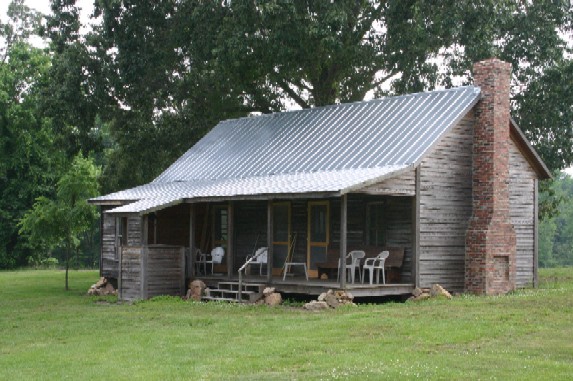
My 1851 Navy is one of two Colts my grandfather first showed me when I was a child. My brother has the other, a model 1860 Army Colt that is also missing the ramrod lever, though not the ramrod, itself. This one we think came back from the Civil War with my great, great grandfather. Granddaddy didn’t know much about it. About my model 1851 he always said that one of his brothers had found it under the house when they were boys. How Granddaddy came by it I don’t know. There’s a picture of the house in question here. It sits a long way back from the main road in a now obscure township called Scottsville some 12 miles east of Marshall, Texas. My mother’s family settled there in the 1830s. I’ve written about them here and here.

Granddaddy called these pistols horse pistols. They weren’t. The Walker Colts, designed like the Patersons for the Texas Rangers, were true horse pistols, meant to be carried in holsters mounted on a rider’s saddle. They were much larger and heavier than my family pistols, which, like the Patersons, are belt pistols. The comparatively lightweight five-shot Paterson Colts gave the early Rangers the means to fight the Comanches on almost equal footing. The Walkers were a not very practical replacement. They increased the Rangers’ fire power theoretically, but they were also heavy and unwieldy. The model 1851 and 1860 Colts (and their Confederate knockoffs) were the standard sidearms of both armies during the Civil War. I’ve always been rather proud to have these old weapons in my family.

I say these thing to point out 1) that I am not an effete liberal snob who has no connection with or knowledge of guns and 2) that my Texan credentials go back a long way. I am disturbed by a recent Mother Jones Story about the killing contests that are becoming popular in Texas and other states that presently celebrate guns. Here’s a view of the conclusion of one such contest as described by a witness who happened on it outside a West Texas sporting goods store.

The lot was packed with trucks full of dead coyotes, foxes and the occasional bobcat; one pickup had a cage welded to its bed, and it was crammed with carcasses. . . . Around back, participants in the West Texas Big Bobcat Contest were weighing their kill in a competition to see who had shot the biggest bobcat and the most coyotes, gray foxes and bobcats in a 23-hour period. Some $76,000 in prize money was at stake—more than $31,000 went to the team that bagged a 32 pound bobcat. Other jackpot winners were a four-man team that killed 63 foxes, a team that killed 8 bobcats, and another that killed 32 coyotes.

Note the apparent emphasis upon numbers killed, but that’s not all that’s disturbing about this report. I am particularly disturbed by quoted comments from Jeremy Harrison, billed as a fifth-generation rancher. “To those who are offended [by the hunting contests], he has simple advice: Butt out.”

“It’s none of their business. It has nothing to do with them,” . . . “It’s one of the best things about this beautiful state of Texas. We have 100 percent support from Texas and from the local people. If they don’t like it, they can just stay away from it.”

I dissent as a Texan from this view of the large scale slaughter of wild animals. I don’t hunt for sport, but I don’t want to ban the practice. Nor do I want to ban gun ownership. But it is one thing to use guns and quite another to make a fetish of guns and killing. It is one thing to hunt for sport and another to kill indiscriminately. The killing contests are not hunting, any more than the slaughter of wolves from helicopters and airplanes in the northwest is hunting. These unsportsmanlike practices ought to be an embarrassment to hunters, on a par with game ranches where deer, elk, and other captive animals are shot like fish in a barrel by urban cowboys out for a thrill.

I have no “agenda” about this apart from ordinary human values. I regret that some anti-hunting enthusiasts have sent hate mail to Mr. Harrison’s friend, Geoff Nemnich, but since Mr. Nemnich apparently sells videos glorifying hunting contests at Cabela’s stores he can hardly sustain the claim to innocence he makes when he asks rhetorically, “And I’m the barbarian?” Nemnich makes an additional claim at the end of the Mother Jones article. The hunting “[c]ontests are completely legal . . . Some may consider it ethically wrong, but hunting has been around forever, it’s who we are out in this part of the country.”

Nenmich doesn’t speak for me either, and I think my Texan credentials are likely as good as his. My great, great grandfather sat in the legislature of the Texas Republic. And while I’m at it maybe I should say that the folks who claim to represent a secessionist Texas republic today don’t speak for me. That same great, great grandfather voted for secession in 1861, went to the bloody war that his side lost, and sat again in the Texas legislature from 1879 until 1882, after the Ku Klux Klan undid reconstruction. Surely no sane person would wish to repeat that terrible history of bloody error.

Nor does Nemnich’s idea of “who we are in this part of the country” include me, and not just because I no longer live in Texas. I watched Texas and North Carolina, the places closest to my heart in my country, change during the 1970s and 1980s as they were impacted by in-migration from the rust belt of people who brought right-wing prejudices with them and supported the ascendancy of politicians like Jesse Helms and Phil Gramm. It’s tempting to characterize today’s killing contests as the favorite blood sport of a bunch of Johnny-come-latelies.

But those Johnny-come-latelies had a home prepared for them in southern-strategy red states long before 1964. The John Birch Society and the Klan were already there. I’ve written about this too. But now I am remembering how I watched the fences along roads between Abilene and Albuquerque during childhood journeys back and forth and sometimes tried to count the skins of coyotes and wolves strung up on the barbed wire. The ruination of the prairie and its animals, the awful rabbit drives of the dust bowl era and afterwards were not blood sport. They were a different kind of killing, a denouement to the long and terrible slaughter and removal of the aboriginal inhabitants of the North American continent.

All this is well known. Much of the removal, especially that east of the Mississippi, was accomplished by European introduced disease, pandemics that spread through Native American nations and the animals upon which they depended for survival from the east coast west. But much of the removal was accomplished by wholesale slaughter and enforced starvation visited upon humans and animals alike by the human predators we have lionized as pioneers, and by official policy enforced by the United States Army. I wouldn’t bring up this past, except that Harrison and Nemnich have framed today’s killing contests as political statements. Their claim of solidarity with Texas culture and the land suggests an identification with earlier generations of Texans that they seem to think manifests itself in these present day rituals of killing for it’s own sake.

I’d rather be identified with Sam Houston than with my great, great grandfather. As governor of Texas, Houston opposed secession and was driven out of office for his pains. I’d rather be associated with the ambivalence of Charles Goodnight after the closing of the frontier. Goodnight is perhaps the most renowned of the Legendary Texas cattlemen, though he was far from being a saint, as J. Frank Dobie portrays him. Goodnight’s career spanned the early history of the Texas Rangers, the Confederacy in whose army he served, and the short post-bellum history of trail herding. He was the first to raise buffalo as livestock on a ranch close to Quitaque in the southern Panhandle after the decimation of the great herds. He died in Arizona in 1929, having survived the Indian and Lincoln County wars, famine, drought, and financial ruin, far from Quitaque, farther still from the Palo Pinto County of his salad days.

Goodnight was not unfamiliar with killing, but when he died he had a reputation as a man of peace; so much so that Laura Vernon Hamner, Goodnight’s first biographer, entitled her fictionalized life The No-Gun Man of Texas. Larry McMurtry’s characters, Augustus McRae and Woodrow Call are based in part on Goodnight and his friend Oliver Loving. Call’s exclamation to a reporter towards the end of Lonesome Dove is a quotation from Goodnight as recalled by Dobie, who interviewed Goodnight not long before he died, reported that Goodnight claimed his life had mostly been a failure, and noted that someone had once asked the old cowman to comment on his reputation as a man of vision.

“Hell of a vision!” was Goodnight’s answer.

Intimations of mortality

I had thought to return to talking about politics this year. The plight of the poor and the weak among us seems urgent to me, as does the plight of our infrastructure and of our treasury of cultural institutions in these hateful political times. But I have searched my soul and found that I’ve already said most of what I have to say about these things.

I’m also concerned that many in my my country seem determined to promulgate a false history to rising generations in a time when authentic memory of the terrors of slavery and the native American genocide are fading as the generations die. But no appeal to a more honestly usable past can save us from true believing folk who imagine that the cosmos is only about six thousand years old; and it doesn’t help that many of these people are good and dear, and that I love them.

I long ago resigned from these arguments. I may return to politics, but if any of my friends are still comforted by the belief that they will not meet me in heaven, I wish them comfort and decline to pursue that issue further. Besides, winter is dragging on. I don’t mind the cold and snow we’ve had recently, but lately we’re in the grip of the sort of indifferent, soggy, in-between weather that keeps one indoors in spite of warming temperatures. I don’t trust this weather any more than I trust my country’s politics.

Over last weekend we had balmy days. The cosmic world stayed the same in spite of the hour we lost as political and commercial spheres shifted to Daylight Saving Time. I’ll be glad for the light in the evening hours as spring and summer return and envelop us. I look forward to cooking outdoors again and to watching the summer fire flies from my back porch. But we’re not there yet, and I’m thinking we’re in for at least one more cold snap before the season advances. Of course I have no idea about this. Weather Underground is forecasting mild temperatures through the middle of the month, but the Farmer’s Almanac is less optimistic and suggests we may have one more snow before April. As I’ve said more than once before in these pages, I’m feeling the pull of the cosmic cycle more and more every year, every season. Perhaps I take this indifferent weather, if not as a portent, at least as a memento mori. One of the home truths of my time of life is that every so often it dawns on me that I’m not immortal.

I hesitate to talk about intimations of mortality for fear that people I love will rush to my side to comfort me or otherwise persuade me to stop being morbid. I don’t feel old, but I know that at two years shy of eighty I am almost as old as dirt; and I know I need a strategy for dealing with the remainder of my life. I don’t mean to call up the usual bureaucratic end-of-life specters. I have a living will and a regular will and a caring spouse who has my power of attorney and children who love me. I have no fear of being subjected to mechanistic horrors as I leave the world.

But I need a strategy for living in the shadow of death in a new way, because my own death is closer to me now. Not that I am suffocated by the thought of it or overwhelmed by fear. My need is rather an inner need that reflects my awareness of that part of myself that corresponds to the real world into which we are born and in which we love and hate and into which we bring our children and through whose environs we struggle with ourselves and others and search for happiness and fulfillment and goodness and meaning and God, a world more real to me now than its symbols and rituals. I stress that I am not looking for pie in the sky. But I am indeed looking for something that isn’t exactly cultural, though it certainly has a cultural dimension.

I’ve been reading Jacob Needleman’s Money and the Meaning of Life. After I was ill last summer I re-read his Way of the Physician. I had first read it years ago as a possible subject for a Dallas Morning News Book review. I didn’t review it and now don’t remember why, but Needleman’s willingness to face up to basic questions of life and death without resorting to conventional pieties, particularly bureaucratic pieties, drew me to him. This new book (new to me; it was published in 1994) argues that we should take money more seriously than we do, since it is the chief organizing engine of our worldly life.

Quite so: though Needleman’s real project is to persuade us that there is a higher life than the life of money that is only accessible after we have paid our debt to Caesar. I am drawn to this view, though not to Needleman’s theosophy or his interest in Gurdjieff. Nor do I necessarily think the other life, the not-money life, is higher. I think it is other. I think it is the pearl of great price. I agree that the obsession with money blinds us to it, blinds both rich and poor. Access to the not-money life requires, I believe, the fact as well as the understanding that one has enough.

It may require other things as well. It may require particularly the realization that one’s own good is intertwined with and dependent upon the good of others, perhaps the good of all. And not merely the good of all humans, but perhaps the good of all creatures great and small, as that lovely hymn sings to us. It may require an ethic such as that we are attempting to envision in present-day conversations about sustainability.

Sustainability is not a new idea, but it rests upon a vision of community that has never seemed attainable within the framework of modern capitalistic conceptions of the world. Sustainability orders the world according to need; capitalism, according to desire. Sustainability might ultimately conceive the withering away of money as shared wealth took the place of individualistic acquisitiveness and avarice.

But my purpose isn’t to propose a Utopia, either as a social goal or as a satiric heuristic. My point is to suggest a need in myself for a new framing of the ancient ideal of seeking the Kingdom of God. The love of money yields as abstract a life as any degenerate monasticism. The Kingdom of God is existential, here and now if it is anywhere. So far, the most telling evocation of the Kingdom of God for me is Wendell Berry’s essay, “Two Economies.”

We know from our own experience that it is possible to live in the present in such a way as to diminish the future practically as well as spiritually. By laying up “much goods” in the present—and, in the process, using up such goods as topsoil, fossil fuel, and fossil water—we incur a debt to the future that we cannot repay. That is, we diminish the future by deeds that we call “use” but that the future will call “theft.” We may say, then, that we seek the Kingdom of God, in part, by our economic behavior, and we fail to find it if that behavior is wrong.

I think we may have reached a point in the history of life on this planet when something like sustainability may be forced upon us by our own excesses. Our cities are rotting, no matter what their chambers of commerce say. I will not live to see it, but we shall soon, as a people, begin to experience a loss of habitat similar to that we have visited upon our planet’s non-human creatures—as oceans rise and the planet’s surface becomes less habitable.

Cities have never been sustainable. Our present-day landfills are but the latest iteration of the refuse heaps by which cities have been known for centuries. Perhaps this is one reason why the dream of community tends to be agrarian, as it is with Berry. Nor is there any sense of a sustainable human community in the Utopias of the past; though perhaps the Eucharist and similar ritual meals symbolize the aspiration towards such a thing. Tim Burke has two excellent discussions on his blog right now of what it might mean to think of sustainability in terms of the needs of modern urban societies and bureaucracies. He concludes that it’s hard to imagine what such a thing might look like.

So here I am, an aging man living in an old house whose builders had no idea of me, in the midst of a city that had no idea of me in the past and has precious little idea of me now. If I followed the normal path many Americans my age follow I would discard my house and move to a “retirement” community soon. At some point I will likely be forced to make that move as my ability to manage my small economy (see Berry) declines, as I become less and less able to climb stairs, for instance. The question of sustainability for me is now less a question of trying to imagine the future of my city at large than of forming and maintaining a particular intentionality as I regard the prospect of my city’s departure from me personally.

I’m not planning to let go gently, and as I think about staying in my house as long as I can my cosmic life and my abstract life coincide. I could wish, with St. Paul, for a continuing city to come, but I don’t. The prospect of an eternity of consciousness in an unchanging place isn’t attractive to me. And at this point I realize what my thinking has left out. I have loved my life, loved places, loved the sheer presence of mountain and ocean and prairie, loved seasons and tides and the sun and moon. St. Francis praised these things as his brothers and sisters. But I have loved my city too, some manifestations more than others. In Denton it will always be sunset in McKenna Park and I will always be pushing my little son in the swing there as we look across the prairie towards Decatur.

In Dallas it will always be the end of an evening when Giles Mitchell and I walked along Snider Plaza trying to dance like Anthony Quinn, having just seen Zorba the Greek at the Fine Arts theatre. In Raleigh I will always be jaywalking with Shelby Stephenson in search of the Executive Mansion the night Sam Ragan was awarded the North Carolina Medal. I shook Jim Hunt’s hand that night, but laughing with my friend as we got lost (or didn’t) meant more. And here in this old city whose river is a strong, brown god, and where I have fallen in love with life and my beloved all over again, I think I am a citizen of no mean place, to borrow from St. Paul another time. Even hollowed out and given over to corruption of every kind Saint Louis is a consummately human place, rich with the sorrows and laughter of many languages. It will certainly outlast me.

And the Kingdom of God? It contains the ten thousand things and the joys and terrors of them partly because it is full of death. It is the awareness of death around me that provides me with the conscious will to live; and it is the knowledge that my life is finite that makes it a life at all. This is a real knowledge to be distinguished from the forms of abstract knowledge that have occupied most of my attention all these many years. For the truth about the cosmos and me is that I shall finally be abandoned, or recycled, as the cosmic stream moves on. My city, like my life, struggles against abandonment. In the end the only real issue is how to lose—and so I think again of Cavafy’s poem:

As one long prepared, and graced with courage,
as is right for you who proved worthy of this kind of city,
go firmly to the window
and listen with deep emotion, but not
with the whining, the pleas of a coward;
listen—your final delectation—to the voices,
to the exquisite music of that strange procession, . . .

making certain it goes on redux

Paul Tillich is buried in a small grove of trees in New Harmony, Indiana. The grove is called Paul Tillich Park, and it sits just across the street from Phillip Johnson’s Roofless Church. Tillich helped to plan the site which, like the Roofless Church, was a project of philanthropist, Jane Owen. Owen had been Tillich’s student—the restoration and enhancement of New Harmony were her life’s work. I took the photo at the head of this essay about ten years ago in Paul Tillich Park. It is one of several of his sayings the philosopher/theologian chose to be displayed there along with this bust. Jane Owen died recently, but I like to think her work goes on as her legacy, and Tillich’s, continue in New Harmony.

I told my class last week that being in sight of eighty years I’m delighted that I have no idea when my own life will end. I am also very fortunate: to be in good health, and to come from a family inclined to longevity. Still, aside from the usual caveats faced by people my age, particularly the warnings my body periodically sends me not to take it for granted, I’m aware of being at a real juncture, a place that seems to require a pause not so much to take stock as to take new breath.

I’m suffering from something like information overload this year, though it isn’t exactly that. It’s more like Mrs. Moore’s muddledom in E. M. Forster’s A Passage to India, in which history, temperament, old age, political consciousness, metaphysical uncertainty, all seem to conspire to to suggest a profound anomaly, to wit: the world has changed unalterably and become unrecognizable; and simultaneously, the world hardly ever changes—it is I who have changed.

She had come to that state where the horror of the universe and its smallness are both visible at the same time—the twilight of the double vision in which so many elderly people are involved. If this world is not to our taste, well, at all events, there is Heaven, Hell, Annihilation—one or other of those large things, that huge scenic background of stars, fires, blue or black air. All heroic endeavour, and all that is known as art, assumes that there is such a background, just as all practical endeavour, when the world is to our taste, assumes that the world is all. But in the twilight of the double vision, a spiritual muddledom is set up for which no high-sounding words can be found; we can neither act nor refrain from action, we can neither ignore nor respect Infinity.

My condition isn’t hopeless, as I think Forster thought Mrs. Moore’s condition to be, but it places before me a complex of questions, drops them on my plate like Proufrock’s works and days of hands. What may yet be done? What may it still be possible to think? How shall I bear myself towards a world that more and more seems to be characterized by irreconcilable disputes and wrongs without remedy? And somewhat less urgently, though equally relevant to my present condition, how shall I bear myself towards the prospect of my own unbeing?

I am an intuitive person. My thinking life—note that I don’t say intellectual life; that’s something else—has proceeded by fits and starts. I am seldom aware of the major movements of my mind until they are well begun. I approach them in medias res. I am, moreover, a literary person. What I know of what has been thought and said in my language, and to some lesser extent in a few other languages, opens resonant spaces in my thinking, supplies me with the fundamental categories of what I have learned from Richard Rorty to call my final vocabulary, though perhaps not all of its categories. As a result, thinking is for me an exploration and a sounding of those resonant spaces in hopeful anticipation of occasional release into more nearly original utterance. Original to myself, of course; I long ago understood that I arrive at new places in my thinking only to realize that others have been there before me. I cherish the hope as well that my literariness is not mere pedantry or belleletrism; albeit, it is so much a part of my nature that I can hardly hope to escape it.

Back to Mrs. Moore, whose untimely death occurs as an anti-resolution of the primary conflict of Forster’s novel. The muddle that does her in contains elements that resemble some of the dilemmas of postmodern times. She is a woman with advanced ideas, able to befriend Dr. Aziz, the novel’s Muslim Indian protagonist, resistant to the bigotry of other British characters for whom the Raj is a projection of the falsehood of Anglo superiority. She is also religiously unprejudiced, able to find God in the mosque where she first meets Aziz. Her own Passage to India, the combination of culture shock (symbolized by the echo in the Marabar caves), old age, the loss and grief contingent upon various personal betrayals, and perhaps simple exhaustion, proves too much for her, overcomes what might have been a heroic spirit. Before her death she is unable to help Aziz in his trouble, though she is certain of his innocence, perhaps partly because it is her friend, Adela Quested, who has accused Aziz of sexual assault.

Like Mrs. Moore I’m unable to defeat my own muddledom or to rise above it. In fact I don’t wish to do either thing. Neither religion nor ideology nor my social grounding offers me meaningful triumph, consolation, or even escape. But unlike Mrs. Moore I am unwilling (and I stress that word) to drift away into a fog of anomie. What I seek is to find the center of my muddle and to take up a position there. Like Wendell Berry I believe that the center is a position rather than an abdication. What I have begun in this essay, and will continue to do in subsequent essays, is attempt to address some matters that are contingent upon my having taken it up as well as being immanent in my thinking life and in my memories. As Montaigne wrote, “To philosophize is to learn to die”; or to paraphrase Berry in a different context, I seek to prepare myself for a world in which I will be dead, but not to avoid living as meaningfully as I am able all the way out to the end of whatever there is.

We’ve not visited New Harmony, Indiana, since 2008. At that time some favorite places were gone, notably the Golden Raintree Bookstore, where we had spent a good many happy hours and where I once found a beautiful copy of Drums, by James Boyd. The town’s remarkable public library remains, though. Denominated the Working Men’s Institute, it serves as the town’s chief reminder of New Harmony’s brief ownership by Scottish industialist Robert Owen, of a past grounded in Utopian idealism and the earliest stages of the international labor movement.

New Harmony—from Paul Tillich Park, a monument to the most privileged and elite European education in the person of one of the finest products of the prewar German university system, to the Working Men’s Institute, a forceful reminder of the ideal of universal education, of the joining of practical learning with the impulse to philosophy in the broadest sense. And the two just a brisk walk from one another.

Shelby Stephenson

My old friend, Shelby Stephenson, is the new Poet Laureate of North Carolina. The N&O story covering his installation last Monday offers a clip of the poet reading from his long poem Fiddledeedee, first published in 2001 and reissued just last month by Press 53 in Winston Salem. It was a good choice for that Audience, describing in moving cadences the springs of his imagination.

Shelby’s accomplishments are many: a dozen or so published books and countless magazine publications; thirty-one years as editor of Pembroke Magazine at UNC Pembroke, where he rose to the rank of full professor over a long and illustrious academic career; winning the Bellday Prize and the North Carolina Award for Literature; induction into the North Carolina Literary Hall of Fame, to name just a few.

We met, I think, in 1978, when the Stephensons moved to Southern Pines, NC, where they remained for many years before moving back to Johnston County and the farm where Shelby grew up. I have eaten oysters and barbecue, sung songs, argued about poetry and philosophy, jogged, commiserated, and more with Shelby Stephenson over the years. We’ve lived a long way from one another for a long time now. But if you are fortunate enough to have such a friend as Shelby, you don’t let time or distance deprive you of the friendship. I’m happy for him now, and I very much hope our paths cross again before long.

And I may have been the first person to write about Shelby’s poetry. He has always said that I was. Maybe the best way for me to recognize his present achievement is to reprint what I wrote. The piece pretty much explains its own circumstances: Shelby and Sam Ragan reading together at the Southern Pines Library. Sam Ragan would be named Poet Laureate of North Carolina in 1982 and hold the laureateship until his death in 1996, the last of the NC Laureates to receive a lifetime appointment. Here is what I wrote about them both almost thirty-seven years ago, as published in the Southern Pines Pilot on April 26, 1978.

* * *

It is a mournful truth that poetry, perhaps the eldest of the arts, has never made its fortune in the modern world. Our time, which has seen the elevation in prestige and economic value of professions which would have seemed unlikely of success in the last century, has seen the decline of poets in influence and social regard.

But poetry has by no means died. Sturdy souls that they are, poets have simply gone underground. Their works are to be seen, of course, in the few major-house publications which print serious verse and in a small group of surviving prestige literary magazines. But in the main poets are writing for the thousands of independent publishers and literary magazines which have grown up in the last ten years, publishers like Moore of Durham, magazines with names like Vantage Point, Aspect, The Stone. These for the most part have limited circulation, a decided regional or individualistic feel and an anti-slick, anti-establishment voice.

COSMEP, the Committee of Small Magazine Editors and Publishers, maintains a traveling bookstore representing little magazines from all across the country. This store, called the COSMEP Van Project, has been in our area this week.

To celebrate the project’s arrival, the Sandhills Arts Council sponsored a poetry reading last Sunday in the Southern Pines Library combined with a tour of the book van. Poets Sam Ragan and Shelby Stephenson read from their own works, many of which have appeared in works printed by small presses.

Sam Ragan explained that the difference between a major and a minor poet was that the major poet would never use the word “rue,” as minor poets do, and that major poets always read from their own works as he and Shelby Stephenson did.

Sam Ragan is well known as a writer and publisher, perhaps less well known as a poet. This is unfortunate, for his verse possesses great beauty and economy of expression. It is a reticent poetry, depending upon unadorned images, things in themselves, which sometimes gather into landscapes.

I can see through the tree’s limbs.
Beyond the girl
In the green bathing suit,
Beyond the sea oats and sand,
Where the sea rolls,
Breaking white, as far out
As where fishing boat
Sits motionless in the sun.

Mr. Ragan quotes William Faulkner about the literary art, saying that he wishes to arrest time in his verses, which he thinks of as frozen moments. This is the lyric impulse, and it suggests iconic poetry dominated by visual imagery. A survey of the poet’s recent book, To the Water’s Edge, will reveal much that is visual, but the first interest in these poems is in the play of the poet’s mind over the objects and events of memory and perception.

Driving down No. 1 at night
The headlights catch the gleam Of beer cans,
They look like cat’s eyes.

When lilacs last in the junkyard bloomed.

This passage opens “Notes On the Margins of Our Times,” a poem made of vignettes from the social history of the sixties, each moralized with a fragment of familiar verse, song, or speech, sometimes quoted, sometimes paraphrased. The landscape of this poem is an inward one, finally, through which things pass sometimes unaltered from themselves, sometimes changed by ironies sensitive or sensible:

Do not go bojangles into that good night.

Sam Ragan’s poetry is invested with a love of common things and common order, against which the horrific, the startling, the grotesque, assume proportions assigned by common sense:

It was a bad trip,
And when he couldn’t fly
They picked up his body
Where it had splintered on the sidewalk.

Flights of fancy, always understated, stand out in relief, too, from the general steadiness as when in “Sandhill Summer” the poet imagines the surging of an ancient sea in the sound of wind in tall pines. “I sleep,” he says, “in the shadow of ghost winds.”

Shelby Stephenson’s verse is heavier and sweeter than Sam Ragan’s. Mr. Stephenson likes long sentences and heavy rhythms rich with words and sometimes thick with music. Here are some lines from “Winter Ritual,” a poem about hog killing.

Hog tails hang down after the maul.
Men swill homemade scuppernong brandy,
Rake thick sleeves across mouths
Cutting the sun’s slash on the tin barn-roof—

Someone has speculated that musical English poetry tends to fall into the’ patterns of Anglo-Saxon. True or not, the first line of this passage is an almost Anglo-Saxon line, with its alliterative linkages and dual syntactic units breaking it into half-lines. The rest of the passage is heavily consonantal and assonant, and the whole demands to be intoned rather than merely read. Here, a complex boyhood experience of violence and death is also creative, and the adult poet examining the childhood memories from hog-killing days seems most of all to find it all intoxicating, the blood and meat, the sausage and entrails, the swilling and the boiling-strong stuff for a small boy.

The primary emotion animating Mr. Stephenson’s verse is nostalgia, but there is in it such a tempering of humor and good sense that the poems generally avoid sentimentality. One poem, “Goat Pills,” talks about castrating a goat named Billy—without any Freudian confusion. It is always clear that the goat is a goat, and as such he is the main actor in a comedy of violent high-spirits which ends as he runs up the hood of Uncle’s Buick spraying goat pills all over the place:

striking handles and knobs, discovering places Uncle says
we cannot find
when he messes up the seat
of his Palm Beach pants on one, just one!

In this poem, too, the children save the goat pills in bottles and dispense them as hangover medicine to unsuspecting uncles and cousins. Never a dull moment down on the farm.

Together with a strong feeling for the land and its influences in the lives of men and women who live daily with it, there is in Shelby Stephenson’s verse a recognizable strain of frontier humor of the kind one associates with Twain and Faulkner. For these poems too, are boyhood poems, whose lessons are enhanced for us readers by the poet’s pose of innocence, accepting all experience almost without judgment. Nonetheless the boy is not forever; nor is the farm. In a poem entitled “Clematis Post” Stephenson talks of how a basketball post serves in succeeding decades of his life as a post for cleaning game and as a makeshift trellis. In the midst of dying there is life.

Hidden in my growing a growing is.
Every spring the turning leaves
scrape from brown-dry stems the hanging scraps of winter.

Sam Ragan reads as he speaks, with generous literacy, but also with the gentle cadences of eastern North Carolina. Shelby Stephenson closes his eyes and sings. One may read them for himself in the literary magazines, but there is a wealth of other poetry in the listening, which reference to text fails to disclose—a fact which strengthens this writer’s conviction that poetry is language for the ear.

We were glad to entertain the COSMEP Van Project and to celebrate its presence with a reading by two fine North Carolina poets.

* * *

In 2005 Shelby inscribed a copy of Fiddledeedee to Kathleen and me when we visited him and Linda on their farm near Benson, NC, south of Raleigh. I own most of Shelby’s books by now, but I’m still partial to his first, Middle Creek Poems. And my favorite lines of Shelby’s are those I’ve quoted from the poem “Clematis Post,” which he included in that 1979 collection. Maybe Shelby likes those lines as well. He published that poem again in abbreviated form in his 2013 chapbook, Play My Music Anyhow, with the title, “All That’s Left.” His newest book is called The Hunger of Freedom. My copy should arrive from Amazon tomorrow. I look forward to finding out what else is left.