Seamus Heaney

Today’s New York Times reports the death of Seamus Heaney, a fact that might serve to remind us that we have not lacked great poets even in a time when the death of poetry has become a commonplace. It was Hölderlin who asked the question that even in his own time was far from rhetorical: “What are poets for in a destitute time.” Martin Heidegger picked up the question and made it the center of little book of essays that has been translated as Poetry, Language, Thought. But the career of Seamus Heaney is both a better and a more comprehensive answer to Hölderlin’s question than Heidegger’s answer, perhaps because Heidegger wasn’t a very good poet and may not have understood that not all poetry is to be subsumed under the rubrics of German romanticism.

Of course, claims like the ones Heaney makes in The Redress of Poetry, a 1995 collection of his own essays on poets and poetry, have a kinship to Heidegger’s, because both speak out of a tradition that has identified poets with biblical prophets on the one hand and Socrates on the other. But Heaney’s thoughts about poetry seem fresher and more vital than Heidegger’s, which seem derivative instead. Consider this, from the preface to Heaney’s translation of Beowulf, which has liberated that wonderful poem from its history for a generation of students:

Without some melody sensed or promised, it is simply impossible for a poet to establish the translator’s right-of-way into and through a text. I was therefore lucky to hear this enabling note almost straight away, a familiar local voice, one that had belonged to relatives of my father’s, people whom I had once described in a poem as “big voiced Scullions.”
     I called them “big voiced” because when the men of the family spoke, the words they uttered came across with a weighty distinctness, phonetic units as separate and defined as delph platters displayed on a dresser shelf. A simple sentence such as “We cut the corn to-day” took on immense dignity when one of the Scullions spoke it. They had a kind of Native American solemnity of utterance, as if they were announcing verdicts rather than making small talk. And when I came to ask myself how I wanted Beowulf to sound in my version, I realized I wanted it to be speakable by one of those relatives.

Heaney was a professor, at Queens University, Oxford, and Harvard, among others; but he was not an academic poet. His verse is accessible, earthy, and it often rhymes. He was as likely to claim kinship with Robert Frost, Dylan Thomas, and Elizabeth Bishop, as with other academics of his generation. Here is a montage of video recordings of Heaney reading one of his most famous poems, “Digging,” about his father, but also about his own sense of his vocation.

Heaney was awarded the Nobel Prize for Literature in 1995. His NYT obituary quuotes this encomium from an Irish Times editorial written in recognition of that achievement.

Book sales may not mean much in the areas of fiction or biography, but for a poet to sell in the thousands is remarkable proof to his ability to speak in his poems to what are inadequately called ‘ordinary people.’ Yet the popularity of his work should not be allowed to obscure the fact that this deep, at times profound poetry, forged through hard thinking and an attentive, always tender openness to the world, especially the natural world.

RIP Seamus Heaney . . .

And was Jerusalem builded here . . .

I have seen these ways of God: I know of no reason
For fire and change and torture and the old returnings.

                                                        —Robinson Jeffers
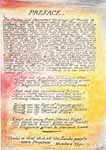
Yesterday I awoke with strains of Blake’s “Jerusalem” turning over in the back of my mind. Later, I checked in with Melissa Harris-Perry reporting from the Mall on the beginning of festivities celebrating the fiftieth anniversary of the 1963 March on Washington. As I drifted around the house making breakfast, seeing my beloved off to a celebration of Women’s Equality Day, I thought of Dr. King’s peroration on the steps of the Lincoln Memorial that day fifty years ago, now almost as famous as the Gettysburg Address, and how easy the commerce seemed between the ideal of equality as we understood it then and that great preacher’s evocation of God Almighty in the words of the then familiar spiritual “Free at Last.”

A couple of days before, my beloved and I had watched Lee Daniels’ powerful new film, The Butler, whose evocation of the civil rights movement turned me inside out, pushed hard against whatever barrier it is that prevents me from weeping, so that I was forced to wipe my eyes as we left the theater. It was not nostalgia but something else that film stirred in me. I have been thinking of late about the complexes of memory and present experience that seem to ground my perception of the world and connect my sense of myself and the course of my life with the larger rhythms of history and spirituality. I was privileged to participate directly in some of the large-scale events of the last century. Images of those events, of things I experienced directly, float to the surface of my memory now amongst fragments of poetry and song, but there’s a deeper emotion underneath, a sort of memory aquifer in which part of me remains immersed. More about that later.

In the midst of these reflections I read through an essay posted by Joseph Bottum yesterday at Commonweal. Entitled “The Things We Share: A Catholic’s Case for Same Sex Marriage.” The piece, which Bottum calls a personal essay, makes a pretty good case for why proponents of same sex marriage seem to be winning the legal argument in today’s world. But when Bottum gets into the area that seems to be most important to him, a discussion of why the “thin” arguments from natural law that are being used to defend Catholic opposition to same sex marriage fail and should fail, some deep loyalty to those same thin arguments seems to dominate in the end. The essay falls into a long digression to the effect that the entire sexual revolution has been anti-Christian, which to Bottum seems to mean anti-Catholic, that serves to obscure the thought (to which Bottum devotes only a few sentences) that the Summa Theologica, while it finds what is sometimes now called traditional marriage to be morally superior to other forms of human cohabitation, does not condemn other such forms. There’s a conclusion to be got from Bottum’s evocation of Thomas, but instead of drawing it, Bottum drifts off into a nostalgic paean to a formerly enchanted world that it seems to be the Church’s present mission to reenchant.

I found this essay offensive in many ways, from its glaring homophobia (linked, I think, to an expressed distaste for the personal that undercuts the essay’s main story thread) to its lavish praise for Robert John Neuhaus and its glib dismissal of mainline Protestantism. I also found its primary argument incoherent. As a supporter of same sex marriage I can’t find anywhere in Bottum’s essay a Catholic case for same sex marriage aside from the claim in its subtitle. Nor can I find any real appreciation for “things we share,” a phrase that alludes to a broken friendship between Bottum and a secular gay friend, with whom Bottum formerly shared “a bit of old-timey Americana, the stuff we all still share,” at informal weekend hootenannies. Still, I’ve spent enough good time at informal weekend hootenannies that I liked Bottum’s story about his former friend—indeed it seemed to me the most honest part of the essay—and we do share the stuff of old-timey Americana. All us Americans share that. But it’s a rich, thick mixture of stuff. We constantly get it all over ourselves, like barbecue sauce at a pig picking. And Bottum is after something real when he speaks of the enchantment of the world. We lose something important to us as humans when we lose the ability to apprehend the gods in things.

Bottum’s failure in this essay, it seems to me, is that dogmatism gets in the way of his humanity. An enchanted world doesn’t have to be a Christian world, much less a Catholic one—something Professor Tolkien demonstrated with his stories of Hobbits, devout Catholic that he was. We can read of the enchantment of the world of pagan antiquity in Vergil and Ovid and alike in Hesiod and Homer and the tragedians. When the gods leave, as gods inevitably do, the real work of human being and understanding begins, in the need to save the phenomena, the need that gave rise to Greek philosophy, and perhaps to Christianity (or at least to confessional Christianity) as well. The way of ideological dogmatism sets up orthodoxies and their built embodiments, seeking to maintain by force the authority of past belief and practice. But there is also a way of prophecy. That is the way of Blake in the poem with which I began. It is also the way of Christians who are exploring ways to create marriage liturgies for same sex unions and who believe they are being led by the Holy Spirit in their work.

And it was the way of Dr. King, whose uneasy relationship with Bayard Rustin probably reflects his own homophobia, something he and A. Philip Randolph and others had to rise above as they designed and carried out the events of August 28, 1963. We are now far from that day, further from it spiritually than the fifty years we traverse in remembering it. Dr. King is now a cultural saint, but I can imagine any number of scenarios in which he would make a cheap target for today’s right-wing racist attack machine were he alive today, just as he was a cheap target for J. Edgar Hoover at the time of his assassination. If, like Ivan Karamazov’s Jesus, Dr. King were to return to the streets of Washington, DC, or to Memphis, today—he would likely not be assassinated. Instead, he would be talked to death in the public media, ground to bits by the celebrity industry until nothing was left but a series of tabloid howlers. It would be the vindication of an old friend who stormed into church choir practice on the evening of April 4, 1968, jubilant, with the words: “Hurrah, we’ve killed that son of a bitch!” The only good prophet, or at least the best one, is a dead prophet.

I am seventy-six years old today. As my memory swims in that deep aquifer that opens when I think seriously of the past fifty years, I find a plurality of enchantments, an ollo podrida of enchantments. Among them rests the idea of catholicity (small c), but it commands no more allegiance in that imaginary than the sound of one hand clapping. I’m glad my country has chosen to honor the memory of August 28, 1963, an innocent time, relatively speaking, before the dreadful march of killing that ensued in its wake. We might remember as we congratulate ourselves for having made progress towards a better world that it took the death of a president to overcome the forces of entrenched catholicity that stood against equality in the world Dr. King addressed in 1963, that our initial attempts to create a more nearly just society in law unleashed an orgy of violence that hardly spent itself for a decade, and that powerful forces demanding reinstatement of all the old injustices have reassembled in the world King’s legacy addresses fifty years later. Indeed I feel more solidarity with Charles Blow than with Dr. King today.

The Rev. Dr. Martin Luther King Jr.’s “I Have a Dream” speech keeps ringing in my head, an aching, idyllic, rhetorical masterpiece that envisions a future free of discrimination and filled with harmony and equality. But I wonder whether the day he imagined will ever come and whether many Americans have quietly abandoned King’s dream as a vision that can’t—or shouldn’t—exist in reality.

At seventy-six I don’t want to live inside anybody’s dogmatic catholic hierarchy, not even that of my own church, but I’m proud to be an inheritor of the revolutionary idealism that gives Dr. King’s rhetoric its profound resonance down through the years, an idealism both spiritual and secular that takes as its exemplars figures as disparate as Gandhi and Bob Dylan, who stole his name from a Welsh poet. I think of the songs we all sang as though they were our property in those days: “Blowin’ in the Wind,” “We shall Overcome,” “Abraham, Martin, and John,” “Kumbaya,” and the wonderful words of Julia Ward Howe’s that almost became the national anthem of the sixties. What enchantment did we see in the watch fires we imagined as we put our arms around one another on the quads and streets of those years, as we sang in our chains like the sea, to paraphrase that same Welsh poet. Was it a world free at last from bigotry, dogmatism, inequality, and starvation? I hope it was. For that would be the Jerusalem of randipole Billy Blake, as he was sometime known by his best fictional disciple, Gulley Jimson.

Glory, Hallelujah!

we should have been better

There are times when history is more than one can bear, when events take over and one’s best judgment fails. It is best at such times, or so I have always believed, to cultivate what Keats called negative capability, “being in uncertainties, mysteries, doubts, without any irritable reaching after fact and reason.” I’ve been thinking about the not guilty verdict in the trial of George Zimmerman. At first I thought I could accept the proposition that judge and jury did the best they could do, hedged in as they were by bad law, but after reading the published interview with juror B37, I find I cannot do that. Nor can I accept the corollary proposition that the jury “got it right” because the prosecution failed to prove Zimmerman guilty beyond a reasonable doubt.

An unarmed boy, walking in a neighborhood where he had every right to walk, was stalked and murdered. His murderer, a vigilante who was advised by police to cease his stalking activity, was exonerated on the ground that in his confrontation with the boy he feared for his life. My purpose here isn’t to rehearse the arguments and counterarguments I have encountered over the last seventy two hours’ reading. These are easy enough to find and speak for themselves. Indeed, I’d be content to leave the whole matter to think about another day, except that my term of other days grows short, and I can no longer trust any culture of memory to help me with the time being. Most particularly I cannot trust the political culture I inhabit. Of course the Zimmerman verdict was racist. Of course the police took no interest in investigating the shooting or in identifying the victim. Of course Trayvon Martin was denied justice. Of course the misuse of Florida’s SYG law is an obscenity. Of course Trayvon Martin was virtually lynched in the courtroom, and of course the prosecution permitted this additional obscenity.

But most particularly I cannot accept the argument that I shouldn’t blame ‘the legal system’ for this terrible miscarriage of justice. A system that has allowed itself to be hijacked not only by bad law but by a blithely and casually racist human movement as well, in which George Zimmerman is merely one actor, deserves all the blame it gets from citizens whose interests it betrays, and these will be many if the Zimmerman trial becomes the basis of precedent. But this systemic failure is only one of a broad series of failures of our present system of courts to protect the rights and interests of citizens. Witness the Supreme Court’s recent decisions gutting the voting rights act and protecting drug companies from law suits, just two among a host of recent decisions in which the Supreme Court has abandoned humanity in favor of the human abstract. Witness the Supreme Court’s infamous 2005 decision in the Jessica Gonzales case, in which police were exonerated for failing to protect a woman who had obtained a restraining order against her abusive husband, which failure resulted in the husband’s killing the couple’s three children. Witness the Supreme Court’s evisceration of the fourth amendment protection against unreasonable search and seizure.

The Supreme Court’s abysmal recent record with respect to the rights of individuals, together with its now well-established habit of pandering to the interests of corporations and the military industrial complex, has resulted in a system of legality that leaves a host of wrongs without remedy. One reason there has been no concerted political pushback against this very bad court is that the consequences of its derelictions have fallen primarily upon minorities, the handicapped, convicts and prisoners, and other politically marginalized groups to which the average suburban American prefers not to give much thought.

Except when threatened. My newspaper today presents the spectacle of the good citizens of Clayton, Missouri, a wealthy Saint Louis suburb, who are up in arms over the building of a low-income senior center in their midst. Just days ago we were treated to the outrage of parents from an affluent school district at the prospect of sharing their facilities with disadvantaged students from a failing district nearby. Today’s Washington Post carries an op ed piece by Richard Cohen that could serve as a summary of the fears and convictions of affluent Americans who do not believe themselves to be racists but who nonetheless choose to live in gated communities:

Where is the politician who will own up to the painful complexity of the problem and acknowledge the widespread fear of crime committed by young black males? This does not mean that raw racism has disappeared, and some judgments are not the product of invidious stereotyping. It does mean, though, that the public knows young black males commit a disproportionate amount of crime. In New York City, blacks make up a quarter of the population, yet they represent 78 percent of all shooting suspects — almost all of them young men. We know them from the nightly news.

Those statistics represent the justification for New York City’s controversial stop-and-frisk program, which amounts to racial profiling writ large. After all, if young black males are your shooters, then it ought to be young black males whom the police stop and frisk. Still, common sense and common decency, not to mention the law, insist on other variables such as suspicious behavior. Even still, race is a factor, without a doubt. It would be senseless for the police to be stopping Danish tourists in Times Square just to make the statistics look good.

It’s easy enough to attack Cohen. Here’s a piece that does a pretty good job of that. But a perhaps unintended consequence of Cohen’s tirade is that it clearly places the history of Trayvon Martin’s death and subsequent character assassination in the context of class warfare. Race is an important element in today’s renewed class struggle—for many it will be the primary. But the struggle comprehends factors of gender and sexual orientation and issues affecting teachers, public employees, and other workers as well. We’re in the midst of a bitter class war, made worse by its perpetrators’ denial, driven by capital and privilege.

A final note: I do not think the reactions of the likes of Ann Coulter, Geraldo Rivera, or Thomas Sowell to the Zimmerman verdict are worth consideration. I have no wish to suppress the ideas of such people, but I do not believe that I am morally obligated to engage them. They have their audience, of which I am not a part. I find their ideas so morally repugnant that I cannot take them seriously.

There are times when history is more than one can bear, when events take over and one’s best judgment fails. I’m wondering if my body is up to a trip to the nation’s capital on August 28th. But right now I’m angry and sad. Angry and sad for Trayvon Martin whose short life has again been brutalized. Angry and sad for Trayvon’s family and friends, whose suffering has been enlarged and publicly ridiculed. Angry and sad for my country and what it has become, what we have become. For we could have been better, should have been better.

I stand with Texas women

I’m posting this now in advance of the vote in Austin which will almost certainly impose new and repressive restrictions on women seeking abortions and upon men and women alike seeking medical services relating to reproductive health, constituting a massive and probably unconstitutional violation of the relationship between patients and doctors. Later, I’ll have a good deal more to say, especially about so called conservative states’ denial of basic medical services to children. But today I’d just like to say unequivocally that I stand with my friends in Austin and Raleigh and Madison and Indianapolis and Columbus and in all the surrounding locales in this country where reactionary legislatures are attempting to strip citizens of long established rights.