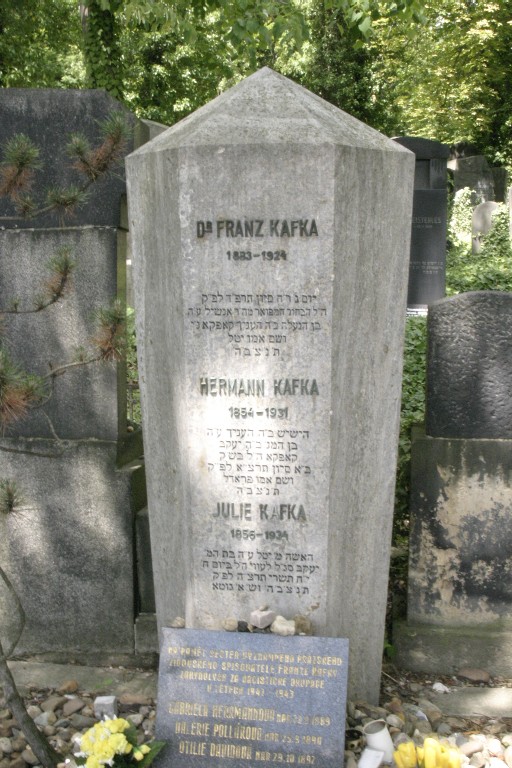
 It’s early afternoon on Sunday, June twenty-fourth of this year. I am in Prague walking along a well-kept gravel path down a long wall from the entrance to The New Jewish Cemetery. I find Franz Kafka’s grave just opposite a memorial to his friend, Max Brod, snap a few forbidden pictures hoping that God will forgive me and thinking that some pilgrimage has now ended. Earlier in the day, my beloved and I visited the Old New Synagogue and walked down Maiselova Street where the day before we had struggled through a tour of the other old city synagogues and the Old Jewish Cemetary in a pouring rainstorm that made it difficult to orient oneself geographically.
We were at the end of our tour and had by this time seen a good many things that evoked the memory European Jewry, but neither of us was quite prepared to find that the synagogues of old Prague are mostly museums. The Old New Synagogue is still in use as a house of prayer, but when I asked a docent there how many were in attendance at the Saturday service, she told me apologetically that she didn’t know because she isn’t Jewish. Then she speculated that mostly visitors had attended because the congregation is very small. “There aren’t many Orthodox Jews left in Prague,” she sighed ruefully.
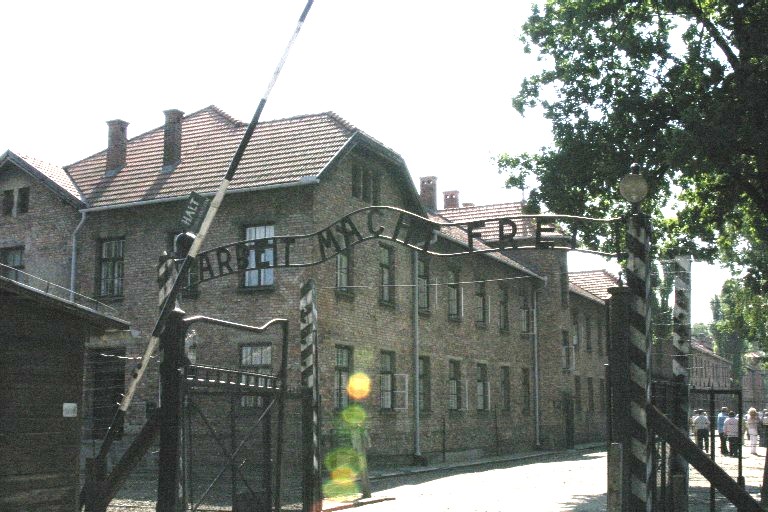 Brooding over these perceptions is the memory
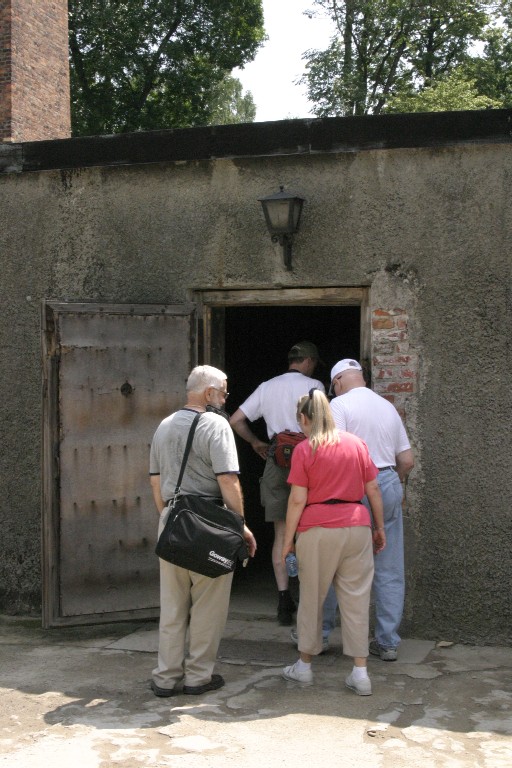 of our visit to Auschwitz, in Poland, almost two weeks before. Here’s the main gate at Auschwitz I, the first part of the camp (formerly an army barracks), with the infamous inscription Arbeit Macht Frei that was used throughout the Nazi system of concentration camps. And here’s a picture of some of our group entering the room where so many were murdered. Inside this bunker-like structure is a large room with openings in the ceiling, used to introduce Zyklon B gas, and a smaller room housing two ovens that were used to burn the bodies. This relatively small facility at Auschwitz I was used before (and after) the killing factory was built at Auschwitz-Birkenau, or Auschwitz II, a few miles away. The Nazis blew up the gas chambers and ovens at Auschsitz II when they abandoned the camp. It’s very hard to be at Auschwitz. Our program director, a lovely polish man named Marek Gajewski, told us that he has special respect for the people who work as guides at the death camps.
Marek’s father had spent time in the Soviet Gulag. He was a concert pianist, so his tormentors broke all his fingers. The most important thing I learned in Eastern Europe, I think, is that the memory of the Nazi terror and the Soviet terror that followed are vivid and contemporary. It is as though they happened only yesterday. I will never forget Marek’s account, as we drove along a now beautiful bridge across the Vistula from Warsaw to Praga, Poland (where much of the film, The Pianist was made), how the Soviet army had watched the almost total destruction of Warsaw by Hitler’s departing forces (when they could have prevented it) and walked into the city to take control afterwards.
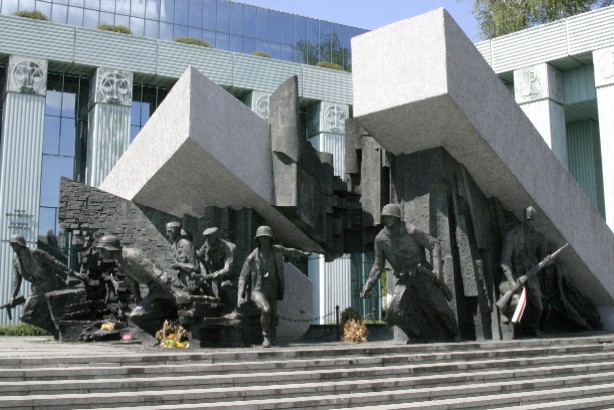
Here’s a picture of part of the memorial to the Warsaw Uprising at the end of World War II. It was this uprising that so angered Hitler that he ordered the total destruction of the city. Poles are understandably proud of this event in their history, when a small irregular army of fighters held off the Wehrmacht for some two months, especially since the Soviets would not allow them to celebrate it. It’s now honored not only by this large monument, but by a fine new museum in Warsaw.
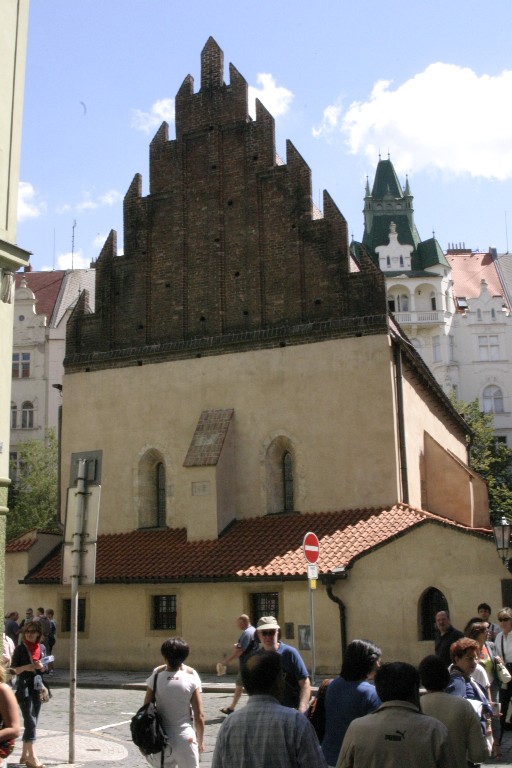
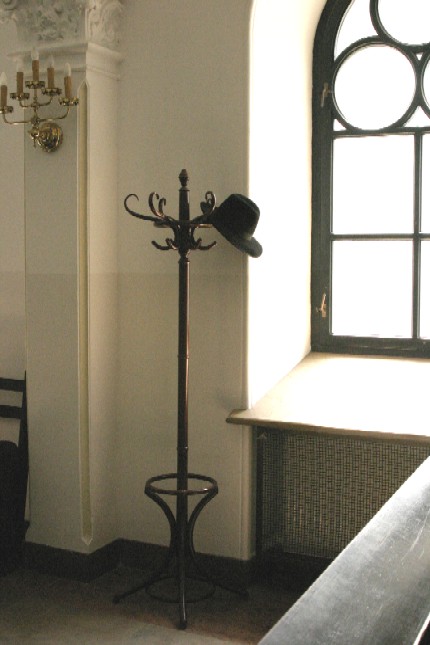
Back to Prague. Here’s the Old New Synagogue, completed in 1270 by most accounts. Small as it is, it has a feeling of loftiness and amplitude inside. The entrance now after centuries is well below street level. Its tiny reading desks suggest that it was built for humans much smaller than we moderns are on average. But it’s lovely, simple and clean and cozy, nothing ostentatious, nothing too much. I wasn’t allowed to photograph the interior, but you can see a couple of nice interior shots at Wikipedia and here. I’ve read with some dismay accounts of violent disputes at the Old New Synagogue recently. Though I don’t entirely understand what I read it appears that identity politics is everywhere, even in this venerable place.
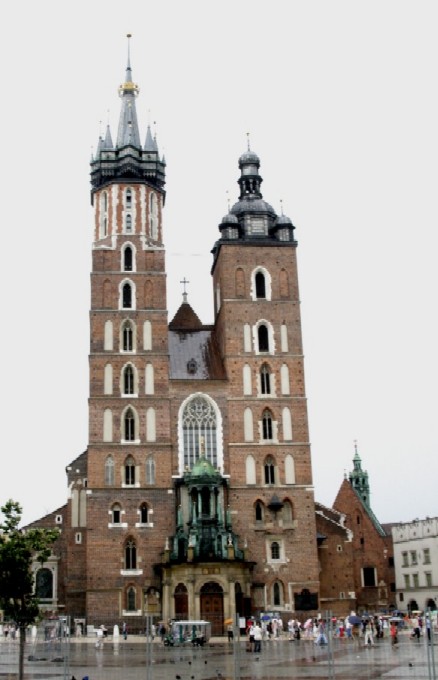
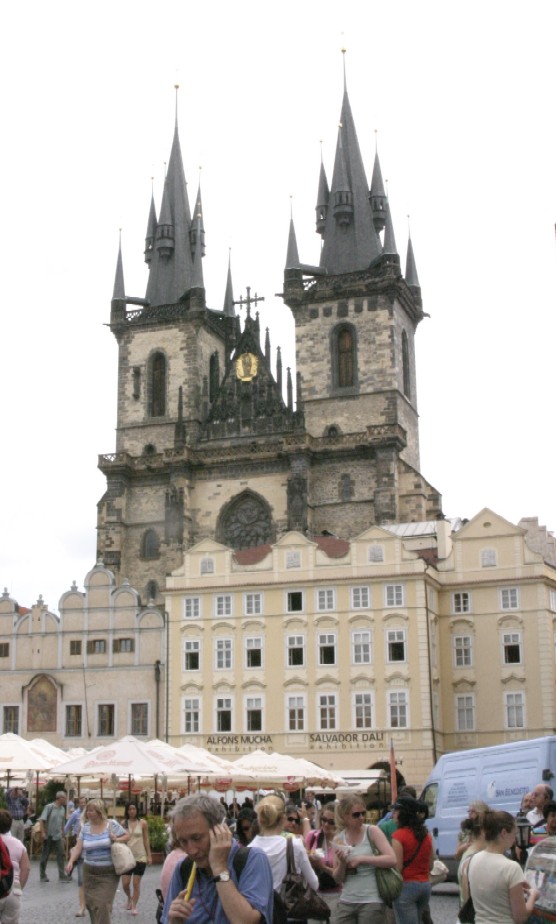 It was the law in most of Europe for centuries that synagogues could not be taller than churches. Here, The Church of Our Lady Before Tyn utterly dominates the old town square, its haughty towers a reminder of the fate of Jan Hus and his followers. Last summer the statue of Hus in the center of the square was being
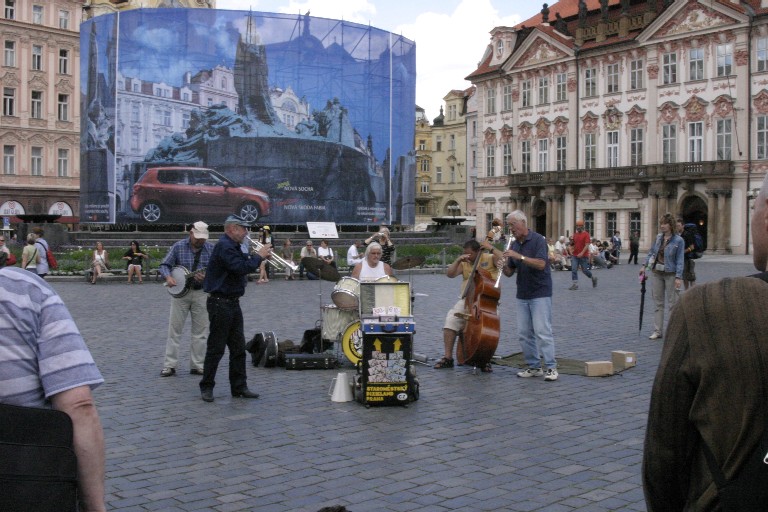 refurbished, so that one saw this wrap instead. The guys in the band here were playing dixieland, not badly either.
Prague is seriously crowded with tourists. This band in the middle of the square was surrounded by a pretty large crowd of folks listening or on their way, as we were, somewhere else.
more . . .