
November 22, the more it stays the same

I last wrote about this anniversary in 2008 when I recalled a prayer I heard on the loudspeaker at Crozier Technical High School in Dallas where I taught an extension class on Monday, November 25, 1963. As I said then, the prayer concluded with the agonized question: “Why, Lord, why did it have to happen, and why did it have to happen here?”

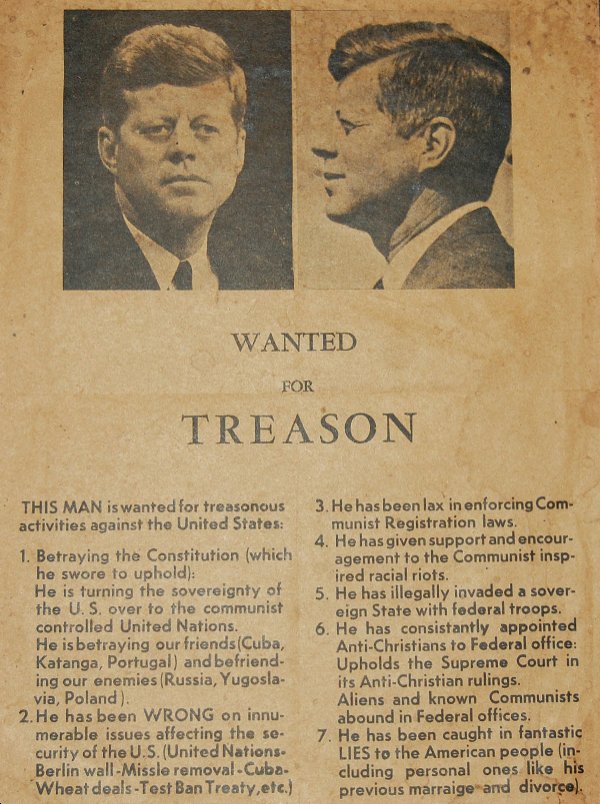
This year the city of Dallas has asked that question again by undertaking to mount what The New York Times has called “the biggest event it has ever held to mark the assassination.” Dallas, itself, is a changed place, now one of Texas’ liberal leaning enclaves (unlike surrounding Dallas County). But this year I am remembering the Dallas political climate of the early 1960s when every day’s news brought us some offense against civility in the depredations of the National Indignation Convention where Evetts Haley called for the lynching of Chief Justice Earl Warren, and Edwin Walker attempted to out-MacArthur the infamous world war II general almost daily. The early sixties offered a feast of political extremism in Dallas, circulating a pamphlet accusing the president of treason and inciting angry mobs to abuse Lyndon Johnson and Adlai Stevenson.

We tend to forget that President Kennedy was in deep trouble when he traveled to Dallas in 1963. His legislative agenda was stalled in the congress. He was targeted by organized hate campaigns on behalf of various fanatical anti-communist groups, opponents of civil rights, and anti-Catholic Christians. He had come to symbolize all that the most fanatical movement conservatives hated most: east coast elitism, sympathy for communist regimes, opposition to Jim Crow—no matter his problematic history with respect to civil rights and the prosecution of the cold war. The assassination made JFK a martyr for causes he had come to support reluctantly and made Dallas his symbolic assassin, albeit the real killer was in all likelihood a disaffected loner.

A number of journalists have connected present-day right-wing fanaticism with the fanaticism of the 1960s and earlier times. See here and here for examples. Right-wing fanaticism runs deep in Texas and in Dallas, the home of the revived Ku Klux Klan of the 1920s. Much has been made of the shift of southern right-wing voters to Richard Nixon in 1968, but in Texas it was the Eisenhower election of 1952 that marked a massive shift of right-wing Democrats to support of Republican candidates, led by then governor Allan Shivers. Ronald Reagan was courted by these same Texans as a potential presidential candidate in the years immediately before the election of 1960. The Shivercrats, as we called them, kin to the Dixiecrats who supported Strom Thurmond when he walked out of the 1948 Democratic convention to protest his party’s civil rights agenda, remained in the Democratic party until Lyndon Johnson’s presidency, when Johnson’s defection to liberalism gave them a reason to declare themselves Republicans. Texas Governor (as well as Secretary of the Navy under John Kennedy and Secretary of the Treasury under Richard Nixon) John Connally, was one such Shivercrat.

McCarthyism and racism run deep in Texas as well. Just before I became a student at SMU in the early 1950s, the chair of the English department, John Beaty, had become widely controversial for his fanatical anti-communism, which caused him to complain that SMU was rife with communists and fellow travelers. I remember watching him walk around campus wearing a pith helmet—we joked about it and called him Clyde. Marshall Terry has remembered him as a fine teacher, Paul Boller as a vindictive red baiter. In Austin, J. Frank Dobie had been targeted by the FBI and the House Un-American Activities Committee after his shift to liberal politics in 1943. Dobie was eventually driven out of The University of Texas by right-wing governor, Coke Stevenson, in 1947. I’ve mentioned the depredations of J. Evetts Haley, one of the founders of the John Birch Society and a red baiter and Roosevelt hater from the earliest times. Haley remained a force in Texas politics throughout the 1960s. His 1964 book, A Texan Looks at Lyndon, made him a national figure for a time. Haley is also the author of a much praised biography of legendary cowman, Charles Goodnight, a book Dobie admired. Dobie and Haley were friends for many years until Dobie declared for liberalism and civil rights. Haley was also a committed racist, as were most others who supported the National Indignation Convention. Texas’ history as a haven for slavery and its long and shameful history of racist lynchings and mass murders are indices of the depth of its racist past.

But these observations don’t tell the whole story. Texas had a strong liberal contingent in my day, led during my experience by Senator Ralph Yarborough. The Texas Observer was and remains a liberal rag with a fair amount of influence. In my day in Dallas, SMU stood as a bastion of liberalism, even though it depended upon right-wing Dallas for yearly support. Unphrey Lee and Willis Tate didn’t win all the battles they fought, but they fought the good fight, something I think SMU has forgotten how to do. I need to think about my Texas. It is my place in a way that New Mexico, where I was born, is not; in a way that North Carolina and Missouri, places I Have lived for many years and will always love, are not. Texas is my place, and my love for Texas is kin to my love for my country. I need to think about these things because I have never explored them except in an essay I published over twenty years ago. I wrote about it here last year.
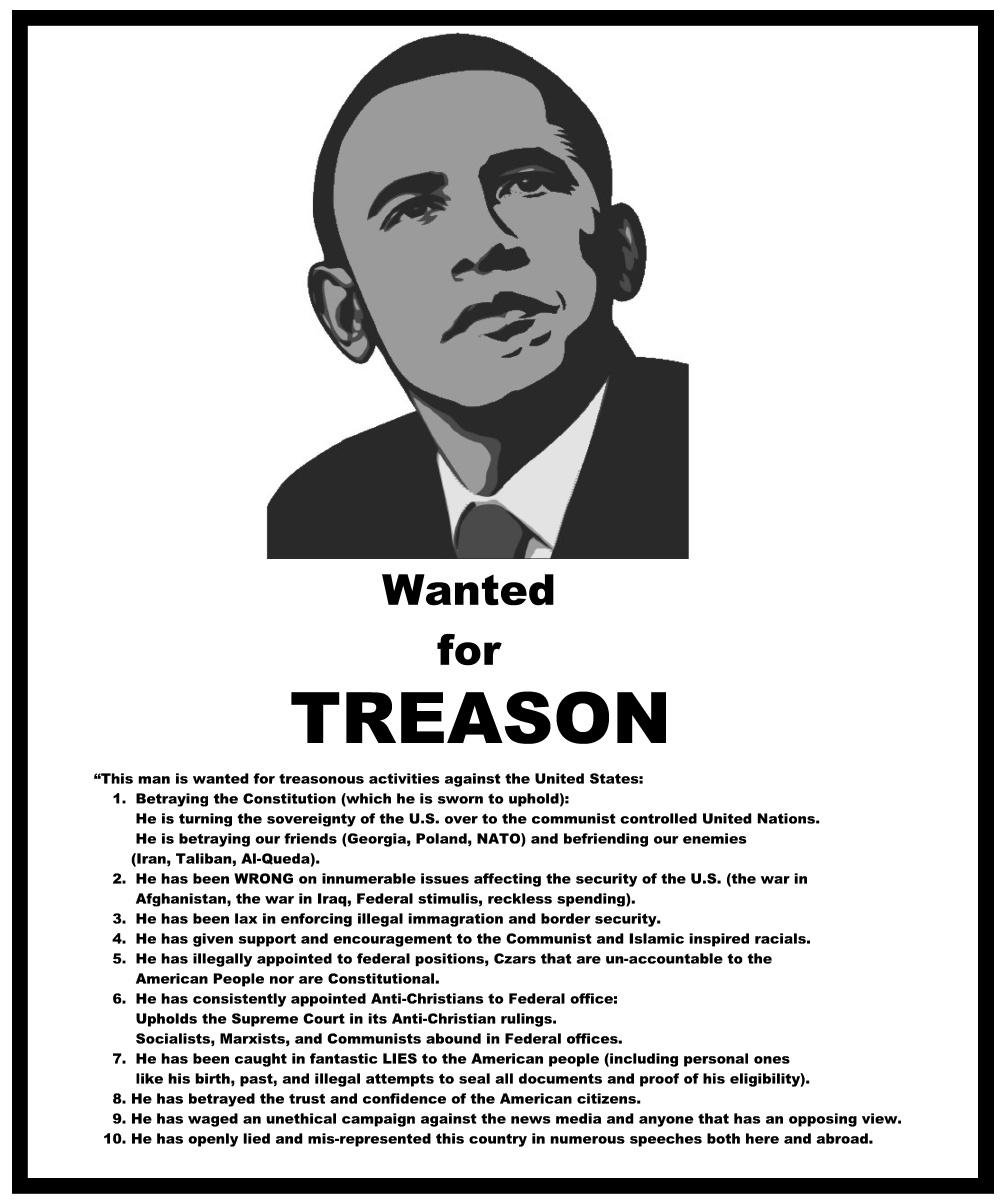
And I intend to write more about these things. But today I am thinking that I shouldn’t be surprised at the recent craziness of some Texas politicians. It is as though the past that many in Dallas would like to escape has now become a permanent part of American national life, as Manny Fernandez observed in The New York Times. This year, on the anniversary of John Kennedy’s death by violence, I am remembering the many who have been murdered by political violence in my state and in my country in my lifetime. And I am not unmindful of the significance of a poster that has circulated recently charging President Obama with treason.

one more thing

In an introduction at Facebook for my last blog post I wrote as follows:

A few years ago at a public forum I listened apprehensively as the owner of a large St. Louis business defended the attacks on pensions that are going on presently in the public and private sectors. “Why should today’s managers have to abide by contracts with workers that were made over twenty-five years ago?” he asked. I might put the question differently, at least with respect to public workers: “Why should todays managers, having systematically and illegally underfunded public pension obligations for years (and perhaps lost workers’ contributions by bad management and high-risk investment strategies) be allowed an escape hatch?” But my argument and others like it have largely fallen on deaf ears for the past thirty-plus years. Now we’re seeing the consequence of this unconscionable public irresponsibility in Detroit, complete with the connivance of the Obama administration.

But I spoke too soon, at least in one respect. Underfunding pensions for public workers has not been illegal since 1974. In a piece that appeared in Rolling Stone a few weeks back, Matt Taibbi has presented a substantial and well-documented analysis of the financial crisis we seem to be in as a nation, that honors the perspective of those of us who worry that benefits we worked for years to obtain may disappear because of the machinations of “huckster financiers.”

another loss for democracy

As the hostage crisis drags on in Washington, and we get closer and closer to default on the national debt, there’s a new story today that’s perhaps more disturbing. The Obama administration has intervened in the Detroit bankruptcy proceeding, and not on behalf of workers or middle-class Detroit citizens, who overwhelmingly oppose the bankruptcy and the dictatorship of sometime Obama apparatchik, Kevyn Orr, who is reprising his role in the sack of the US Auto Industry as he directs the use of the courts “to gut the benefits of public employees and sell off public assets.” No, the Obama administration has intervened on behalf of capital. Jerry White puts it this way at the World Socialist Web Site.

The Obama administration, speaking on behalf of Wall Street, sees the measures being taken in Detroit as a model. Just as the government-backed restructuring of the auto industry in 2009—in which Orr played a significant role—was the opening shot in an attack on wages and benefits throughout the country, the bankruptcy of Detroit will set the precedent for destroying city workers’ pensions and health care.

Banks and other investment firms who “swindled the city out of hundreds of millions in credit default swaps” will of course be paid first as the bankruptcy proceeds. Workers and retirees, who have been abandoned by their unions, will lose most. The Bankruptcy will rob “the city’s 19,000 retirees and their dependents of as much as 90 percent of their pension benefits” and dump them willy-nilly into the new health insurance exchanges. Some workers have already lost jobs as the public services of which they were part have been privatized (and these include public schools). A once proud city will lose the last vestige of its integrity and much of its cultural capital as Orr sells off the contents of its “world famous Detroit Institute of Arts,” having already lost its ability to govern itself. It may be the most profoundly un-American thing I have witnessed in my seventy-six years.

The back story is well known. The state of Michigan overturned the law enabling the unelected emergency manager, but the will of the people was thwarted by a last minute deal to reinstate the law by a venal state government, backed by Detroit’s mayor. Now Detroit is ruled by a dictator, who when he took the job announced that he was “prepared to be the most hated man for a period of time.” And the situation in Detroit presages something still more ominous. We are hearing from Washington of the possible willingness of the Obama administration to begin the dismantling of Social Security and Medicare. And the news today that COLAs next January will amount to only 1.5 percent does nothing to allay the dismay of retirees like me. Public workers, retirees, and public life are under attack everywhere. If the Obama administration sells us out again, and this brief in the Detroit bankruptcy case looks very much like a sellout, I and a good many other progressives may have to look for a political home outside the Democratic Party.

But this action in the Detroit case is less a betrayal of me and my generation than it is of Generation X and the Millennials, those younger Americans who have supported the Obama presidency in numbers, perhaps even while they participated in the occupy movement. It isn’t just Detroit’s public workers and retirees who are being sold out; it is the hopes and dreams of millions of young Americans who didn’t exactly think Social Security would be there for them, but hoped it might—and who, as they chanted “Yes, we can!” with the rest of us, almost came to believe they could.

constitutional crisis

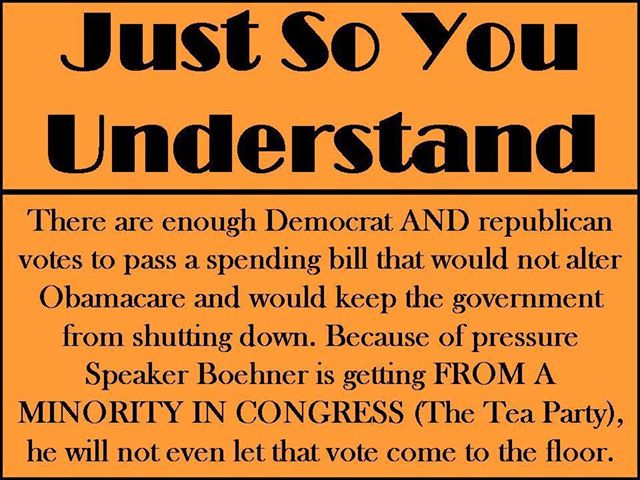
Here’s a graphic that’s been showing up at Facebook and elsewhere. It comes from mediamatters.org. Click the thumbnail to enlarge it, and you can read more from Jonathan Chait. Hat tip to Daily Kos for both items.

Journalists who have pretended objectivity in this matter have actually taken a side by giving credence to the rightist Republican rump. It is a faux objectivity to pretend impartiality when none is possible. Headlines such as “Your fault! No shutdown end; Dems, GOP trade blame” and “In shutdown blame game, Democrats and Republicans united: It’s the other side’s fault” enable journalists to strike a pose that proclaims them superior to the conflict and allow them to report on a situation that has deep political and moral significance for our country as though it were a tennis match.

The old-time sports writers were far more honest. They gave both excellence and foolishness their due. I can’t imagine Haywood Hayle Broun writing any of the drivel that passes for reporting on the government shutdown that I have seen in the last few days’ newspapers. But in the final analysis, no matter how much the Republican rump games the system, our government isn’t a tennis match. Tennis matches achieve closure, and the loser doesn’t get to take the winner hostage and demand that she be given enough points to reverse the outcome of play.

At present we are at the beginning of a hostage crisis in this country, just as real as the crisis of the late 1970s when fifty-two Americans were held captive in the U. S. Embassy in Tehran. For the nation’s major news outlets, the New York Times, The Washington Post, and my own St. Louis Post Dispatch, all of which have been great newspapers in their time, to report on this crisis as though it were the result of normal politics and as though our entire government were to blame, is unconscionable. It renders these media conplicit in the crisis over which they pretend superiority.

There are reasons to compare this present crisis to the secessionist crisis that preceded the American Civil War; but I think a better parallel is to be found in the constitutional crisis that signaled the denouement of the first English Civil War of 1642–1651. In 1649 a minority of the long parliament (the rump) was assembled by Oliver Cromwell to try King Charles I for treason. The parliamentary majority were not in favor of the trial; nor were all members of the rump, nor, apparently, were the English people at large—but the deed was done. And the King was beheaded on January 30, 1649.

The core charge against him was that he had sought “out of a wicked design to erect and uphold in himself an unlimited and tyrannical power to rule according to his will, and to overthrow the rights and liberties of the people of England.” Sound familiar? It should. Today we are witnessing an assertion of right by a parliamentary rump which has cowed the Republican party into refusing to accept the legitimacy of a president who has been twice elected by substantial majorities. This is not business as usual. This is an attempt on the part of a minority of half of the congress to seize power and topple the president.

And the Affordable Care Act is not the cause of the crisis. It is merely the site of it, just as the Monica Lewinsky business was the site of our last Republican impeachment gambit. But it ought to be clear that Republicans do not represent the freedom they so loudly proclaim or the constitution they pretend to defend. The ACA was enacted constitutionally; it has been ratified by a conservative Supreme Court and by the electorate in 2012. It is the Republican parliamentary rump that presently stands outside the constitution, and if polls are to be believed most Americans are wise to that and to who the real tyrants are.

Here’s another graphic, courtesy of Anti-Republican Crusaders. Where will we go from here? The president has invited congressional leaders to a White House conference as the Republican rump continues to foment legislation whose only purpose is to punish him. But things aren’t looking good for the rump. Faced with the anti-democratic consequences of their duplicity, members of the rump now gloat that the government shutdown will teach us all a lesson and contend that the people aren’t always right about what they need. It now looks as though the rump will lose the public relations battle and the support of big business. Not the best resolution, but perhaps it is better than war and bloody decapitation. In the final analysis seventeenth-century England preferred constitutional monarchy to parliamentary tyranny. Monarchy was restored in 1660 and ratified in 1688. Along the way the signers of the king’s death warrant were tried for regicide and followed the king to the scaffold.