tower grove park in the snow

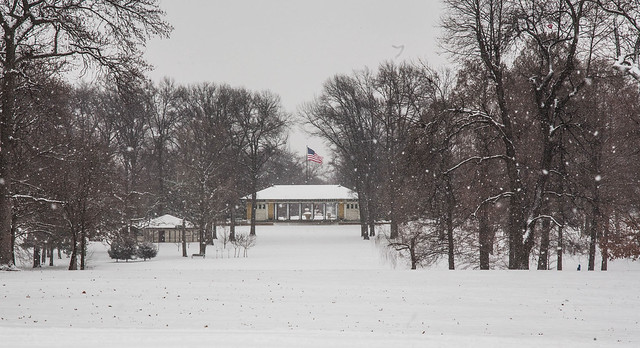
I’ve now added a set of winter photos of Tower Grove Park to my image collection. The photo at the head of the page shows the vista down the the long hill on the back side of the park towards the bath house. Here’s a better view
_MG_2339.jpg

Here are a few other images I particularly like. This first one is the music stand in the center of the park where we’ve heard a good many concerts by the Compton Heights Band.
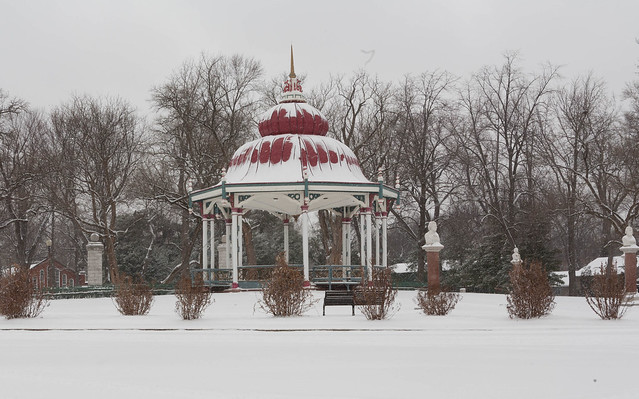
_MG_2302.jpg

The music stand is ringed around by granite pedestals, each bearing the figure of one of Henry Shaw’s favorite composers (see below). The present busts are copies of originals that are now displayed in the Piper Palm House and marked by damage from erosion. I think the exchange must have been made in order to prevent further damage to the original heads, though the copies are beginning to show weather damage now.
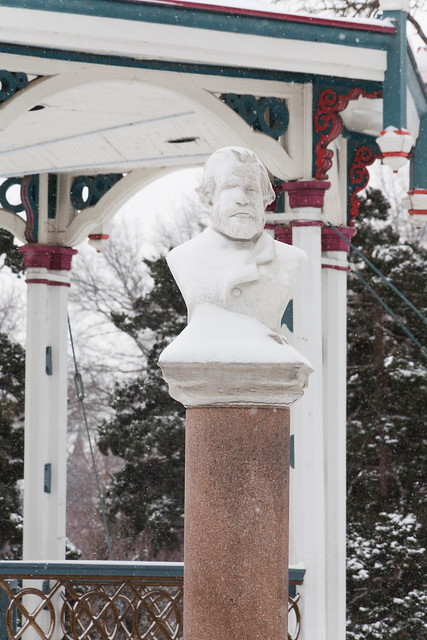
_MG_2313.jpg

Here’s one of the park’s many gates, just adjacent to the bandstand.
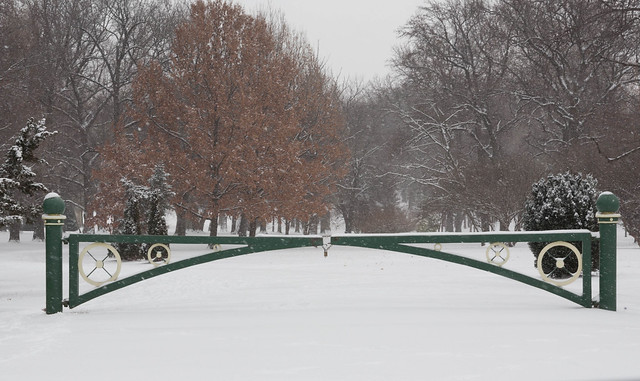
_MG_2306.jpg

And here’s a familiar sight. At all hours the park is a popular place for humans and dogs to walk together.
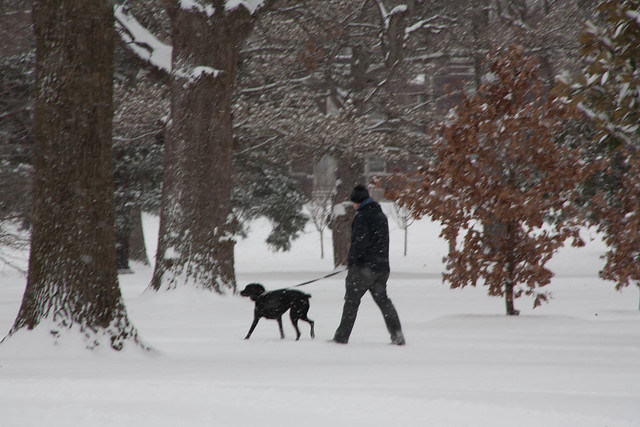
_MG_2320.jpg

Here’s the Turkish Pavilion, a popular site for warm weather barbecues and picnics, now shrouded in snow. Across the street from it is the dove-cot house with homes for pigeons and other birds under its cupola roof.
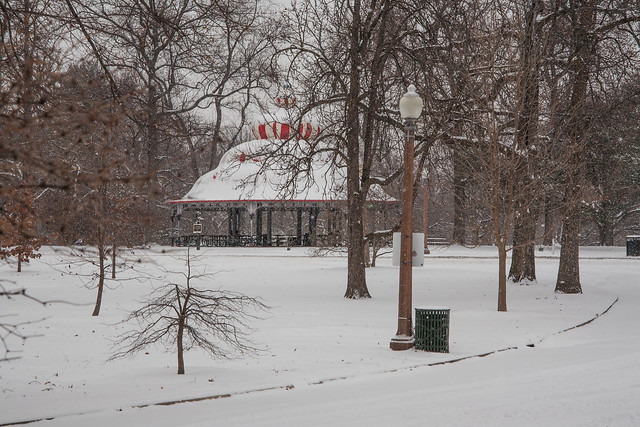
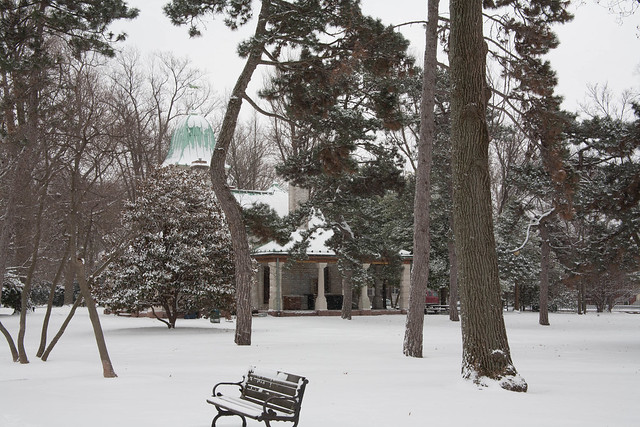
_MG_2342.jpg

_MG_2340.jpg

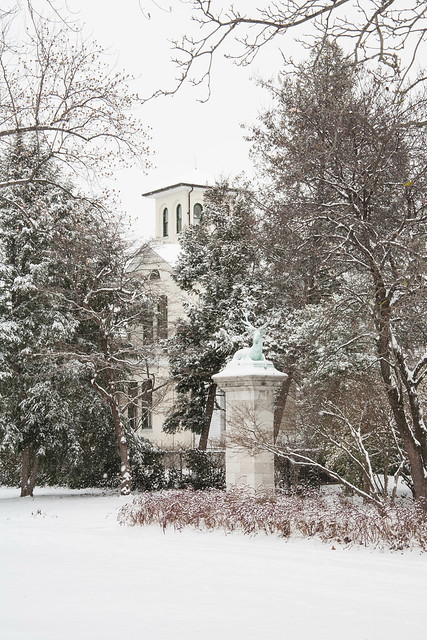
This elegant house, just inside the Magnolia Avenue park entrance, serves as the residence of the park’s executive director.
_MG_2351.jpg

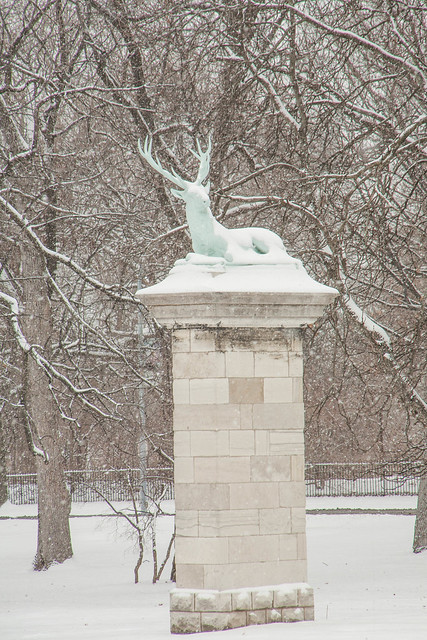
The bronze stag in the foreground is one of a pair that frame the Magnolia entrance and continue a theme articulated at the park’s main entrance on Grand Boulevard, which features lions on stone pedestals. Here’s the other Magnolia Avenue stag.
_MG_2349.jpg

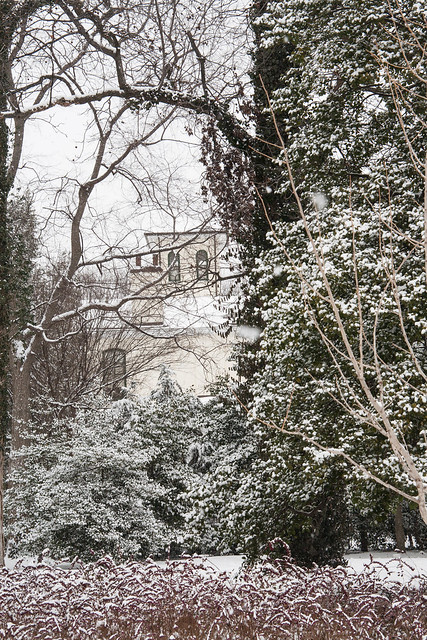
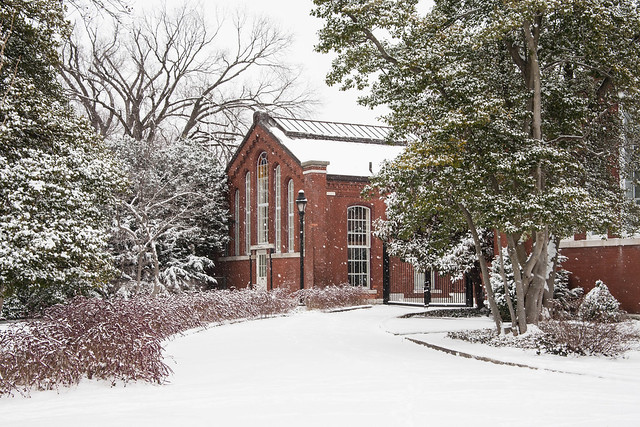
Here’s the house again from another perspective and after that a corner of the Piper Palm House, which houses administrative offices for the park and serves as a venue for concerts and other programs, including a Sunday brunch during the cold months of the year. It’s also a popular site for weddings. Perhaps I’ll return in warmer weather for more photographs of the central buildings and the woodland groves that make the park many degrees cooler than the outside world in summer.
_MG_2353.jpg

_MG_2352.jpg

Tower Grove Park was an 1868 gift to the City from Henry Shaw, who also donated the land for the Missouri Botanical Garden and oversaw the early development of both facilities as well as the residential areas immediately adjacent to them. As I’ve mentioned before, both garden and park show on Compton and Dry’s 1876 map of Saint Louis. You can see other park pictures at my Flickr photostream.
out the backroom window

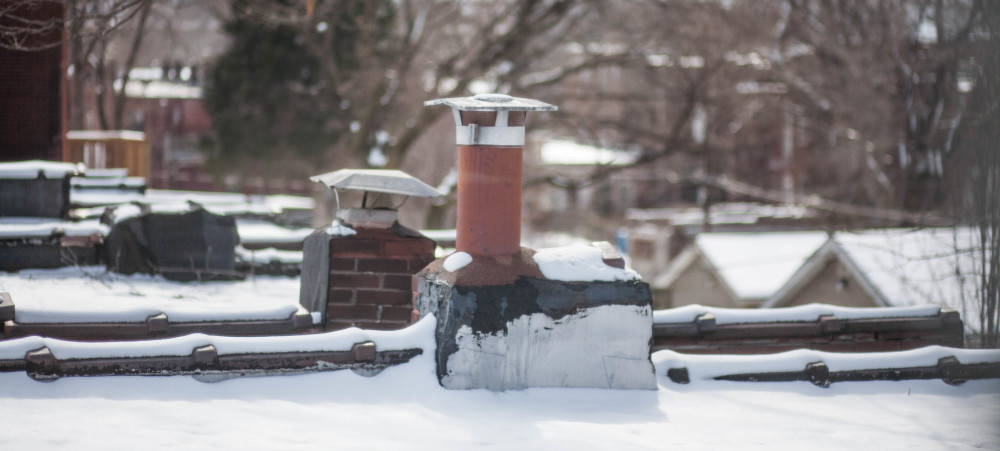
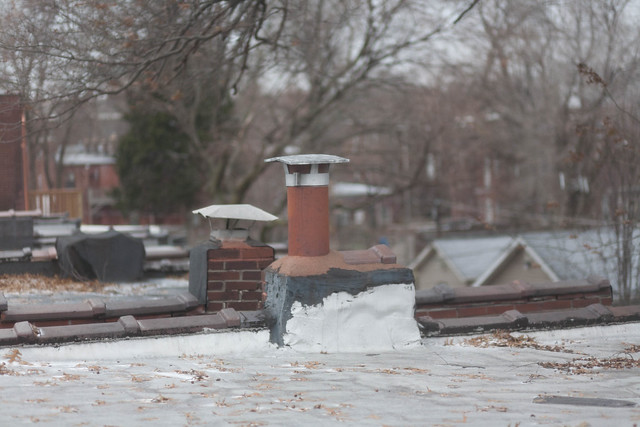
I’ve changed my blog header photo again. I took the new photo through a window at the back of the house that looks out over my neighbors’ roofs to the south, making it a photo almost literally out the backroom window.

_MG_2291.jpg

I’m cheating a little, but just a little. The room whose window I used isn’t technically the back room, but it does qualify as a back room. I was experimenting with a new 85mm lens that’s pretty fast and so got the background nicely blurred. The two chimneys are parts of two different houses across a narrow gangway from one another.

Peace and Vigilance

I’ve written about Dr. King recently enough that I don’t want to do so again today, but perhaps the paragraphs below do him no dishonor. My beloved is off registering voters at today’s MLK celebration at Harris-Stowe University. I’m at home with a mild case of the crud, or I’d be there too.

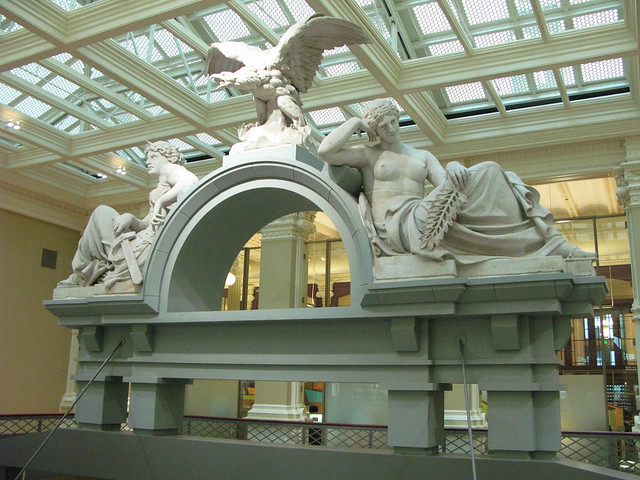
So:—for those who find this blog’s heading interesting, the photo depicts Daniel French’s sculpture entitled Peace and Vigilance. It originally sat at the top of the front pediment of my city’s historic federal building, dedicated in a ceremony presided over by William Tecumseh Sherman in 1884 and known as The United States Custom House and Post Office. The building occupies the block bordered by Olive, Locust, Eighth and Ninth streets in the heart of old downtown Saint Louis.

It is now known as the Old Post Office, its original function and occupants having been moved elsewhere, including a substantial stock of gold bullion it was built to house. Today it is again fully occupied, housing The Missouri Court of Appeal, Eastern District, branches of Webster University and the Saint Louis Public Library, the office of former Missouri Governor, Bob Holden, the Saint Louis Business Journal, the Missouri Arts Council, and other enterprises. I took this photo one evening several years ago at a community forum about the city earnings tax. presided over by the League of Women Voters.

French’s original sculpture, shown in my photo, was removed from its pediment in 1970 and replaced by a cement copy. It was then restored and reinstalled in the Old Post Office’s central atrium as part of a restoration and redevelopment project that was completed in 2006. You can see what it looked like where it was originally installed (and where the copy now resides) here. And here’s another photo of the present installation from a different vantage point.

IMG_0127.jpg

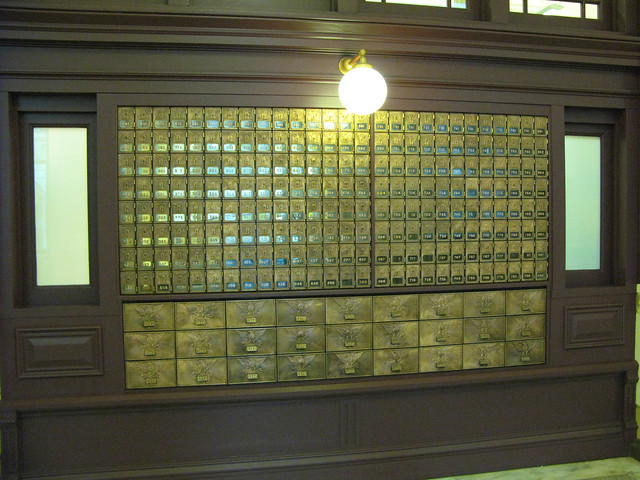
Because of the fear of fire the Old Post Office avoided wooden construction for the most part. Here are a couple of exceptions Here’s a photo of the restored service area with its beautiful old brass boxes and wooden framework.

IMG_0135.jpg

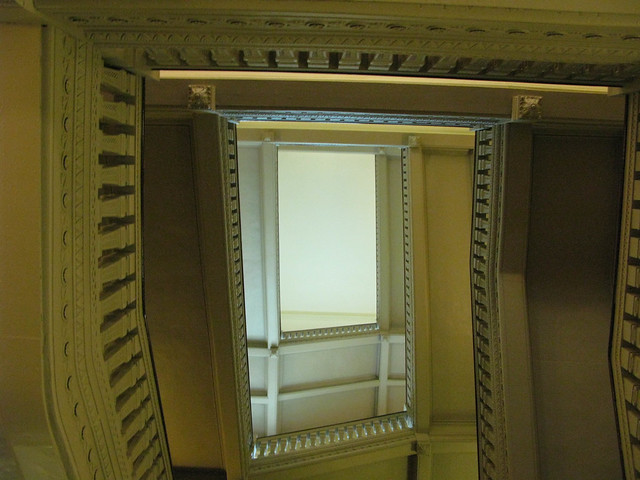
And here’s a photo one of the old staircases rising from the main floor to the top of the building. The original basement was a vault with a moat around it. I’ve not been down there, but maybe one day I’ll take my camera and venture down.

IMG_0133.jpg

In 1884 Saint Louis was one of the four or five fastest growing cities in the nation. We were eventually eclipsed by Chicago and other western cities, but in 1884 Saint Louis was the informal capital of the west. The new Custom House and Post Office was a recognition of Saint Louis’s importance to the expanding republic and also a monument to the republic’s reunification. Designed in 1872 and begun in the following year, it seems to have been well on its way to completion by the mid-1870s, as shown on this 1876 pictorial map of the city done by Richard Compton and Camille Dry. I’ve not been able to embed it satisfactorily, but I’m hoping this link will take you there. Be patient it will take a while to load.

The pictorial map is available online. It’s cumbersome to use because moving around in it takes a good deal of computer memory, but it’s also full of information and for antiquarians like me a great deal of fun. The part of the city where we live hadn’t yet been developed, the streets not yet cut through. But to the west of us Tower Grove Park is complete and just to the north of that is the future site of the Missouri Botanical Garden, showing Henry Shaw’s estate and his summer house, which we recently toured at the garden over the Thanksgiving holiday.

My beloved is just home from Harris-Stowe. She tells me the event was mobbed and that there were many Ferguson protesters. I suspect this will be on the nightly news amid accompanying misinformation. There’s a division here between old line civil rights activists and some of the Ferguson protesters. That’s a story for another day, too; though my beloved tells me proudly that she herself registered four protesters to vote.