Happy Thanksgiving!

_MG_2122.jpg

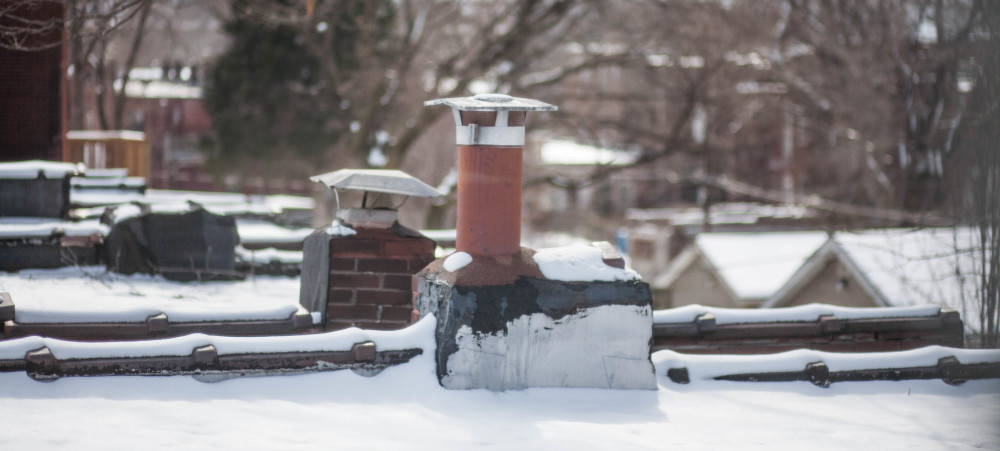
This photo from the Grand Boulevard Gallery in my city seems especially poignant to me today. I’m cooking, anticipating the arrival of friends and family for holiday visiting—doing the things I love to do on Thanksgiving day. If I could put my arms around all my friends and family and all those in the spectrum of my awareness and say nothing, only let the touch speak peace, perhaps that could call down a blessing as we will pray at my table this evening.

God keep you today and always, Facebook friends, blog friends, and all who may see this note.

along south grand the morning after

Back before I got sick last summer I had begun to explore my city with a camera. There’s a lot I want to write about St. Louis, and I’m thinking I’ll illustrate many of these posts with my own photographs as I write them and put them up.

I’m also getting more serious about photography. I’ve started a photo stream at Flickr and am trying now to build it up as I explore Adobe Lightroom. I think I’ll try to post photos every week from now on, in addition to the ones I’ll use in posts about the city and other things and places. I had thought to get my photostream built up a good deal more before posting the first photos here, but I have a reason for beginning now that will be immediately apparent.

This morning I braved chilly weather for a walk down South Grand, about a half mile from my house. It’s a strip filled with restaurants, boutiques, service businesses, a bank, and it serves as the comercial center of three more or less contiguous neighborhoods around historic Tower Grove Park: Tower Grove East (my neighborhood), Tower Grove Heights, and Shaw (where Vonderrit Myers was shot). Though protests about the Ferguson decision were mostly peaceful along South Grand there was some looting and a good many businesses had windows broken out. My church, St. John’s Episcopal Church just half a block west of Grand on Arsenal, had windows broken along the alley.

I’m going to write more about that evening and my church’s role in it later. Right now I’m still thinking about my morning’s walk. Here’s a photo taken at the southeast corner of Grand and Arsenal looking down past the storefronts on the east side of Grand. The same gestalt could be seen repeated in each block of Grand for the next six blocks.

_MG_2121.jpg

Something remarkable occurred in the hours after the plywood barriers went up. In late morning, early afternoon, people began to paint signs and murals on their storefronts. I don’t know how much of this was spontaneous and how much was orchestrated by neighborhood merchants, and I’m not sure I care. As the painting went on more and more artists joined in, painting whatever they were inspired to say in the spaces offered by the boarded-up storefronts. By late evening, when we walked to South Grand to have dinner, the street was alive with what in the sixties we might have called a happening, and what we now sometimes call a smart mob, made up of folks painting whatever vision they had on the walls left behind by calamity.

A good many of the South Grand Murals aspire to be prophetic, like this one on the front of Salon St. Louis where my beloved gets her hair cut.

_MG_2117.jpg

Or this one, in the window of the Wyoming St. Post Office.

_MG_2161.jpg

Others are more prosaic, like this one on a side wall of The St. Louis Bread Company.

_MG_2126.jpg

When I drove down Grand at mid morning yesterday, I noticed a good many boarded up windows spray painted with the slogan, “Why? We need our jobs.” Here’s one mural that stuck to that message, on the Medicine Shop window at Grand and Juniata.

_MG_2135.jpg

A brand new restaurant, Rooster, was particularly hard hit. Its large expanses of glass were too good a target, I suppose. Here’s what Rooster’s front looks like now.

_MG_2141.jpg

The flag is the city flag with a peace sign substituted for the central fleur-de-lis. Because we met friends from church inside last night when we had dinner there, and because we then stopped by the church on our way home, my initial reaction to the invitation to table was to think of church, but I’m sure Rooster was only advertising.

_MG_2142.jpg

Here’s a photo that shows more of the damage at Rooster. It’s a former bank building and has been jammed with crowds since its opening in October. The owner is local entrepreneur, Dave Bailey. You’ll find a number of good reviews if you Google.

_MG_2170.jpg

As we were walking last evening after dinner we met lots of folks to talk with. There was a festive, almost holiday atmosphere along the street. One man we spoke with, not a young man, had a couple of cans of Krylon paint in his hands which he kept shaking as he spoke. We complimented the murals and asked which ones he had a hand in. He laughed enthusiastically, “I’ve not started yet, but I’m about to!”

I’ll post more mural photos at Flickr as I’m able. It will be interesting to see whether these murals grow as time goes by. Of course they aren’t permanent, but grafitti tends to grow while it lasts. Our server at Rooster commented about the murals that they made him proud and happy—he lives in the area. “Isn’t it interesting how sometimes the worst in people brings out the best,” he said.

Michael Brown verdict

The St. Louis County grand jury has now found no probable cause to indict Darren Wilson with a crime as a result of his killing of Michael Brown. County Prosecutor McCulloch has laid out the evidence in such a way as to exonerate Wilson and has suggested that anyone who disagrees must have made up her mind in advance of the facts, likely influenced by irresponsible media. Of sourse, what Prosecutor McCulloch presented was an argument based on a carefully selected account of the facts, despite McCulloch’s constant protest that the Grand Jury was presented with all pertinent evidence.

I have never believed that officer Wilson would be indicted for killing Michael Brown. I pointed this out first here. The law gives police the benefit of the doubt in cases such as this one. But it should be said that this is not justice. It is rather a legal shield for the power elite. Prosecutor McCulloch urged the expression of dissent ‘so that such a thing might never happen again,’ but I found his pleading unpersuasive. There are numerous possible interpretations other than the now official one of the “facts” that Prosecutor McCulloch presented. Unfortunately, we shall now never hear them aired in open court. This was what the St. Louis County Grand Jury process was about.

Aside from the fact that McCulloch had a huge conflict of interest in this case and should have recused himself in the beginning, his polemic defending the impartiality of the grand jury process and claiming that anyone who dissents is insulting or attacking the integrity of the good folk who served on the grand jury, who gave up their lives, etc., is a pretty naked appeal beyond the merits of the case. It seeks to set those good citizens who support the grand jury and do not support Michael Brown, a young black man with an attitude, and those who do support Brown, against one another. But these adversaries should have met in open court, and they will not.

For a grand jury proceeding does not allow cross examination of witnesses. When asked why he did not seek a jury trial in this case McCulloch responded that had he done so a pre-trial hearing would still have occurred and the case would still have gone to a grand jury to determine probable cause. The difference is, of course, that a prosecutorial trajectory would have been set in a normal pre-trial proceeding, and that would have strongly influenced the outcome. The best chance McCulloch had of influencing the outcome of this particular case (and of avoiding any potential negative consequences with the electorate) was to present it to the grand jury with no recommendation.

I think the Michael Brown murder trial, travesty though it was, was not about Michael Brown or even about Darren Wilson. I think it was about creating a local outcome that could not easily be appealed to fhe federal court system and create the possibility of overturning Graham v Connor. Of course there will be gunshots, never mind who shoots; and of course there will be looting and vandalism. Civil strife invites opportunistic exploitation, and the terrible irony of such things is that often the innocent are harmed. When a society sets out an intentional policy of harming the innocent, where will such a policy come to rest?

So in the final analysis the verdict was, and is, a whitewash, or worse: the fix was in. The grand jury was used, and the predictable outcome confirms the establishment narrative with all necessary violence and chicanery.